
Serving the GTA and nearby Ontario info@kelvinmechanical.ca +1 905-407-7353

Boilers and hydronic heat

Boiler Repair, Replacement and Hydronic Heating Service

Hot-water heating calls for different thinking than forced air. We repair, install, replace and service boilers and the radiators, in-floor loops and coils they feed, with venting, expansion and system pressure checked. Emergency service is subject to availability.

  • ScopeBoiler repair, install, replacement and service
  • SystemsRadiators, in-floor, hydronic coils
  • QuoteFollows a site review
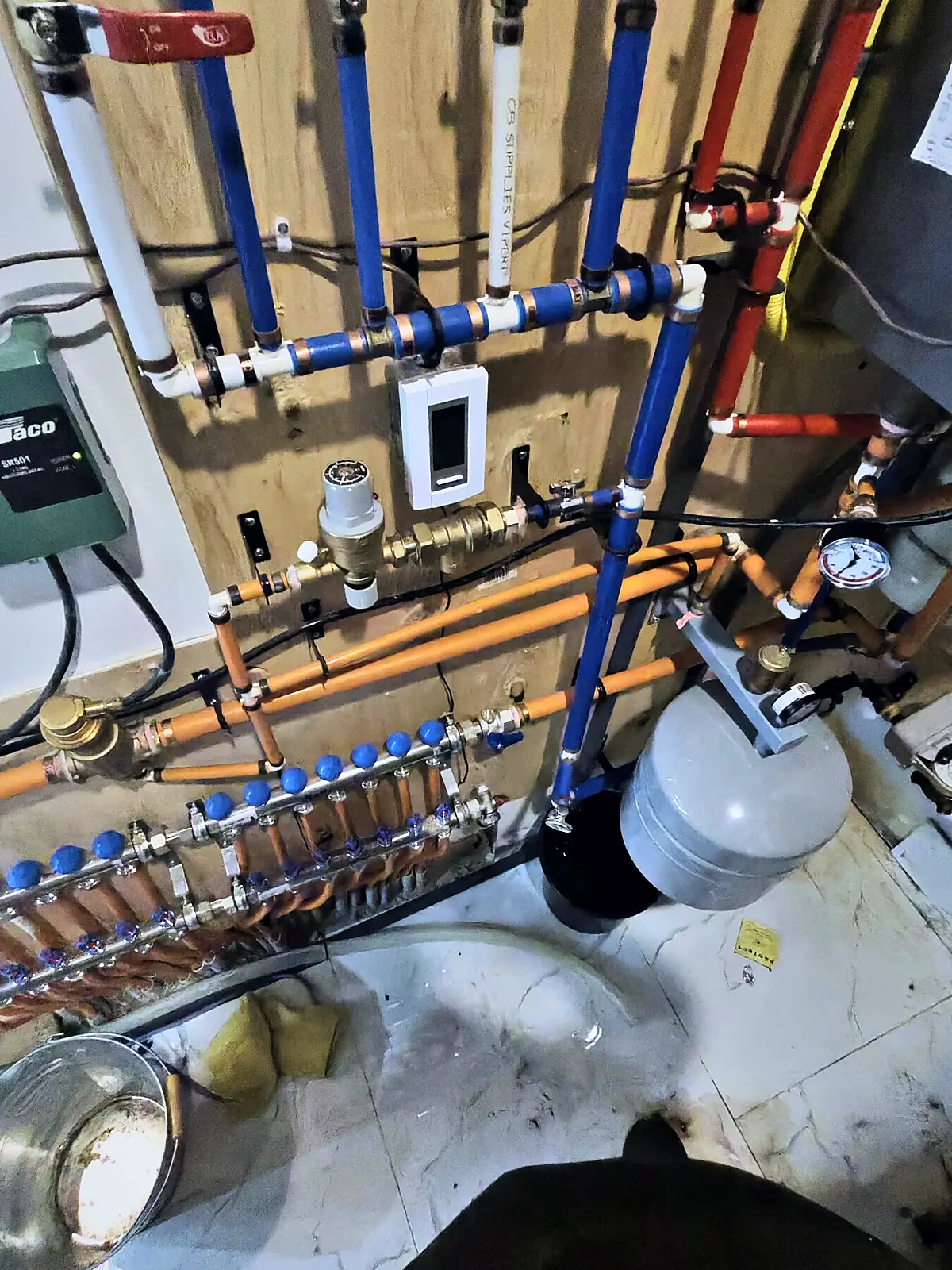
Hydronic heating piping with a radiant floor manifold, expansion tank, gauges and zone controlsServing the GTA and nearby Ontario

Scope

Boiler and hydronic work we take on

  • Repair of no-heat, cold-radiator, pressure, leak and ignition faults, with the findings and options explained before work starts
  • Boiler replacement matched to the home's heat loss and the heat emitters it feeds
  • Condensing and conventional boiler selection, with return water temperature reviewed
  • Hydronic radiators, baseboard and in-floor loops, including mixing for low-temperature zones
  • Hydronic air handler coils that heat air through new or existing ductwork
  • Expansion tank sizing, air separation, fill valve, relief valve and pressure checks
  • Venting and combustion air: sealed plastic runs, or chimney liner review
  • Circulators, zone valves and controls, including outdoor reset where it suits the system
  • Annual service: burner, heat exchanger, safeties, water level controls and combustion readings

Process

Planning a boiler replacement without surprises

Every job starts with a conversation and a look at the equipment. You see the options in plain language before anything is booked.

Request a boiler site review

  1. 1

    Survey the existing system

    We look at the boiler, piping, radiators or loops, pumps, zones, venting and fuel supply. Older systems often have mixed pipe sizes, past repairs and radiators added over the years.

  2. 2

    Calculate the heat load

    Sizing comes from a room-by-room heat loss calculation, not the label on the old boiler. Many older boilers are oversized, which leads to short cycling and wasted fuel.

  3. 3

    Choose the boiler type

    We compare condensing and conventional options against your emitters, return water temperatures and venting path. Pricing varies with equipment, venting, installation complexity and warranty options; a quote follows a site review.

  4. 4

    Install and purge

    The boiler is piped, vented and filled, then air is purged from every loop. Expansion tank pre-charge, system pressure, relief valve and controls are set and checked.

  5. 5

    Commission and explain

    We test firing, safeties, circulators and zone calls, record the settings and show you how to read the pressure gauge. A yearly service schedule is discussed.

In pictures

What this work looks like

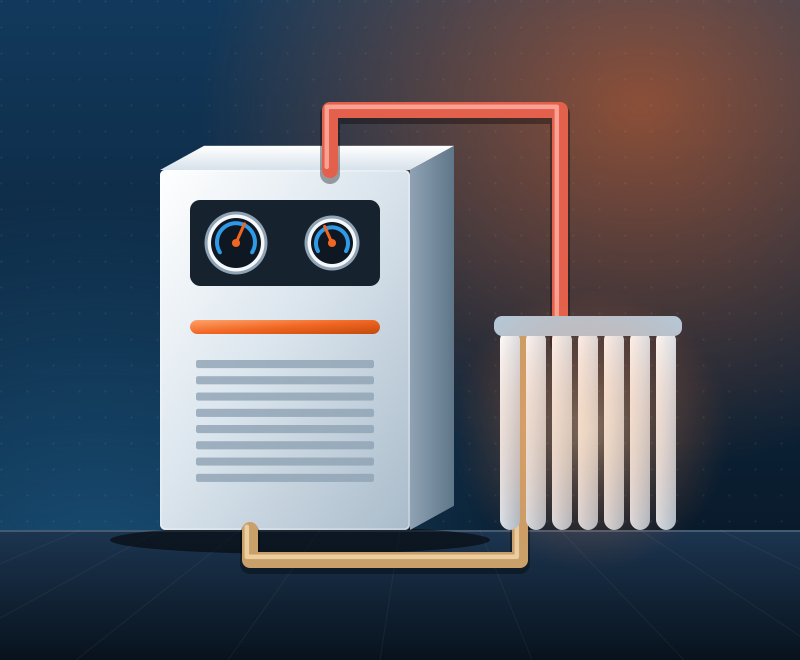
Illustration: boilers and radiant heatIllustration
Boilers and radiant heatHot water heat with radiators
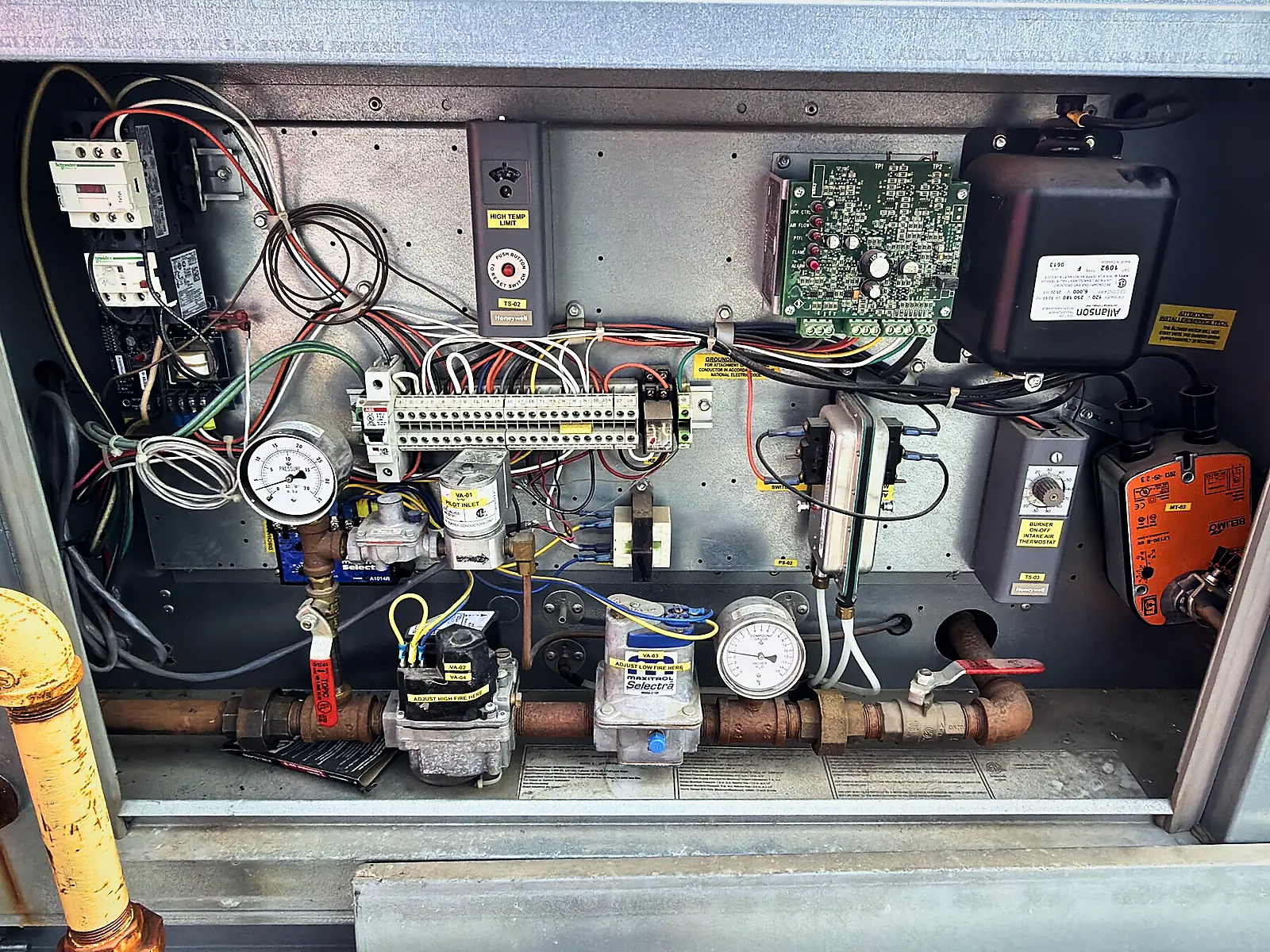
Gas train and burner controlsKelvin job photo
Gas train and burner controlsValves, gauges and safety controls
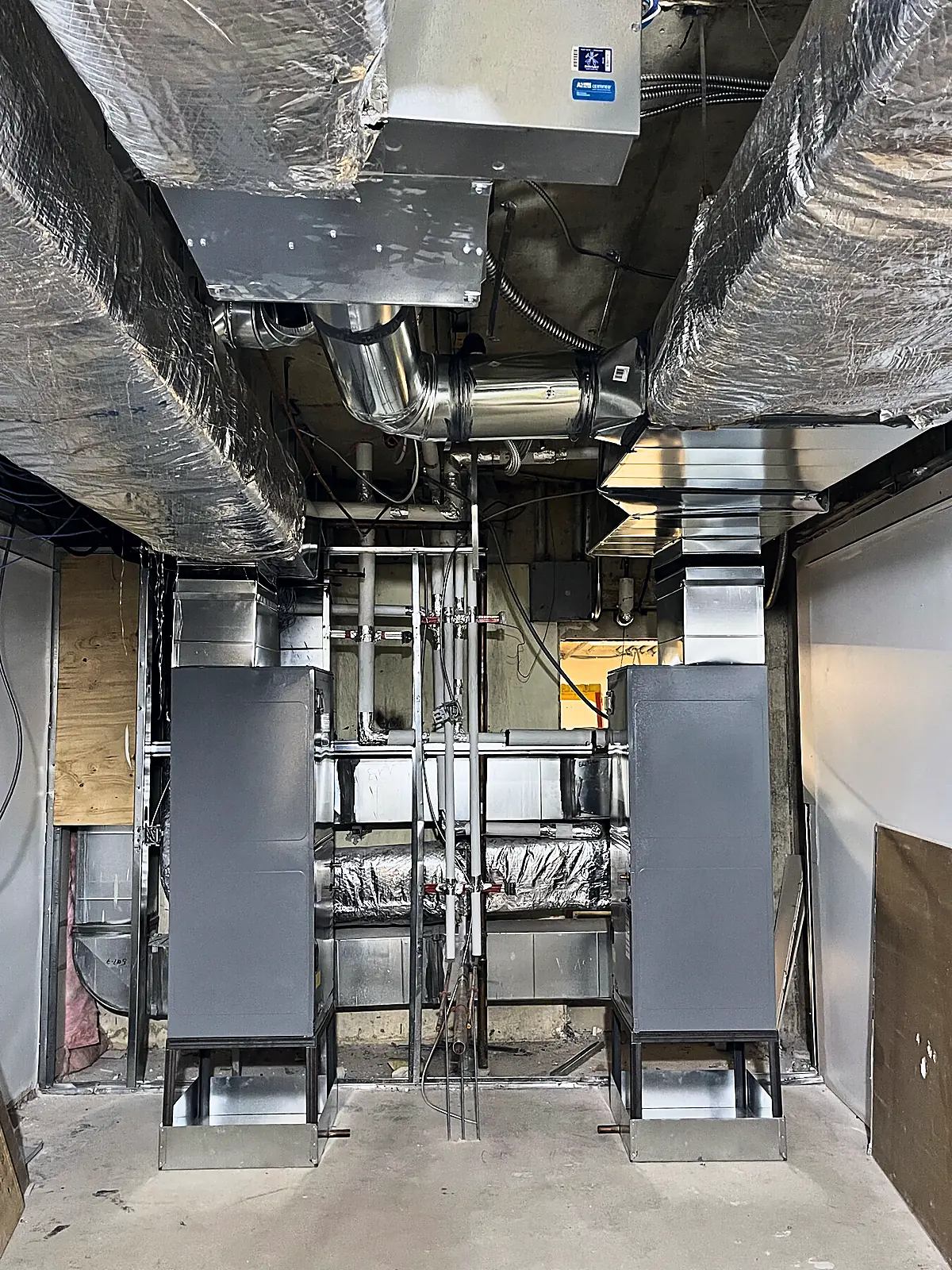
Fan-coil units and ductworkKelvin job photo
Fan-coil units and ductworkMechanical basement in an older building

Photos from Kelvin Mechanical jobs. Labelled illustrations stand in where no job photo exists yet.

Good to know

Condensing boilers, glycol and other design choices

Condensing versus conventional

A condensing boiler recovers extra heat from its exhaust only when return water is cool enough for the flue gas to condense. It suits in-floor loops and generously sized emitters. Older radiator systems that need hot water may see less benefit, so we review the emitters first.

Expansion tanks and system pressure

Water expands as it heats, and the expansion tank absorbs that growth. A waterlogged or wrongly pre-charged tank causes relief valve drips and pressure swings, so we check it at every visit.

Glycol cautions

Glycol protects exposed piping from freezing, but it moves heat less well than plain water and changes pump and expansion tank needs. It must be a boiler-rated, inhibited mix tested on a schedule, never automotive antifreeze. We add it only when the design calls for it.

Venting and combustion air

Condensing boilers use sealed plastic venting with a condensate drain. Conventional boilers usually depend on a chimney that is correctly sized and lined. Either way, combustion air and clearances are reviewed on site.

Light commercial and multi-unit buildings

Small apartment buildings, shops and other light commercial properties often run boilers too. See property management HVAC and commercial maintenance for how we approach larger sites. Some scopes need licensed trade partners, and we confirm that at the site review.

Boiler faults we diagnose

We start with the symptom and the boiler's display, then test before we replace anything. Here are the calls we see most often, and how urgent each one usually is.

  • No heat, or radiators and in-floor loops that stay cold
  • A boiler that locks out, or fires briefly and shuts off
  • Banging, gurgling or kettling noises
  • Pressure that is too high or too low, or a relief valve that drips
  • Cold radiators on one floor or zone while others heat, which can be trapped air, a circulator or a zone valve
  • Leaks at the boiler, pump flanges, valves or piping
  • Ignition and flame-sensing faults on gas boilers
  • Blocked condensate drains on condensing boilers

Act now: a gas smell, a carbon monoxide alarm, or water leaking near electrical equipment. Leave the building and call 911 or your gas utility from outside. Soon: no heat in cold weather, repeated lockouts or a steady leak. Can usually wait for a booked visit: a noisy circulator, uneven radiator heat or a slow pressure drop.

Help centre

Questions about Boilers / Hydronic Heating

Should I repair or replace my boiler?

A single worn part on a sound boiler is usually worth repairing. Heat exchanger leaks, repeated pump or control failures and parts that are no longer available often point to replacement. We explain both paths before you decide.

Is a condensing boiler right for my radiators?

It depends on the return water temperature your system needs. Condensing boilers perform well when return water stays low, which suits in-floor heat and larger emitters. We review the radiators and controls before recommending one.

Can a boiler heat air through ducts?

Yes, a hydronic air handler coil can heat air that moves through ductwork, and some homes combine radiant zones with a coil. It needs careful design of water temperature and flow, so we start with a site review.

How often should a boiler be serviced?

Once a year before the heating season is the usual interval, and the manufacturer's instructions come first. Service covers combustion, safeties, water level and pressure, circulators and venting.

Do you work on commercial boilers?

We handle boilers in light commercial buildings. Larger or specialized plants may need other licensed trade partners, which we confirm at the site review. Related scopes sit under Commercial / Mechanical.

How long does a boiler last?

A well-kept cast-iron boiler can run for many years, while modern condensing boilers have more electronics and are more sensitive to water quality and upkeep. Age matters less than condition. Leaks, corrosion, repeated pump or control failures and parts that are no longer available often decide the question. A site review gives you a practical view.

Why are my radiators cold at the top or not heating at all?

Trapped air is a common cause, and bleeding the radiator at its air vent may help. Other causes include low system pressure, a failed circulator or zone valve, closed valves or sludge in the system. If several radiators are cold or the boiler is locking out, call us rather than bleeding repeatedly.

Why is my boiler pressure too high or too low?

Normal pressure is shown on the gauge and depends on the system, rising a little when the water is hot. Low pressure suggests a leak or lost water, while high pressure or a dripping relief valve often points to an expansion tank problem or an overfilled system. Do not keep topping up without finding the cause.

What is the difference between a steam boiler and a hot water boiler?

A hot water boiler circulates heated water through radiators, baseboard or floor loops. A steam system boils water and sends steam through pipes to the radiators, with different controls, piping and safety needs. Some older Ontario buildings have steam. Tell us what you have, and we confirm at the site review whether the work suits us.

Can I add in-floor heating to my basement with a boiler?

Often yes, since a low-temperature loop can be fed from a boiler through mixing controls. It depends on the floor construction, insulation, heat load and the existing boiler capacity. Many Ontario basements have concrete slabs with little insulation underneath, which affects how the floor performs. A site review sorts this out.

Do I need a permit to replace a boiler in Ontario?

Boilers are regulated fuel-burning equipment in Ontario, larger units can also fall under pressure equipment rules, and permit needs depend on the unit, the fuel and the municipality. Rules differ by municipality and change, so we confirm what applies before work. Kelvin Mechanical works with licensed and qualified professionals and trade partners, depending on the project scope.

What fuels can a boiler use in Ontario?

Natural gas is common where the utility network reaches, with Enbridge Gas as the main utility. Propane and electric boilers are also used, and some older homes still have oil-fired units. Changing fuels affects venting, supply and storage, so it is a bigger project than a like-for-like swap. We review the fuel supply at the site review.

Do you repair boilers, including ones you did not install?

Generally yes, depending on the model and parts availability. We look at the boiler, controls and piping first, explain what we find and tell you whether a repair makes sense. A diagnostic fee may apply; confirmed at booking. Some scopes need licensed trade partners, which we confirm at the site review. Emergency service is subject to availability.

My boiler has no heat. What can I check before I call?

Confirm the thermostat is set to heat and above room temperature, and that the boiler's power switch and breaker are on. Write down any code on the display and the pressure gauge reading. Do not open the cabinet, bleed radiators repeatedly or keep refilling the system. If you smell gas, leave the home and call your gas utility or 911 from outside; if a carbon monoxide alarm sounds, get everyone outside and call 911. Otherwise call +1 905-407-7353. Emergency service is subject to availability.

What affects the cost of a boiler repair?

The fault, the part, how easily the boiler can be reached, the age of the system and whether parts are still available. We explain what we find and the options before any approved work, and a repair price follows the diagnosis.

Why has my boiler locked out or shown a fault code?

A lockout or fault code means the safety controls have stopped the boiler from firing. Check that the thermostat is calling for heat, the power is on and the pressure is within the range marked on the gauge. Reset it once at most, following the manual. If it locks out again, or you smell gas, leave it off and call a registered gas contractor.

What should I do if my boiler is leaking?

Turn off power to the boiler and, if you can do so safely, shut the water supply to the system. Place a container under the leak and keep people away from hot water or steam. Call us promptly, because the cause may be a failed valve, fitting, pump seal or the heat exchanger itself. Emergency service is subject to availability.

Quote and booking

Request: Boilers / Hydronic Heating

Share a few details and we will follow up. A written quote comes after a site review. There is no online checkout.

  • City and service type help us route your request
  • Urgency and property details let us prepare properly
  • Optional equipment photos speed up repairs and replacements

Prefer to talk? +1 905-407-7353

Gas smell or carbon monoxide alarm? Leave the building and call 911 first. Do not use this form.