
Safety first
- Gas smell: if you smell gas anywhere in the house, for example near a gas furnace that backs up the heat pump, leave without touching switches and without using a phone inside, then call your gas utility's emergency line (for many homes, Enbridge Gas) or 911 from outside.
- CO alarm: get everyone out, including pets, and call 911 from outside. Stay out until responders say it is safe.
- Never remove burner or gas valve covers on a backup furnace, and never open the electrical panels on the outdoor unit.
- Hands off the fan. Switch off power at the outdoor disconnect before you clear anything near the fan, and never push sticks or tools through the fan guard.
What a normal defrost looks like
In heating mode the outdoor coil runs colder than the outside air, so around freezing, especially in damp weather, moisture freezes on it as frost. Every so often the heat pump reverses briefly to warm the coil and melt it off. That is the defrost cycle, and it is supposed to happen.
- The outdoor fan stops while the compressor keeps running
- A whoosh as the system switches direction, and again when it switches back
- Steam rising from the unit, often mistaken for smoke, and water dripping from the coil
- Indoors, the air may feel cooler briefly, or backup heat may come on
- After a few minutes, normal heating resumes
Light, even frost that comes and goes is normal. The coil should be mostly clear after each defrost.
Signs the ice is a problem
- The coil is encased in solid ice that does not clear after a defrost
- Ice on the top panel or fan guard, or the fan blade touching ice
- The outdoor fan does not turn while the unit runs
- Ice building up from the base because meltwater cannot drain
- The house is not keeping up, or backup heat runs far more than usual
Safe checks you can do
Work through these in order and note what you see.
- Watch for a defrost. With the thermostat on Heat, give the unit time to run a defrost cycle. If the frost clears, it is working.
- Clear snow by hand. Brush snow off the top and sides with a soft broom or your hands, and never pile shovelled snow against the unit.
- Check drainage. Meltwater must drain away under the unit. Clear loose snow around the base so it can escape.
- Look up. Water dripping from a gutter or roof edge freezes on the top and fan guard. Note it; a gutter fix or deflector usually solves it.
- If it is a solid block, switch it off. Turn the heat pump off at the thermostat, or switch to emergency heat if your thermostat has it, and let the ice melt on its own. Some manufacturers allow gentle rinsing with lukewarm water with the power off; check your manual first.
- Never chip at the ice. Do not use a shovel, ice pick, scraper, heat gun or open flame. The fins and refrigerant tubes are thin, and a puncture means a refrigerant leak.
Using backup heat while you wait
Many heat pumps have backup heat: electric elements in the air handler, or a gas furnace in a hybrid system. Emergency heat mode runs the backup only and keeps the outdoor unit off, which is right when it is iced solid or the fan is not turning. Auxiliary heat is different: it adds backup heat while the heat pump keeps running, including during defrost. Electric backup costs more to run, so treat it as a bridge until a repair.
If you have no backup heat and the house is cooling down in very cold weather, see emergency heating and cooling; emergency service is subject to availability.
Likely causes and how urgent they are
Frost and steam during defrost: not a fault
Normal operation in cold, damp weather. No action needed.
Buried in snow: low urgency
Clear it by hand and keep the space around the unit open.
Roof water dripping onto the unit: plan a fix
Ice on the top and fan guard keeps coming back. Fix the gutter or add a deflector suited to the unit.
Poor drainage or unit too low: plan a fix
Ice builds from the base up. Raising the unit on a stand or pad helps meltwater drain.
Defrost control or sensor fault: book a repair
The coil ices solid and never clears. A sensor, control board or reversing valve issue needs testing.
Outdoor fan not turning: book a repair
Switch the unit off to protect the compressor and use backup heat until it is checked.
Low refrigerant from a leak: book a repair
Patchy or heavy icing with weak heat. Refrigerant work needs a technician with the required Ontario refrigerant training.
When to call
Call if the coil stays iced solid after you have cleared snow and given it time to defrost, if the fan will not turn, if ice keeps returning on the top of the unit, or if you have switched to backup heat and need the outdoor unit back. Our heat pump repair page explains what the visit covers. A fall heat pump maintenance visit checks the defrost controls, drainage and clearances before the snow arrives.
The cost depends on the cause, and a quote follows a diagnosis. A diagnostic fee may apply; it is confirmed at booking.
What to tell us when you call
- The model and serial number from the nameplate on the outdoor unit, and from the indoor unit or furnace
- What the ice looks like and where it is: coil, top, fan guard or base
- Whether the outdoor fan turns and whether you have seen a defrost cycle
- Any error light or thermostat message
- What you already tried, including switching to backup heat
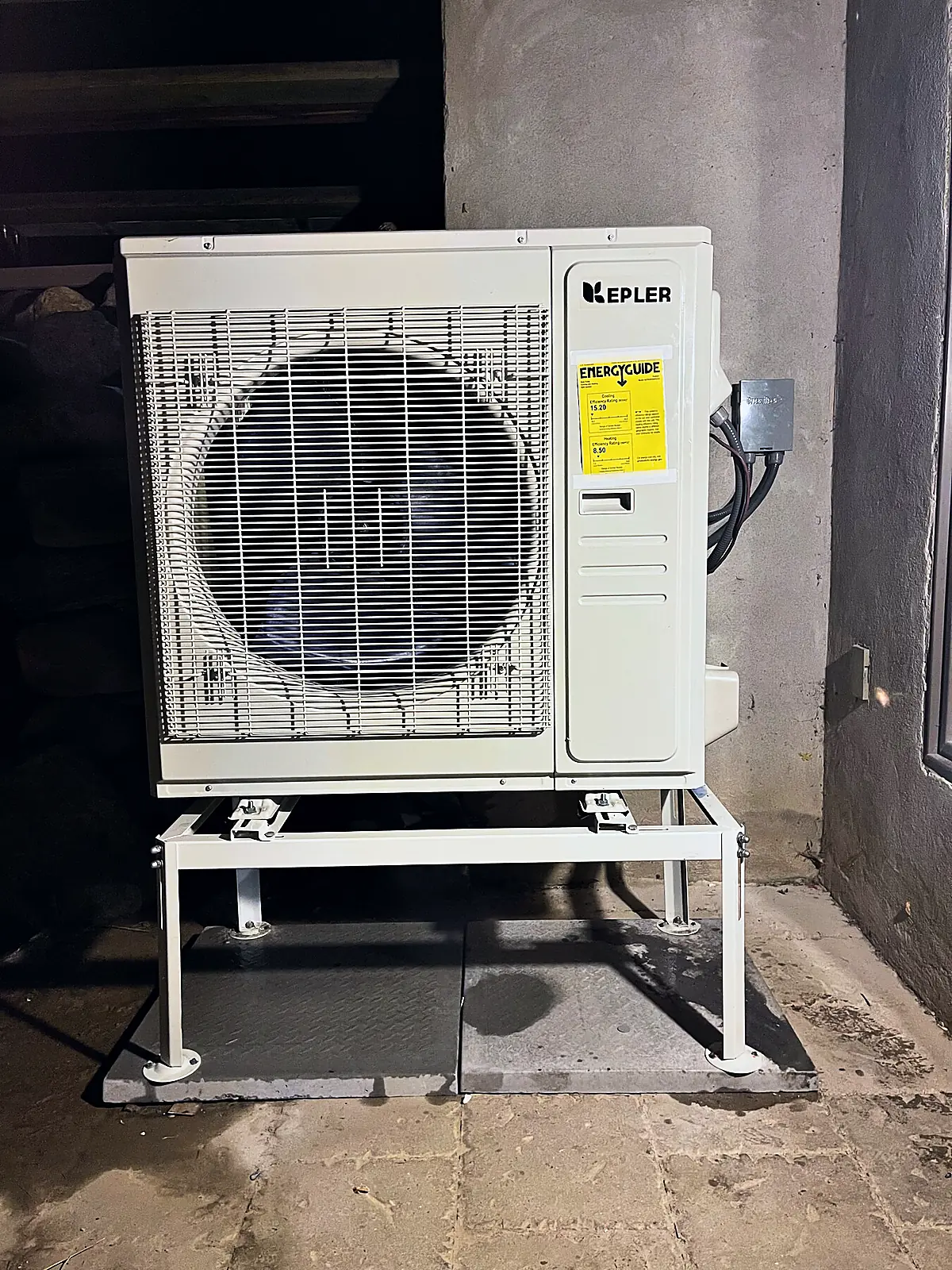
- Photos of the outdoor unit from the front and above, and of the area around the base