
Solar consultation
Solar Panel Consultation and Grid-Tied Systems in Ontario
Solar starts with a consultation, a roof and site review and a check of your electrical capacity. Kelvin Mechanical explains grid-tied options, inverters and batteries in plain terms before any design is quoted.
- Starts withConsultation and roof review
- System typeGrid-tied, battery where applicable
- ElectricalCoordinated with licensed professionals
 Serving the GTA and nearby Ontario
Scope
What a solar consultation covers
- Consultation on your goals, usage patterns and whether solar suits the property
- Roof and site review: orientation, shading, roof condition, structure and access
- Electrical capacity review of the main panel, service size and breaker space
- Grid-tied system layout, with panel and inverter options explained side by side
- Battery options where applicable, with a clear view of what backup can and cannot do
- Net metering basics, with local utility rules confirmed before you decide
- Coordination with licensed electrical professionals or trade partners for the electrical work
- Permits, ESA notification and utility connection steps where required
Process
From first call to a connected system
Every job starts with a conversation and a look at the equipment. You see the options in plain language before anything is booked.
- 1
Consultation
We talk through your goals, how you use energy and any plans for a heat pump or an EV charger. This tells us whether solar deserves a closer look before anyone climbs a roof.
- 2
Roof and site review
We check roof age and condition, orientation, shading from trees or neighbouring buildings, and how panels would attach. If the roof needs work first, we say so up front.
- 3
Electrical capacity and design
The main panel, service size and space for new breakers decide how a system connects. The design shows the panel layout, the inverter type and, where applicable, a battery.
- 4
Approvals and installation
A grid-tied system needs approval and a connection arrangement with your local utility before it is switched on. The roof work, electrical work, permits and ESA notification where required are coordinated so the trades follow one plan.
- 5
Commissioning and handover
After inspection and utility approval, the system is commissioned and monitoring is set up. You receive a walkthrough of the app, the shut-off points and what normal operation looks like.
In pictures
What this work looks like
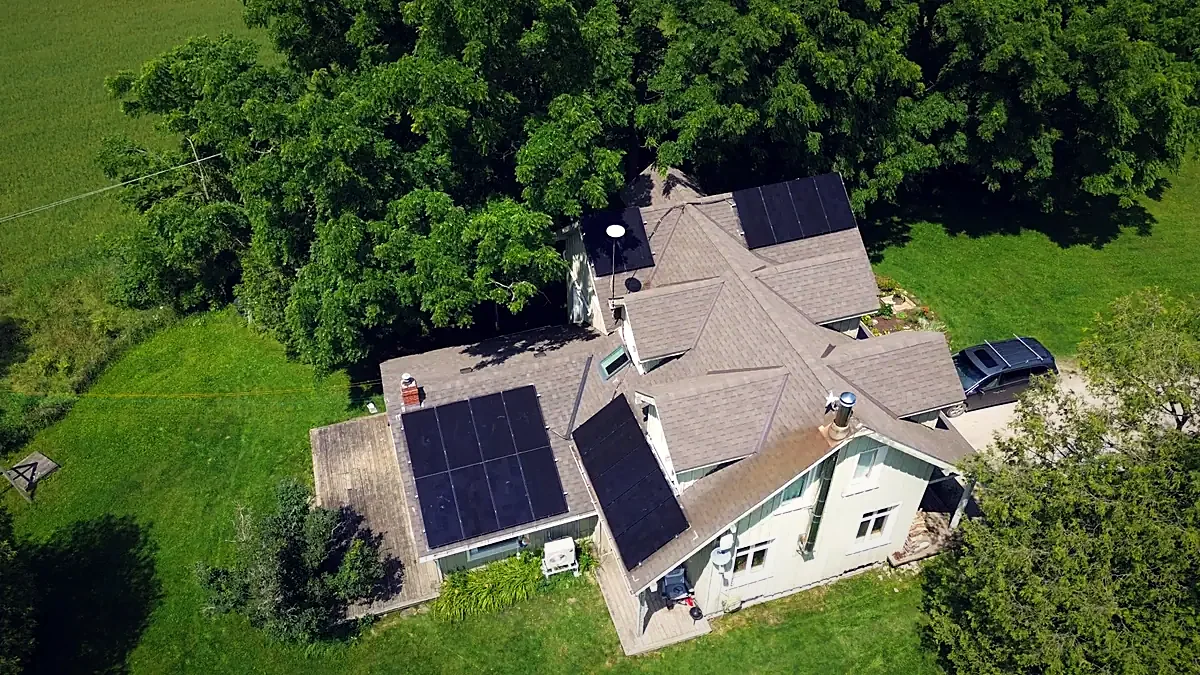
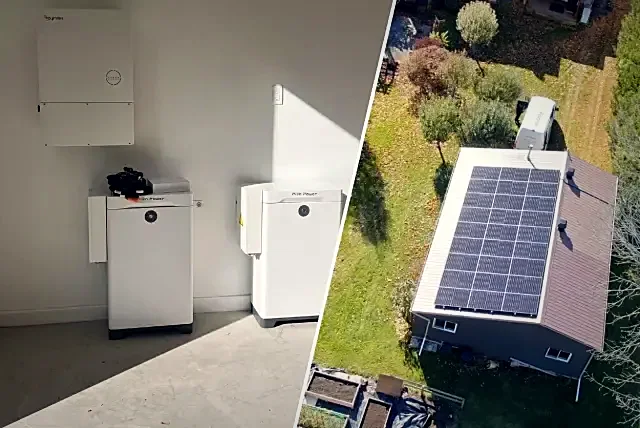
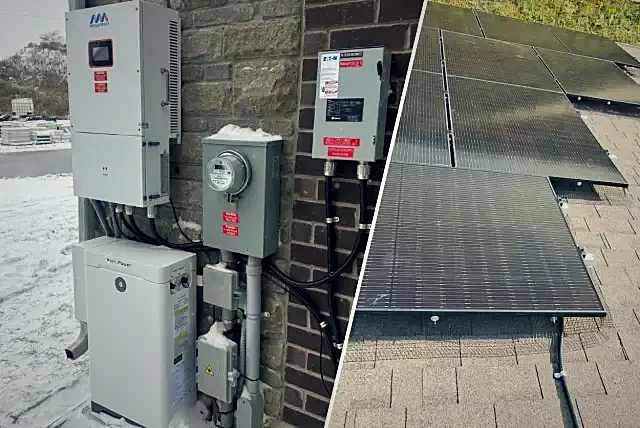
Illustrations and sample pictures. Real Kelvin Mechanical job photos are added as they are collected.
Good to know
Solar equipment and grid questions, in plain terms
Panels and inverters
Panels produce DC power, and an inverter converts it to AC for the home. String inverters serve a group of panels, microinverters sit behind each panel, and optimizers add panel-level control to a string system. Each has trade-offs in shade tolerance, monitoring and service access, and availability changes with supply.
Battery options
A battery can store solar energy for later use and, if the system is designed for it, supply selected circuits during an outage. A battery does not automatically run the whole house. Backup depends on the design, the loads you choose to protect and the equipment.
Grid-tied and net metering
Grid-tied systems stay connected to the utility. In Ontario, net metering is arranged through your local distribution utility. Eligibility and how credits are applied come from provincial regulation and Ontario Energy Board rules, and the utility applies them. Confirm the current rules before you decide, because they can change.
Electrical capacity and other loads
A heat pump, EV charger or electric water heater changes how much capacity your panel has left. Planning these together avoids an undersized panel later. See panel and circuit planning.
What we do not promise
We do not quote production, savings or payback figures before a site review. Results depend on your roof, shading, usage, utility rules and the equipment chosen. Equipment availability changes, so specific models are confirmed at the quote stage.
Ontario notes
Solar notes for Ontario homes
Snow, ice and short winter days
Ontario winters shorten the solar day, and snow can cover panels for a while. Roof pitch, shading from trees and the way snow slides off all affect winter output. The roof must also carry the extra load of panels plus snow, so the structure is part of the review, not an afterthought.
Net metering and your local utility
In Ontario, net metering and connection are arranged through your local electricity distribution utility. Eligibility and credit rules come from provincial regulation and Ontario Energy Board rules, and the utility applies them. Rules can change, so confirm the current ones before you decide. We help you ask the right questions, but the utility makes the connection decision.
Permits, roof structure and electrical safety
Rooftop solar may need a municipal building permit, an electrical permit or inspection, and a utility connection agreement. Requirements differ by municipality and change over time. The electrical work is completed by licensed electrical professionals or trade partners, with permits and ESA notification where required, and we confirm the permit steps and who arranges them at the quote stage.
Help centre
Questions about Solar Panels
Is my roof suitable for solar?
It depends on orientation, shading, condition, structure and remaining life. A roof review answers this better than a rule of thumb, and an older roof may need work before panels go on.
Do I need a battery?
Not necessarily. Many grid-tied systems run without one. A battery is worth discussing if you want backup for chosen circuits, and the design decides what it can power.
How does net metering work in Ontario?
Net metering lets a customer's generation offset their electricity use through an arrangement with the local utility. Eligibility and how credits are applied come from provincial regulation and Ontario Energy Board rules, and your local utility applies them and handles the connection. The rules can change, so we help you confirm the current rules and your utility's process before you decide.
Will my panel handle solar?
A review of the main panel, service size and breaker space comes first. Some homes need panel work for solar, particularly if a heat pump or EV charger is also planned.
Who does the electrical work?
Licensed electrical professionals or trade partners complete the electrical work, with permits and ESA notification where required. In Ontario, anyone hired to do electrical work in a home must be a Licensed Electrical Contractor. Kelvin Mechanical coordinates the schedule and the scope. Use Build My Quote to start the conversation.
Do solar panels work in an Ontario winter?
Yes, they still produce power, but output is lower on short, cloudy days and when snow covers the panels. A tilted roof sheds snow more easily, and cold, clear days can suit panels well. Never climb onto a snowy roof to clear panels. We review roof pitch, shading and snow behaviour in the roof and site review.
Is solar worth it for an Ontario home?
It depends on your roof, shading, electricity use, goals and the utility's current rules. We do not quote production, savings or payback figures before a site review, and results are not promised. A consultation helps you see whether solar suits the property, and whether another upgrade should come first.
Will solar panels power my house during a blackout?
Not by default. A standard grid-tied system without a battery shuts down when the grid goes out, for safety reasons. Backup needs a system designed for it, usually with a battery and selected circuits connected. A battery does not automatically run the whole house, so decide which loads matter to you, then ask for that design.
How long does solar approval and utility connection take in Ontario?
It depends on your local utility, the permit and inspection steps, and the design. We cannot give a fixed timeline before a site review. A grid-tied system needs approval and a connection arrangement before it is switched on, so ask early. We coordinate the trades so the roof work, electrical work and paperwork follow one plan.
Should I replace my roof before installing solar panels?
If the roof is near the end of its life, it is often sensible to deal with it first, because panels have to be removed and reinstalled for later roof work. The roof and site review looks at age, condition, structure and access. If the roof needs work, we say so up front.
Do I need to tell my home insurer about solar panels?
It is wise to ask. Insurers may want to know about rooftop equipment, battery storage and the electrical work behind them. Check your policy before installation and keep the permit, inspection and equipment records. We cannot speak for your insurer, so call your broker or insurer once the design is settled.
Do solar panels need maintenance in Ontario?
Light upkeep, mainly. Panels have no moving parts, but you should watch the monitoring app, keep nearby trees trimmed and have connections and the inverter checked from time to time. Never climb onto a snowy or icy roof. Warranties for panels, inverters and workmanship are separate, so keep each document.
Where we do this work
Solar Panels in Toronto, the GTA and Hamilton
Toronto Mississauga Brampton Vaughan Markham Oakville Burlington Hamilton All service areas
Quote and booking
Request: Solar Panels
Share a few details and we will follow up. A written quote comes after a site review. There is no online checkout.
- City and service type help us route your request
- Urgency and property details let us prepare properly
- Optional equipment photos speed up repairs and replacements
Prefer to talk? +1 905-407-7353
Gas smell or carbon monoxide alarm? Leave the building and call 911 first. Do not use this form.