
Safety first
- Gas smell: if you notice a rotten-egg or sulphur smell, leave the house without touching switches or the thermostat and without using a phone inside, then call your gas utility's emergency line or 911 from outside. Enbridge Gas serves many Ontario homes; the number is on your bill.
- CO alarm: if a carbon monoxide alarm sounds, get everyone out, including pets, and call 911 from outside. Stay out until responders say it is safe.
- Stay out of the burner compartment. Never remove burner or gas valve covers or take apart the igniter or flame sensor; they sit beside the gas valve and live wiring.
Safe checks you can do
Go through these in order and write down what you notice.
- Fan setting: ON versus AUTO. With the fan set to ON, the blower runs between heating cycles too, moving room-temperature air that feels cold on your hand. Set it to AUTO and check again while the furnace is heating.
- Mode and set point. The thermostat should say Heat, with the set point a few degrees above room temperature.
- Warm-up and cool-down. The blower starts shortly after the burners light and keeps running after they stop, so the air can feel cool at both ends of a cycle. Give it several minutes before deciding it is blowing cold.
- Filter. A clogged filter makes the furnace overheat; a limit switch shuts the burners off while the blower keeps running, which feels exactly like cold air. Replace it with the right size.
- Registers and returns. Open supply registers and keep return grilles clear. Closing many registers can cause the same overheating trip.
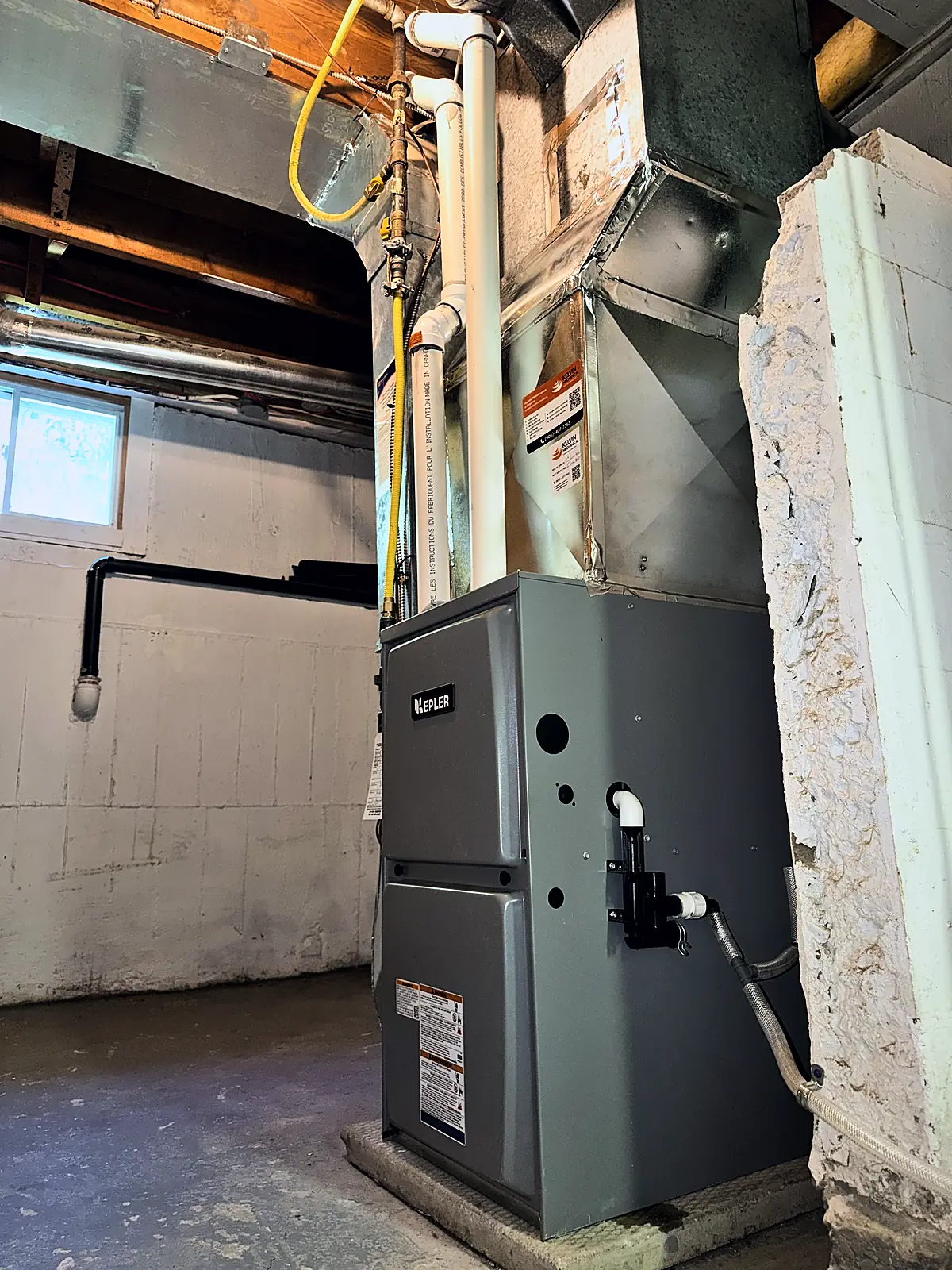
- Outside vent pipes and drain (high-efficiency furnaces). If snow, ice or debris blocks the plastic pipes outside, or the condensate drain backs up, a pressure switch stops the burners. Clear the pipes gently by hand and look for water around the furnace.
- Error light. Write down the flash pattern on the control board light. The code chart, which varies by brand, is usually inside the panel door.
- Other gas appliances. If the stove or gas water heater has also stopped, contact your gas utility rather than adjusting valves yourself.
Why the burners may not light or stay lit
A gas furnace starts in sequence: the inducer fan clears the heat exchanger, a pressure switch confirms the vent is open, the igniter glows or sparks, the gas valve opens and a flame sensor confirms the flame. If any step fails, the gas valve closes. After a few tries many furnaces lock out for a while, sometimes with the blower still running, which you feel as cold air.
A dirty flame sensor is a common culprit: the burners light, then shut off a few seconds later. A worn igniter, weak inducer or sticking pressure switch cause similar symptoms. All of these sit in the burner area, so note the pattern and the code rather than dismantling anything.
When warm air is lost in the ducts
If most registers are warm but one or two blow cool air, the furnace may be fine and the ducts may be the problem. Supply ducts that run through an unheated garage, crawl space, attic or exterior wall lose heat fast in an Ontario winter, and a joint that has pulled apart can dump warm air into a cold space. Rooms over garages and in additions are the usual suspects.
You can look at the ducts you can see in an unfinished basement for sections that have come apart, and note which rooms are affected. Fixing it properly means reconnecting, sealing and sometimes insulating ducts, or rebalancing the system, which is part of a repair or furnace maintenance visit.
Likely causes and how urgent they are
Fan set to ON: low urgency
The blower runs between heating cycles and moves cool room air. Switch to AUTO. No visit needed.
Normal warm-up or cool-down: not a fault
A short burst of cool air at the start or end of a cycle is normal operation.
Dirty filter and overheating: moderate
The limit switch cuts the burners to protect the furnace. Replace the filter; if trips continue with a clean filter, book a check.
Blocked vent pipes or drain: moderate to urgent
Clear outside pipes by hand. In cold weather, a furnace that keeps stopping for this reason needs attention soon.
Ignition or flame sensor fault: book a repair
Burners light and drop out, or never light. These parts are next to the gas valve and need a technician.
Leaky or uninsulated ducts: plan a repair
Cold air at only a few registers, often in rooms over a garage or in an addition. Comfort issue first, energy cost second.
When to call
Call if the air is still cold after you have set the fan to AUTO, replaced the filter and cleared the outside pipes, if the error light shows a flame or ignition code, or if the furnace locks out more than once. Book through furnace repair. If the house is losing heat in very cold weather, see emergency heating and cooling; emergency service is subject to availability.
The cost depends on the cause, and a quote follows a diagnosis. A diagnostic fee may apply; it is confirmed at booking.
What to tell us when you call
- The furnace model and serial number from the nameplate inside the lower door or on the side of the cabinet
- The error light pattern, and whether the burners light at all, light and go out, or never try
- Whether every register is cool or only some rooms
- What you already tried: fan setting, filter, outside pipes, one reset
- Photos of the nameplate, the thermostat screen and the outside pipes