
Commercial ventilation
Commercial Ventilation: Exhaust Fans, ERV/HRV Basics and Fresh Air Balancing
Exhaust fans, ERV/HRV units and fresh air paths for offices, washrooms, shops and garages, installed, repaired and balanced so supply and exhaust actually match.
- ScopeInstall, repair and maintain
- EquipmentExhaust fans, ERV/HRV, fresh air
- SpacesOffices, washrooms, shops, garages
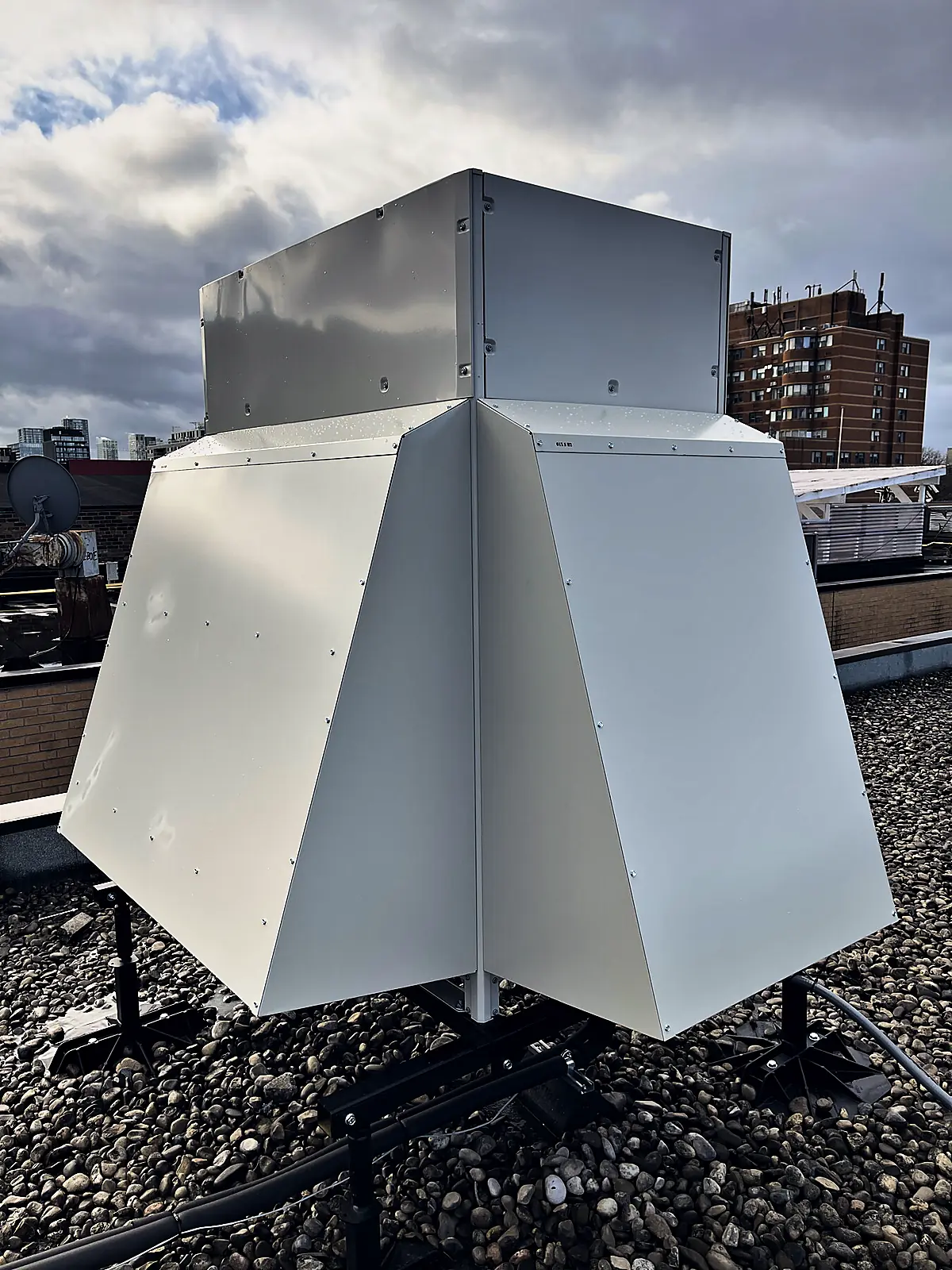 Serving the GTA and nearby Ontario
Scope
Ventilation work, equipment and spaces
- Inline, wall and roof exhaust fan replacement and service for washrooms, storage and shop areas
- ERV/HRV core, filter, defrost and condensate drain service on light commercial units
- Fresh air supply ducting to rooftop units or ventilation units, with dampers and controls
- Washroom exhaust paths with make-up air through transfer grilles or door undercuts
- Garage and shop ventilation reviewed for the way vehicles and equipment are used
- Timer, occupancy sensor and switch controls for demand-based exhaust
- Airflow measurement with damper or pulley adjustment to balance supply against exhaust
- Duct leakage, insulation and weatherhood checks that affect real airflow
Process
Working through a ventilation job
Every job starts with a conversation and a look at the equipment. You see the options in plain language before anything is booked.
- 1
Find out how each room is used
Washrooms, storage, break rooms, shops and offices all need different air. We ask about occupancy, activities, odours, moisture and any equipment that exhausts air.
- 2
Measure what is moving now
We check fan operation, ducts, dampers and weatherhoods, then measure airflow where possible. Many ventilation complaints come from a blocked duct or a stuck damper, not a failed fan.
- 3
Choose fan, ERV/HRV or fresh air path
A fan solves exhaust. An ERV or HRV recovers energy from the exhaust to temper incoming air, while a fresh air path through a rooftop unit adds load to that unit. The choice follows the use of the space and the code.
- 4
Install, seal and control
Ducts are sealed and insulated where needed, weatherhoods are fitted, and controls are set so the system runs only when it should. Electrical connections follow the project scope.
- 5
Balance and record
Supply and exhaust airflows are measured and adjusted so the building is not left heavily negative or positive. Readings and settings go into the service note.
Interactive
Make-up air balance
How much make-up air comes in compared with the air your exhaust fans push out?
Simplified picture of building pressure. We measure airflow and pressure on site before proposing changes.
In pictures
What this work looks like
 Kelvin job photo
 Kelvin job photo
 Kelvin job photo
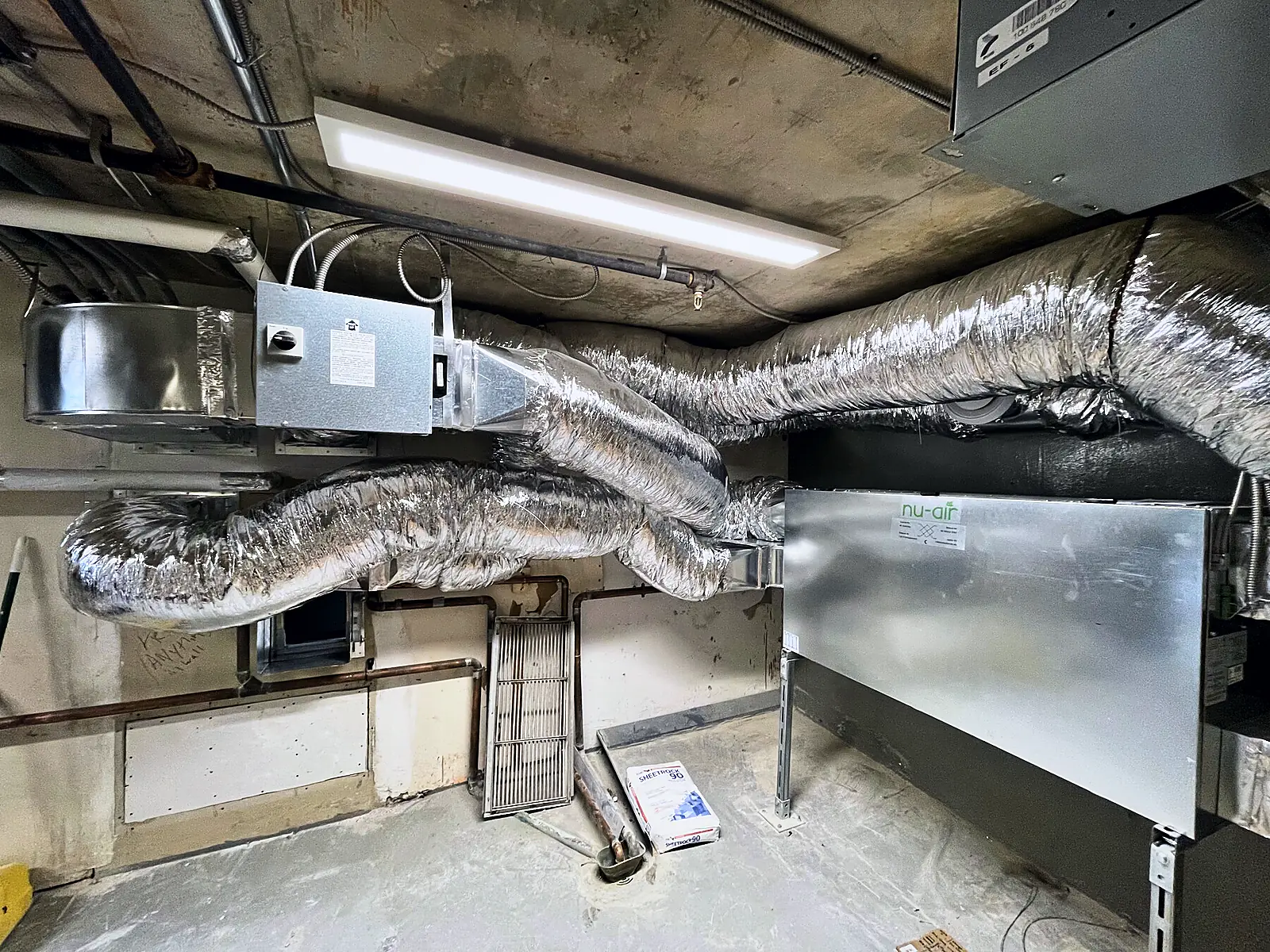
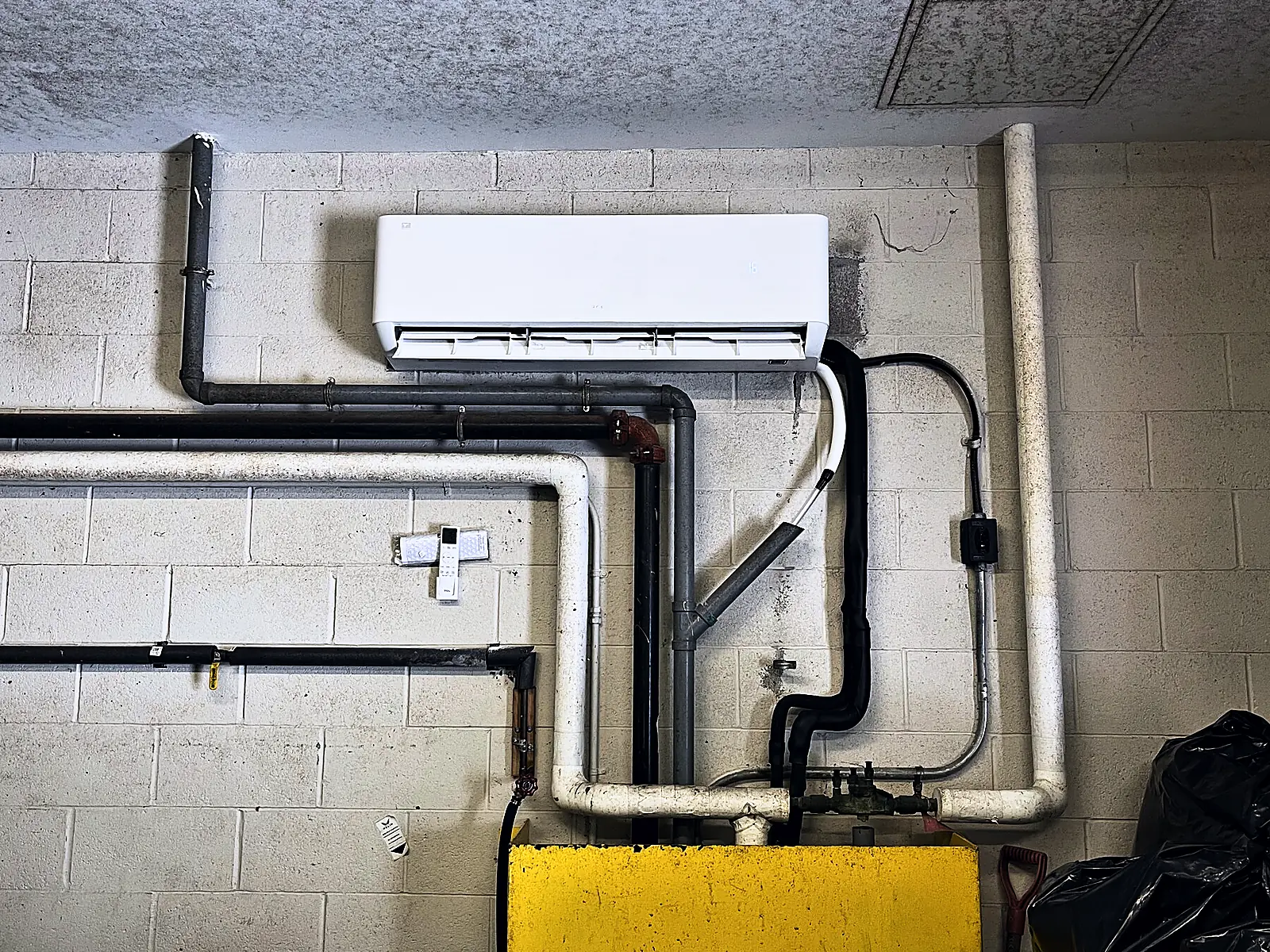
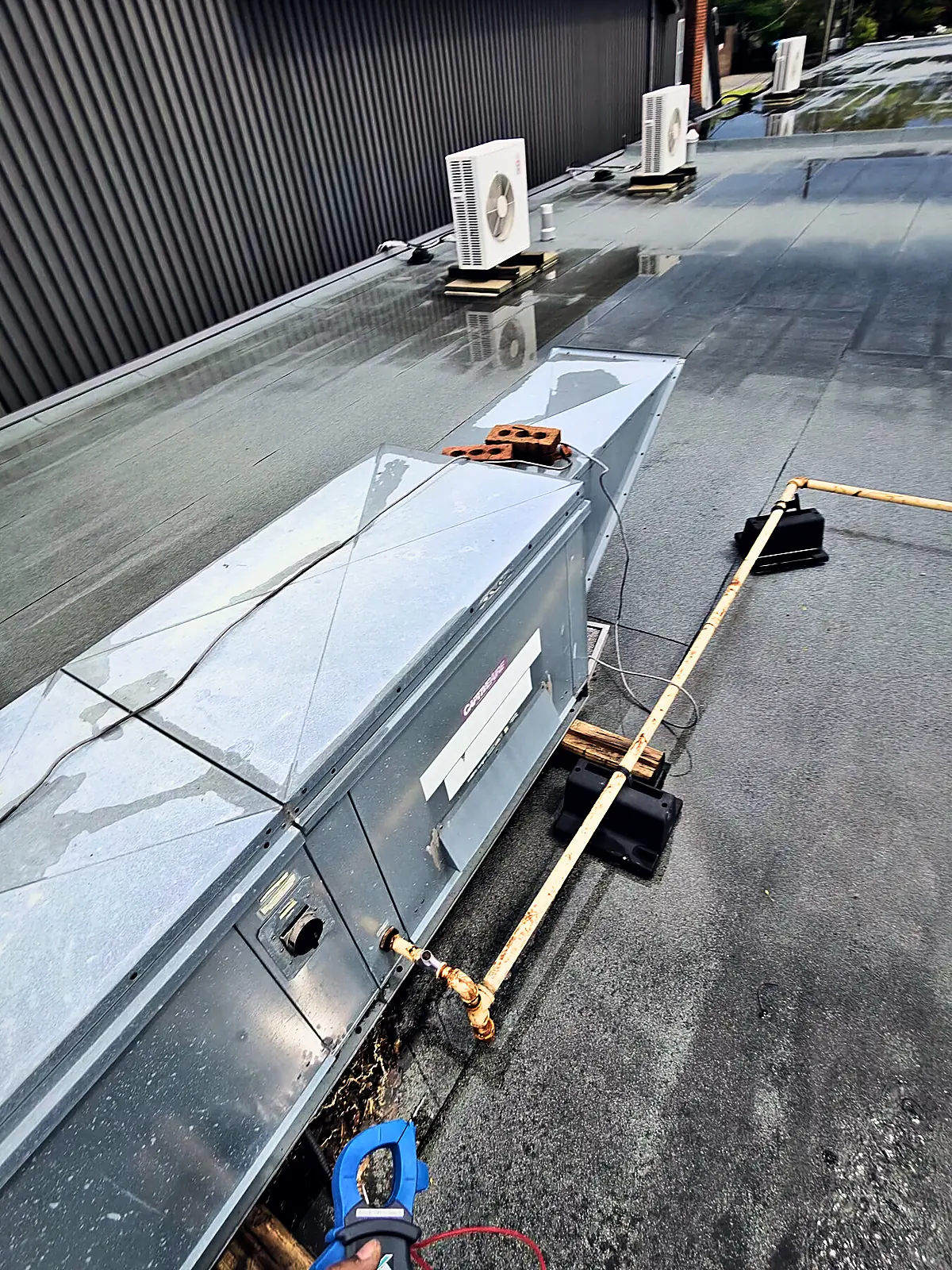
Photos from Kelvin Mechanical jobs in the GTA and nearby Ontario.
Good to know
Ventilation options and their trade-offs
Exhaust-only fans
Simple and economical to install, but they pull make-up air through leaks, doors and cracks. In a tight building that can mean drafts and weak exhaust performance.
HRV versus ERV
An HRV transfers heat between the exhaust and supply streams. An ERV also transfers some moisture. Defrost, filters and condensate drainage matter in Ontario winters, so units are chosen for the building's use and humidity.
Fresh air through an RTU
Outdoor air brought through a rooftop unit is heated or cooled by that unit, so airflow and equipment capacity must allow for it. Economizer and damper settings are checked at the same time.
Shops and garages
Where vehicles or equipment run indoors, fume control is a safety matter, not a comfort matter. We service fans and make-up air, and sizing for capture and fume control is confirmed against the applicable code and, where needed, a designer's specification.
Install, repair, maintain
Installation: fans, ERV/HRV and fresh air paths
New work starts with how each room is used, then fans, ducts and controls are matched to it. Balancing readings are recorded at start-up.
Repair: motors, dampers, controls and ducts
A weak exhaust or stale air often traces to a stuck damper, loose belt, failed motor or disconnected duct. We find the actual cause before parts are ordered.
Maintenance: filters, cores and weatherhoods
Planned visits clean or replace ERV/HRV filters, check cores, drains and defrost, and clear weatherhoods and screens. Written notes keep a record.
Sizing comes from use, not square footage alone
Required outdoor air depends on occupancy, activity and the code that applies to the building. We do not size ventilation by floor area alone. For kitchens, see kitchen ventilation support.
Ontario notes
Ventilation notes for Ontario buildings, winters and humid summers
Tight buildings and older plazas
Renovated shops and offices are often sealed tighter than older buildings, so exhaust fans can starve for air. Older plazas may still have original ductwork and fresh air paths that no longer match the use. Reviewing the air path first avoids adding a fan that cannot move air.
Winter intake air and defrost
Winter intake air in Ontario can be very cold and dry. Ventilation equipment needs frost protection, clean filters and a working damper so cold air does not cause icing, drafts or nuisance trips. ERV and HRV cores and drains are checked before winter.
Building code and ventilation rates
The Ontario Building Code sets ventilation expectations that vary with how a space is used. Offices, washrooms, shops and garages have different requirements, and a designer's drawings or the municipality may specify them. We confirm what applies rather than assume a number.
Humidity in summer
Hot, humid summers bring moisture into the building with fresh air. An ERV can help limit some of that, while a straight exhaust fan cannot. Storage rooms, basements and below-grade spaces need extra care, and the humidity source is checked before equipment is recommended.
Help centre
Questions about Commercial Ventilation
What is the difference between an ERV and an HRV?
Both recover energy from outgoing air to temper incoming air. An HRV transfers heat only, while an ERV transfers heat and some moisture. The better fit depends on the building's humidity, use and climate.
Can you add fresh air to an existing rooftop unit?
Often, yes, through a fresh air duct, damper and controls. The unit must have capacity to heat or cool the added air, which we confirm before quoting.
Why do my washrooms smell even with an exhaust fan?
Common causes are a weak or blocked fan, a disconnected duct, a stuck backdraft damper or no make-up air path. A quick airflow check separates these.
Do you ventilate garages with running vehicles?
We service and replace fans and make-up air, but ventilation for vehicle exhaust is a safety matter governed by code. We confirm the requirements and may suggest a designer or another trade before work begins.
How often should ventilation equipment be serviced?
It depends on the equipment and the environment. Fans and ERV/HRV units are usually checked on a seasonal rhythm. See commercial maintenance for how visits are planned.
Do ERV and HRV units need defrost in cold Ontario weather?
Often, yes. When very cold outdoor air meets warm, moist exhaust air, the core can ice up. Units use a defrost cycle, a bypass or a pre-heat to manage that. Defrost settings, condensate drains and filters are checked in the fall. The right unit depends on the building's humidity and use.
How much fresh air does a small office need?
It depends on how many people use the space, what they do and the code that applies. Ventilation is not sized by floor area alone. A designer or the building's drawings may set the requirement. We start with how the space is used, check what the current system delivers and explain the options.
Why do rooms in my office feel stuffy?
Stuffy air can come from low outdoor air, closed or stuck dampers, dirty filters, unbalanced airflow or a crowded space. A visit measures what the system actually moves and checks controls and schedules. Fixing the cause works better than turning the thermostat down. Send details through Build My Quote.
Do I need a permit to add an exhaust fan in a commercial space?
Sometimes. A new fan may involve a duct opening through a wall or roof, electrical work and, in some cases, a mechanical or building permit. Landlord approval is often needed. Rules differ by municipality and change, so we confirm what applies in the written scope before work begins.
Can ventilation fix a damp or musty storage room?
It can help, but it depends on the source of the moisture. Leaks, poor drainage and humid summer air all play a part. Exhaust, fresh air and dehumidification each do different jobs. We look at the room, the airflow and the likely source before recommending anything, and we do not promise results.
How do I stop cold drafts from a ventilation fan in winter?
Drafts often come from a backdraft damper that sticks open, a damaged weatherhood or an uninsulated duct. A clean damper that closes fully and an insulated duct usually help. If the fan runs when it does not need to, a timer or an occupancy sensor can cut unnecessary run time.
What is a transfer grille and why do washrooms need one?
A transfer grille or door undercut lets air move from a room into the washroom so the exhaust fan has air to pull. Without that path, doors can be hard to open and the fan works poorly. We check the air path as part of any washroom exhaust call.
Should commercial ventilation run all day?
That depends on occupancy and the code that applies to the building. Many spaces need ventilation whenever people are inside, while storage rooms and some washrooms can run on timers or sensors. We review how the building is used, set the controls to match and write the schedule down.
Where we do this work
Commercial Ventilation in Toronto, the GTA and Hamilton
Toronto Mississauga Brampton Vaughan Markham Oakville Burlington Hamilton All service areas
Quote and booking
Request: Commercial Ventilation
Share a few details and we will follow up. A written quote comes after a site review. There is no online checkout.
- City and service type help us route your request
- Urgency and property details let us prepare properly
- Optional equipment photos speed up repairs and replacements
Prefer to talk? +1 905-407-7353
Gas smell or carbon monoxide alarm? Leave the building and call 911 first. Do not use this form.