
Annual furnace tune-up
Annual Furnace Maintenance for Safe, Steady Winter Heat
A furnace check should be more than a filter swap. We inspect burners, ignition, venting and safety controls, then measure airflow and temperature rise so small problems are caught before a cold night.
- ScopeGas furnace inspection and tune-up
- TimingIdeally before the heating season
- ReportShort summary after the visit
 Serving the GTA and nearby Ontario
Scope
What the furnace maintenance checklist covers
- Heat exchanger visual inspection for corrosion, cracks and soot, where access allows
- Burner and ignition check: flame pattern, igniter condition and gas valve operation
- Flame sensor cleaning and flame signal test
- Pressure switch and inducer operation, with vent and intake pipe inspection
- Condensate trap, drain line and condensate neutralizer check (where fitted) on condensing furnaces
- Blower motor, blower wheel and capacitor check, plus filter condition
- Temperature rise measured against the furnace rating plate
- Gas pressure check where applicable, and a test of limit and rollout safety controls
Process
How the maintenance visit runs
Every job starts with a conversation and a look at the equipment. You see the options in plain language before anything is booked.
- 1
Look and listen first
We ask about noises, uneven rooms or past shutdowns, then watch a full start-up sequence before touching anything. The way a furnace starts says a lot about its condition.
- 2
Clean and inspect
Burners, flame sensor and igniter are inspected and cleaned as needed, along with the blower compartment. We check the filter and condensate trap, then look over the vent and intake pipes for leaks, sagging or blockage.
- 3
Measure performance
Temperature rise, airflow indicators and, where applicable, gas pressure are measured against the manufacturer's data. Readings outside range are explained and recorded, not guessed at.
- 4
Test the safety controls
Limit switch, rollout switch, pressure switch and thermostat response are tested. We also remind you to check that your carbon monoxide alarms work.
- 5
Plain-language report
You get a short summary of what was fine, what is wearing and what we recommend, with no pressure to approve repairs on the spot.
In pictures
What this work looks like
 Kelvin job photo
 Kelvin job photo
 Kelvin job photo
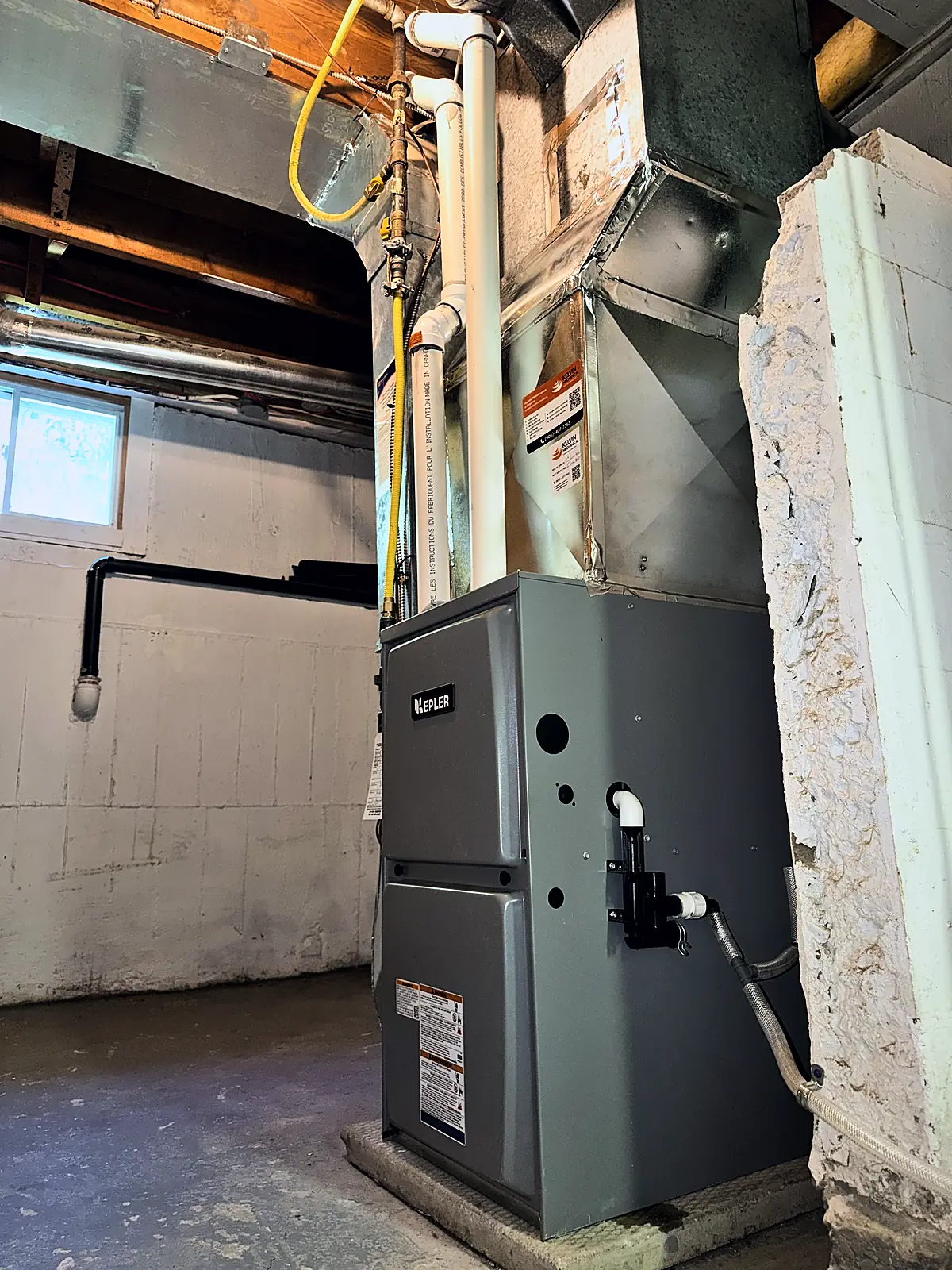
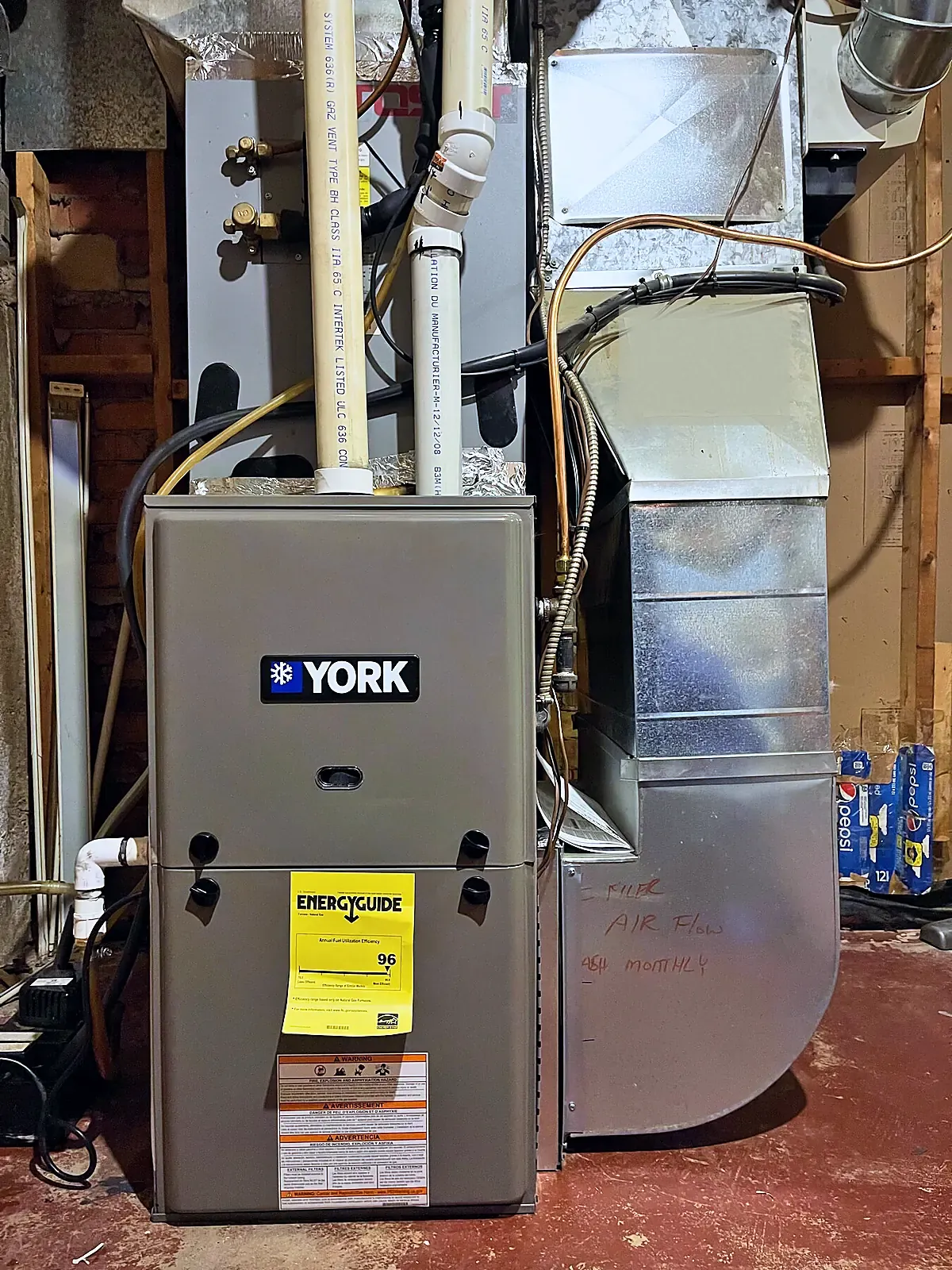
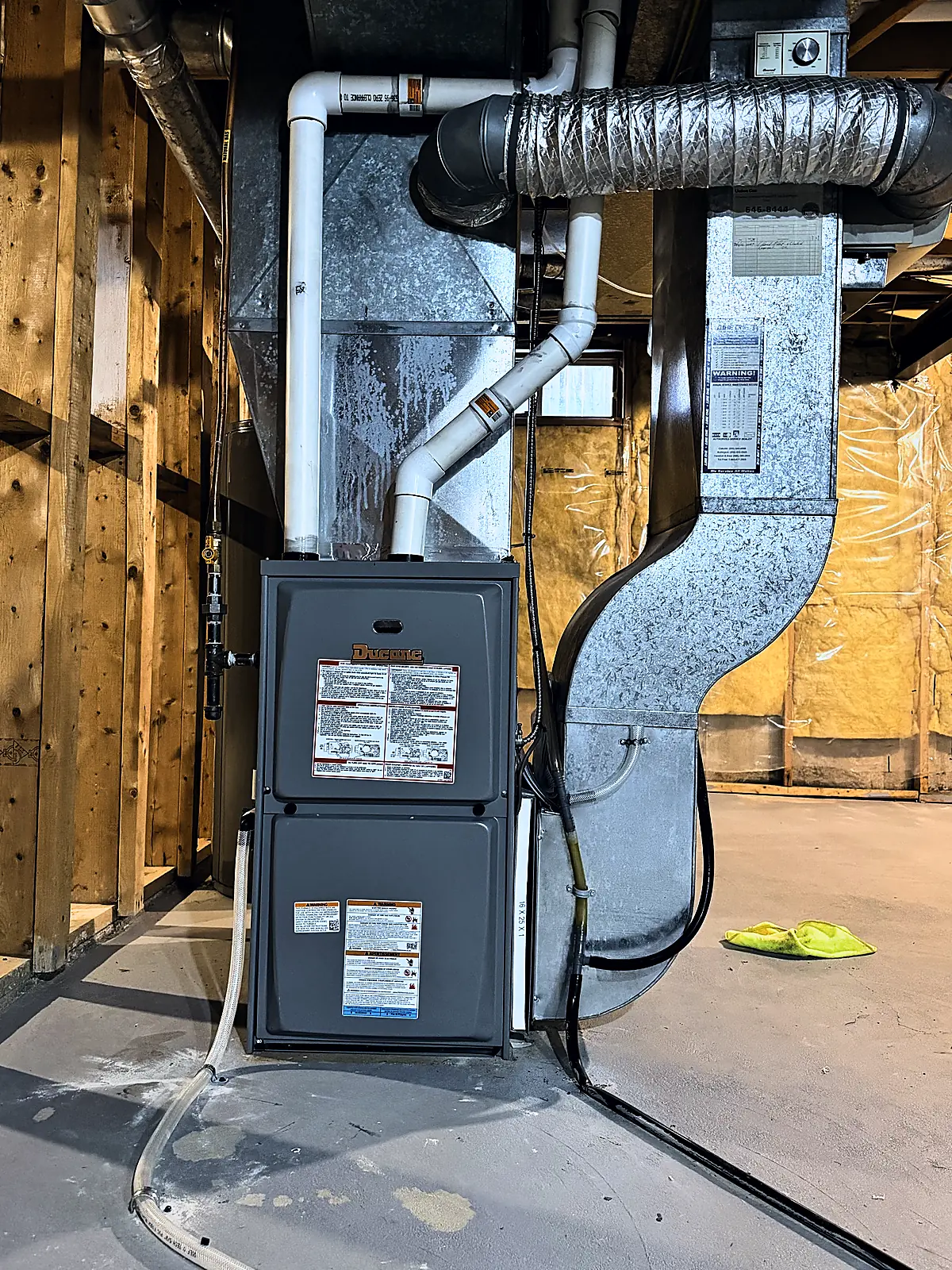
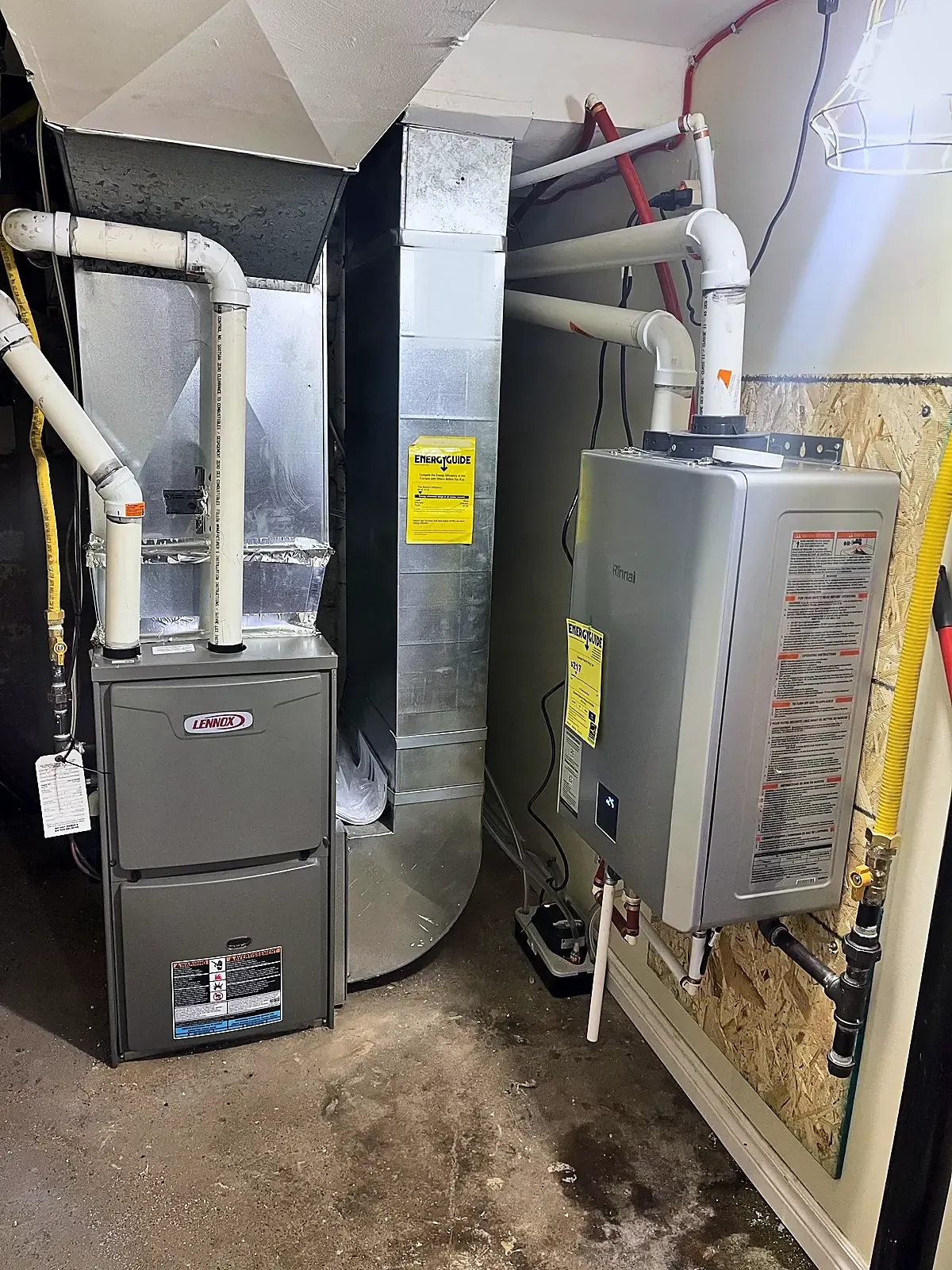
Photos from Kelvin Mechanical jobs in the GTA and nearby Ontario.
Good to know
Why each furnace check earns its place
Heat exchanger visual inspection
The heat exchanger keeps burner flame and exhaust separate from household air. Where access allows, we look with a light and inspection camera for rust, cracks and warping. A visual check cannot find every flaw, so any concern leads to further testing or a replacement discussion.
Flame sensor, igniter and pressure switch
These small parts cause a large share of no-heat calls. A coated flame sensor drops out after a few seconds, and a weak igniter or sluggish pressure switch causes lockouts. Catching wear early is easier than a breakdown in January.
Condensate drain and venting
High-efficiency furnaces produce acidic condensate that must drain freely. A clogged trap or frozen drain line can shut the furnace down. We check vent joints, slope and outdoor terminations for blockage.
Temperature rise and airflow
Temperature rise is the difference between return and supply air temperature. Too high usually points to a dirty filter, closed registers or duct restriction. Too low can mean a blower speed set too high or a gas input problem.
What a tune-up can and cannot do
Maintenance lowers the chance of a breakdown and gives you an honest view of the furnace's condition. It does not stop every failure, and parts on older furnaces still wear out. If we find a fault, we explain it before any work; see furnace repair for how repairs are handled.
Ontario notes
Furnace maintenance in Ontario: what the climate asks of your furnace
A long heating season
An Ontario furnace can run for many months of the year, and the longest runs come during the coldest weeks. Worn igniters, weak capacitors and dirty flame sensors tend to show up under that load. A yearly check finds those parts before a cold night does. The visit is also a chance to review filters and thermostat settings.
Basements, dust and renovations
Many Ontario furnaces sit in basements, where drywall dust from renovations, laundry lint and storage items collect around the unit. Dust clogs filters, coats the flame sensor and restricts airflow. Keep the area around the furnace clear, change filters on time and mention any recent renovation work at the visit.
Venting, condensate and cold weather
High-efficiency furnaces drain condensate, and the drain line must stay clear and drain properly through cold weather. Outdoor vent pipes can also be hit by snow and ice. Maintenance covers the trap, drain, slope and terminations, which are common points of failure in the middle of winter.
Warranty and service records
Some manufacturer warranties expect proof of regular service, and terms differ by brand and registration. Keep invoices and tune-up records. They also help when you sell or rent out the property, since buyers and inspectors often ask about equipment age and service history.
Equipment we install and service






Brand names and logos belong to their owners. Availability depends on the product line and region.
Customer reviews
What a customer says
We worked the deal over phone, got me a good price for installing a 4" filter box on the furnace and didn't mandate buying the box from him. Highly recommend
Five-star Google reviews, copied as written with shortened names. Read more reviews
Help centre
Questions about Furnace Maintenance
How often should a furnace be serviced?
Once a year, ideally before the heating season, is the usual schedule. Follow the manufacturer's instructions too, because some warranties ask for documented annual maintenance.
Can you tell if my heat exchanger is cracked?
We inspect it visually where access allows, and we tell you what we could and could not see. A visual check cannot find every crack. If there are concerns, we discuss further testing or replacement.
How often should I change the furnace filter?
It depends on the filter type, pets, renovation dust and how much the furnace runs. Check it monthly in heavy-use months and replace it when dirty or as the filter's instructions say. A blocked filter is one of the most common reasons a limit switch trips.
Does maintenance include repairs?
Maintenance covers inspection, cleaning and testing. If a part needs replacing, we explain the options and pricing before doing the work. A service fee may apply; confirmed at booking.
Do you always check gas pressure?
Only where applicable. Gas pressure and combustion readings depend on the furnace model and what the technician finds. We take them when the equipment and conditions call for it.
What is the right time of year for furnace maintenance in Ontario?
Late summer to early fall, before the heating season starts, is ideal. That is before the first cold nights, and it leaves time to order a part if something is worn. Fall is busy, so booking early gives you more choice. If you missed it, a visit in winter is still worthwhile, since a check is better than waiting for a breakdown.
What can I do myself to get my furnace ready for winter?
Replace the filter, vacuum around the furnace and registers, keep storage away from the unit, check that outdoor vent pipes are clear, and test your carbon monoxide and smoke alarms. Set the thermostat to heat and confirm the furnace starts. These steps help, but they do not replace a technician's inspection of burners, venting and safety controls.
How do I know if my furnace is near the end of its life?
Warning signs include repeated repairs, uneven heating, loud or new noises, a yellow or flickering burner flame, soot, rust or water around the unit, and age in the range of 15 to 20 years. See furnace warning signs for a fuller list. A maintenance visit gives you an honest view of the condition.
Does a new furnace need maintenance?
Yes. A new furnace still collects dust, can have a blocked condensate drain, and needs filter changes. Many manufacturer warranties ask for regular maintenance, so check yours. A first-year check also confirms that venting, gas pressure and airflow still match the settings made at installation.
Can furnace maintenance help with carbon monoxide safety?
A maintenance visit checks the venting, looks at the heat exchanger where access allows, and tests combustion safety controls. That lowers risk, but it does not replace working carbon monoxide alarms. Ontario fire rules require alarms in homes with fuel-burning appliances or an attached garage, so confirm the current requirements for your property.
How do landlords and property managers schedule furnace maintenance?
Many keep a yearly list of furnaces by suite or address, then schedule visits before the heating season. Ontario tenancy rules set notice requirements for entering a unit, so access has to be planned properly. Written service records also help if a tenant reports a problem. See property management HVAC.
Is duct cleaning part of furnace maintenance?
No. Furnace maintenance covers the furnace, blower, filter and safety controls. Duct cleaning is a separate job, and whether it helps depends on the home, for example after heavy renovation dust. Airflow readings taken during a tune-up show whether ducts or returns are restricting the furnace, and we explain what we see.
Where we do this work
Furnace Maintenance in Toronto, the GTA and Hamilton
Toronto Mississauga Brampton Vaughan Markham Oakville Burlington Hamilton All service areas Heating and cooling services
Quick checks before you call
Quote and booking
Request: Furnace Maintenance
Share a few details and we will follow up. A written quote comes after a site review. There is no online checkout.
- City and service type help us route your request
- Urgency and property details let us prepare properly
- Optional equipment photos speed up repairs and replacements
Prefer to talk? +1 905-407-7353
Gas smell or carbon monoxide alarm? Leave the building and call 911 first. Do not use this form.