
Drinking water
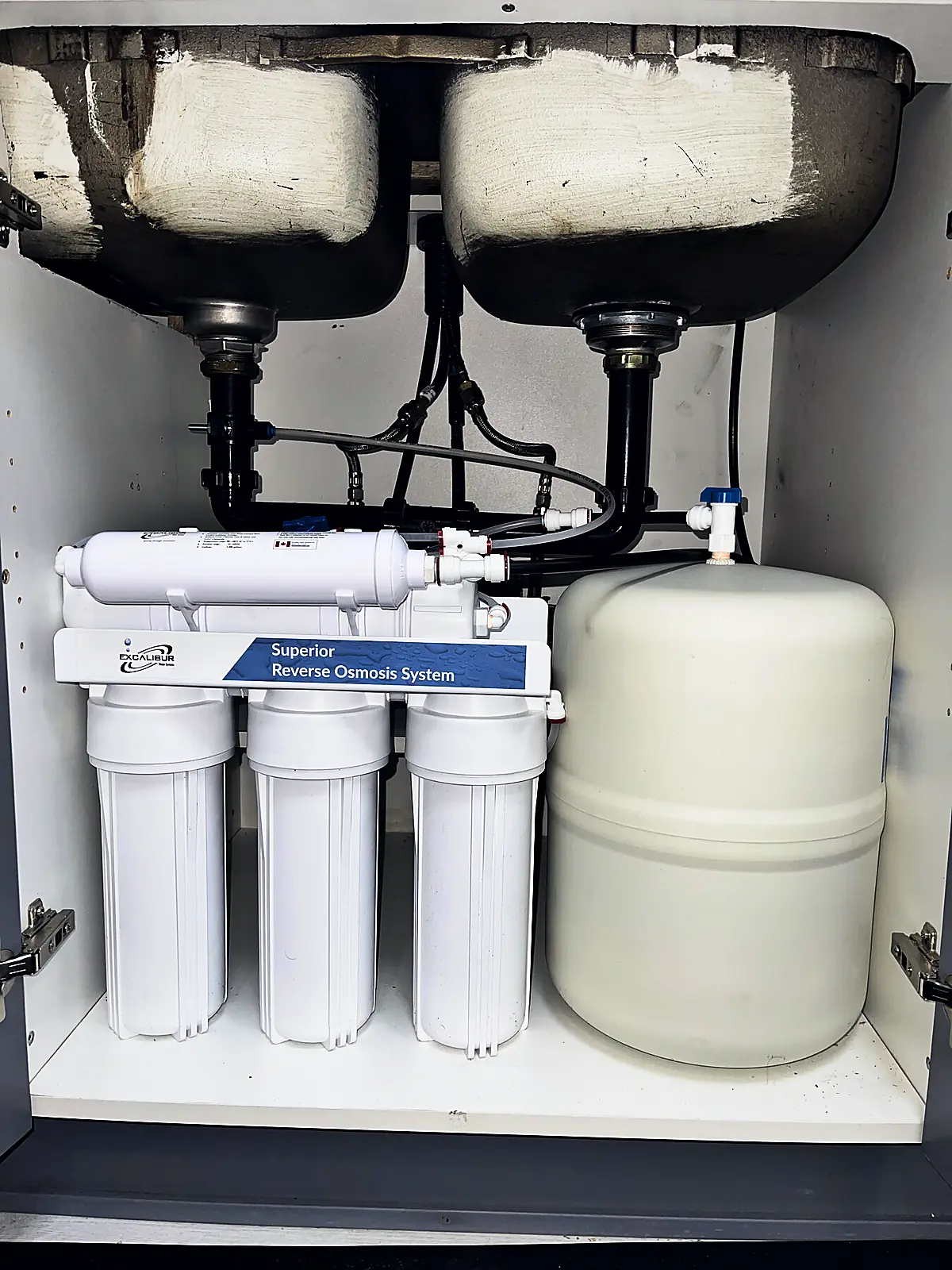
Reverse Osmosis Drinking Water System Installation in Ontario
Under-sink reverse osmosis with a dedicated faucet, chosen from a water test and your kitchen layout, with honest expectations for what RO will and will not do.
- TypeUnder-sink RO, dedicated faucet
- Starts withWater testing
- UpkeepFilter and membrane replacement
 Serving the GTA and nearby Ontario
Scope
What an under-sink RO installation involves
- Water testing and a TDS reading before choosing a system
- Under-sink RO with a storage tank, or a compact tankless design where space is tight
- Dedicated drinking-water faucet mounted at the sink or counter
- Feed water connection with a shutoff, and a drain connection to the sink drain
- Pre-filter, carbon stage and membrane arrangement chosen for your water
- Optional line to a fridge or ice maker, where the model supports it
- Start-up flush, leak check and a TDS comparison after installation
Process
Installing RO at your kitchen sink
Every job starts with a conversation and a look at the equipment. You see the options in plain language before anything is booked.
- 1
Test the water
We check TDS and talk about taste, source and household use. Municipal and well water behave differently, and Ontario water varies by municipality, so a test of your own tap beats assumptions.
- 2
Pick the layout
A tank system stores purified water for quick draws. A tankless system is compact and makes water on demand. Cabinet space, drain location and daily use decide which suits.
- 3
Mount and connect
We mount the unit under the sink, add the dedicated faucet, tie into the cold-water feed with a shutoff and connect the drain line.
- 4
Flush and test
We run the system to flush new media, check for leaks and measure TDS at the faucet to see how your water responds.
- 5
Explain the upkeep
You receive a replacement schedule for pre-filters, carbon stages and the membrane, matched to your water. We can handle the changes if you want local support. See water treatment service.
In pictures
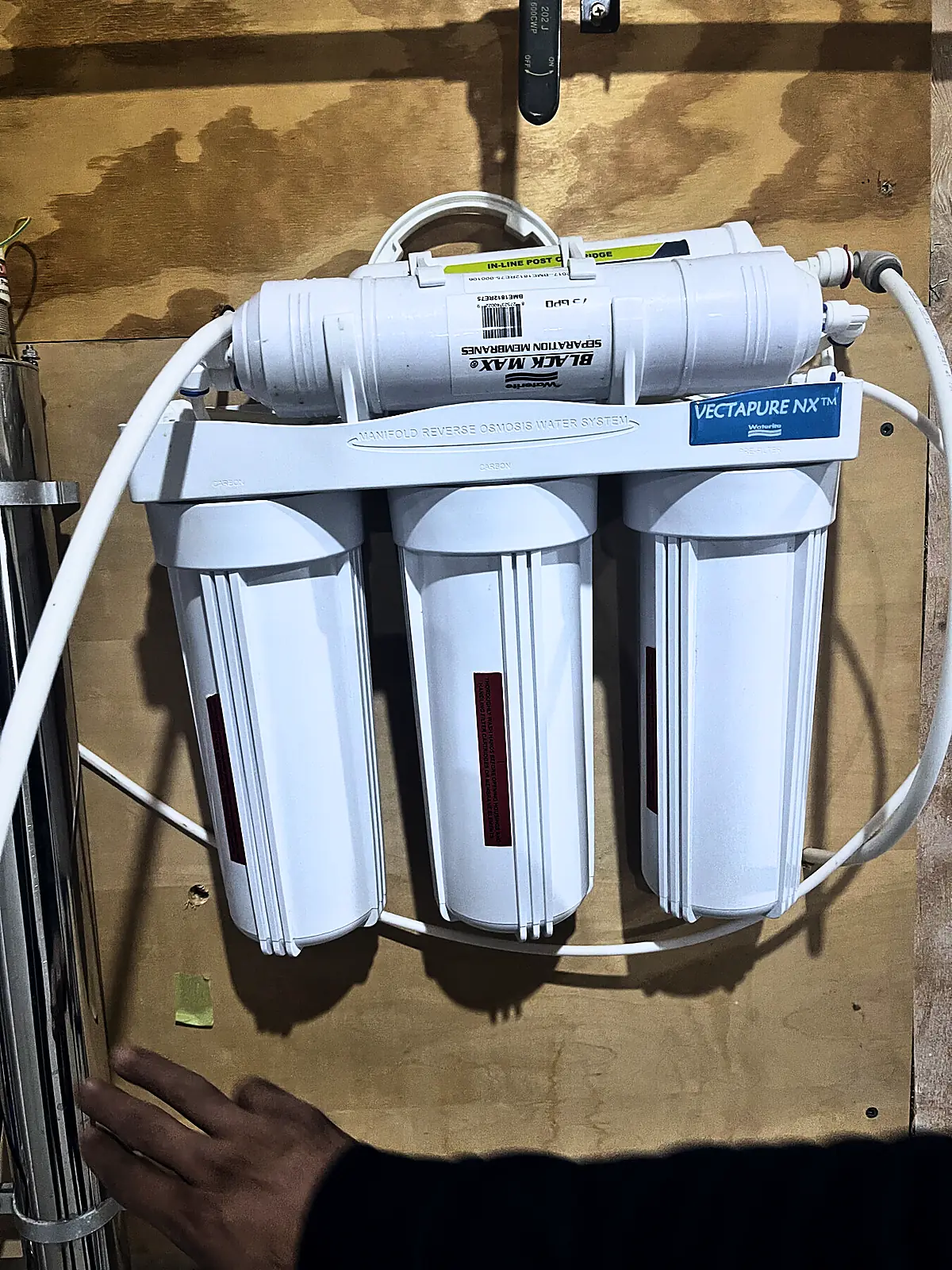
What this work looks like
 Kelvin job photo
 Kelvin job photo
 Kelvin job photo
Photos from Kelvin Mechanical jobs in the GTA and nearby Ontario.
Good to know
Reading TDS, performance and reject water
What TDS tells you
TDS measures total dissolved solids, not safety. It is a handy way to compare tap water and RO water at your own home and to spot a tired membrane. It does not identify specific contaminants.
Realistic performance
Reduction depends on the membrane, water pressure, temperature and the water you start with. We do not quote a universal percentage. Ask for the performance data of the specific model.
Reject water
RO sends concentrated reject water to the drain while it makes purified water. The ratio varies by system and conditions, and some models are designed to send less to drain.
Pairing with a softener
Hard water shortens membrane life, so a softener upstream can help in many homes. See water softener installation.
What RO is, and is not
RO treats the water at one tap. It does not change hardness elsewhere in the house, and results vary with your water and the product. If you are concerned about a specific contaminant, tell us. A lab test for that contaminant tells you more than a TDS reading, and not every system addresses every concern.
Ontario notes
Ontario notes for reverse osmosis systems
Municipal water varies, so test your tap
Water chemistry differs between Ontario municipalities, and a TDS reading at your own tap tells you more than a regional average. Some municipalities publish water quality reports. We test at the visit and use the result to choose the system.
Wells need more than RO
Private wells can carry bacteria, iron, hardness or sediment. RO reduces dissolved substances but does not replace disinfection. Have the well tested, and use the results to plan pre-treatment. A softener upstream often helps membrane life.
Cold water in winter slows production
Incoming cold water in an Ontario winter slows the membrane, and the tank refill takes longer. A properly sized storage tank covers normal use. If your household draws a lot of drinking water, we talk about tank size.
Condos, rentals and approvals
Under-sink RO fits many condo kitchens. Cabinet space, the drain connection and building rules decide, and renters need landlord approval before anyone drills a sink or alters a cabinet. Check your declaration or lease before booking, and send us a photo of the space under your sink.
Equipment we install and service

Brand names and logos belong to their owners. Availability depends on the product line and region.
Help centre
Questions about Reverse Osmosis Systems
Do you test my water before installing RO?
Yes, we test and go over the results at the visit so the system suits your water. Ask what the test covers when you book.
Does reverse osmosis remove everything from water?
No. It reduces many dissolved substances, but results depend on the membrane and your water. We do not claim a single reduction figure, and we point you to the manufacturer performance data for the model.
How often do RO filters need replacing?
Schedules vary by model and water. Pre-filters and carbon stages usually come up more often than the membrane. We give you a schedule based on your water test.
Will RO change how my water tastes?
Many people notice a cleaner taste because dissolved solids and chlorine are reduced, but tastes vary. RO water has a lower mineral content, which some people notice.
Is under-sink RO suitable for a condo?
Often yes. Under-sink systems fit inside a cabinet and need a cold-water feed and a drain connection. Cabinet space and building rules apply, so check your condo rules first.
How much water does a reverse osmosis system waste?
RO sends reject water to the drain while it makes purified water. The ratio varies by system, water pressure and water quality, and some designs send less to drain. Ask for the manufacturer's data for the model. We explain the trade-off for your sink and your daily use.
Does reverse osmosis remove fluoride and chlorine?
An RO membrane can reduce many dissolved substances, including fluoride, and a carbon stage addresses chlorine taste. Results depend on the system and your water. Not every Ontario municipality fluoridates its water; yours can tell you. We go over results after installation.
Does reverse osmosis water need minerals added back?
Not necessarily. RO water has a low mineral content, which some people notice in taste. Some systems offer a remineralization stage as an option. It is a matter of preference and the product, and we explain what each model offers.
Can I connect my fridge and ice maker to an RO system?
On some models, yes. A line to a fridge or ice maker is an option where the system supports it and the distance is practical. A tank gives better flow for these uses. We check the layout and the model before agreeing to the extra line.
Where does the reverse osmosis drain line connect?
To the kitchen sink drain, usually through a clamp or saddle on the drain pipe above the trap, with an air gap at the faucet or equivalent. The drain connection must follow local requirements. We route it so reject water drains cleanly. See plumbing support.
Will reverse osmosis work with well water in Ontario?
Often, with pre-treatment. Hardness, iron and sediment can foul a membrane, so a softener or sediment filter ahead of it may be needed. RO reduces dissolved substances and does not replace dealing with bacteria in a private well. Test the well first, then choose treatment. Your local public health unit explains how testing works.
Does cold winter water affect an RO system?
Yes. Colder incoming water slows production through the membrane, so the tank refills more slowly in an Ontario winter. A storage tank buffers this for normal use. If you draw a lot of water at once, tell us so we can choose a layout.
Where we do this work
Reverse Osmosis Systems in Toronto, the GTA and Hamilton
Toronto Mississauga Brampton Vaughan Markham Oakville Burlington Hamilton All service areas
Quote and booking
Request: Reverse Osmosis Systems
Share a few details and we will follow up. A written quote comes after a site review. There is no online checkout.
- City and service type help us route your request
- Urgency and property details let us prepare properly
- Optional equipment photos speed up repairs and replacements
Prefer to talk? +1 905-407-7353
Gas smell or carbon monoxide alarm? Leave the building and call 911 first. Do not use this form.