
Safety first
First rule out the situations where the right move is to leave the house, not to fix the furnace.
- You smell gas (rotten eggs): do not touch switches or the thermostat, and do not use a phone inside. Get everyone out, then call your gas utility's emergency line or 911 from outside. For many Ontario homes the utility is Enbridge Gas; the number is on your bill.
- A carbon monoxide (CO) alarm is sounding: get everyone out, including pets, and call 911 from outside. Stay out until responders say it is safe.
- Never remove burner or gas valve covers, bypass a safety switch or try to light a modern furnace by hand. Gas appliance work in Ontario is restricted to certified gas technicians.
Every check below uses the thermostat, switches, the filter or the outside pipes. None needs tools or opening a sealed compartment.
Safe checks you can do
Work through these in the order a technician would, and write down what you find.
- Thermostat. Set to Heat, with the set point a few degrees above room temperature. Replace the batteries if the screen is blank. A smart thermostat that has gone dark can point to the furnace, since many draw power from it.
- Furnace power switch. The switch near the furnace looks like a light switch and is easy to flip off by mistake. Make sure it is on.
- Breaker. Reset a tripped furnace breaker once. If it trips again, leave it off and call.
- Blower door. A safety switch cuts power when the lower front panel is not fully seated. After a filter change, push the panel firmly into place.
- Filter. A badly clogged filter can make the furnace overheat and shut down. If you cannot see light through it, replace it with the same size, arrow toward the furnace.
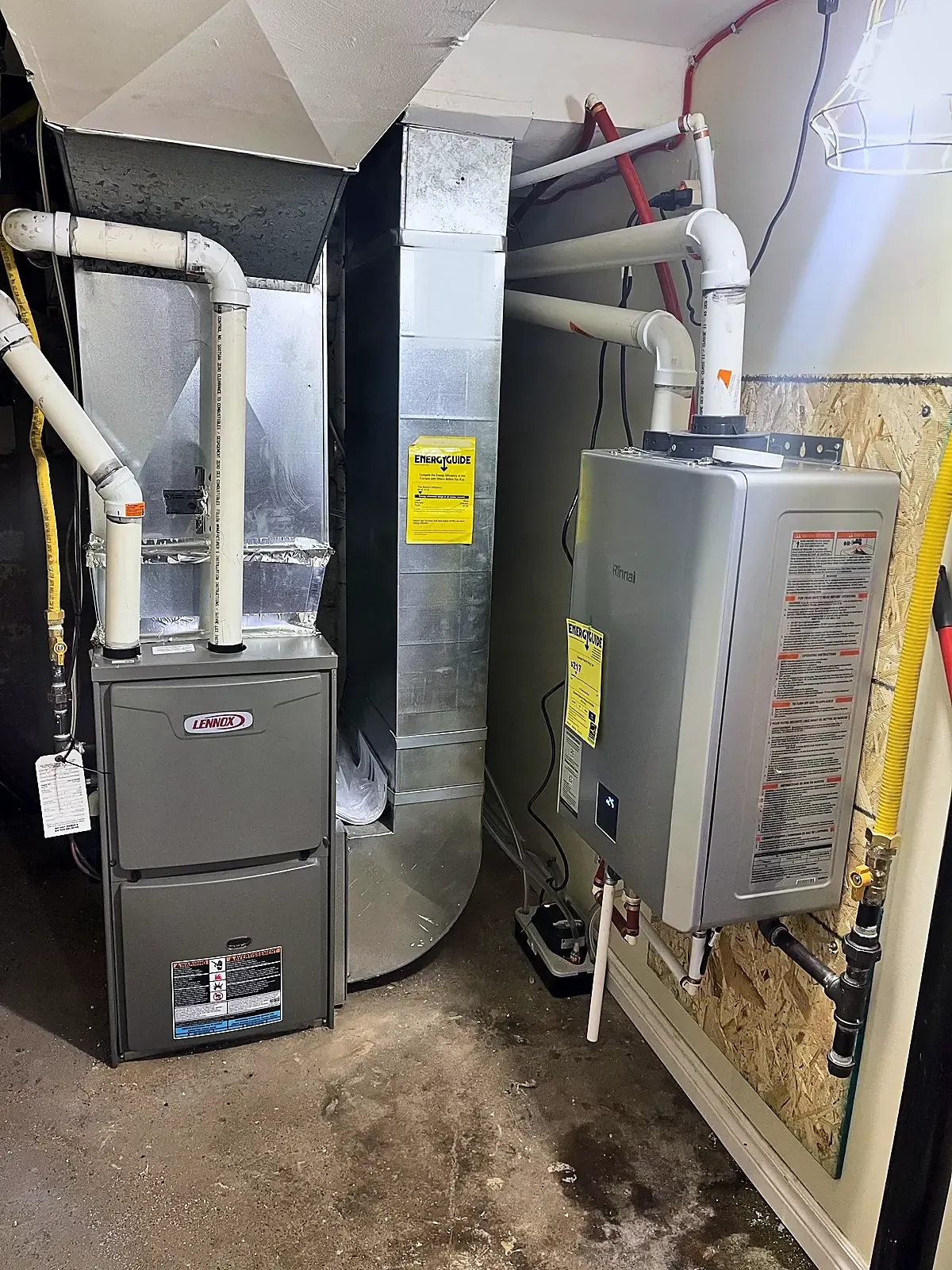
- Outside vent pipes (high-efficiency furnaces). If the furnace vents through two plastic pipes on an outside wall, clear any snow, ice, leaves or nest gently by hand. This is a common cause of no heat after an Ontario snowfall.
- Condensate drain and pump (high-efficiency furnaces). These furnaces make water. A blocked drain, trap or condensate pump trips a safety switch. Look for water around the base or a pump that hums but does not empty, and note it rather than taking the trap apart.
- Error light. A small light on the control board, often visible through a window in the lower door, flashes a code. Write the pattern down before any reset, because a reset can clear it.
- One power reset. Switch the furnace off for about a minute, then on, and give it several minutes: inducer fan first, then ignition, then the blower. If it fails again, stop resetting.
Reading the error light without guessing
The flashing light tells you which safety check the furnace failed: one pattern might point to the venting or pressure switch, another to ignition, another to overheating. Codes vary by brand and even by model, so use the key printed inside the panel door, not a chart found online. Treat it as a clue: a flame failure code does not say whether the cause is a dirty sensor, gas supply or a worn igniter.
Likely causes and how urgent they are
Settings or power: low urgency
A wrong mode, flat batteries, the power switch off or the panel door not seated. Usually solved by the checks above.
Clogged filter: moderate
The high-limit switch shuts the burners off to protect the heat exchanger. Replace the filter. If the furnace keeps tripping with a clean filter, have the airflow checked.
Blocked drain or vent pipes: moderate to urgent
Common on high-efficiency furnaces after snow or ice. Clearing outside pipes by hand is safe; the internal trap and pressure switch are a technician's job.
Ignition or flame sensor fault: book a repair
The furnace tries to start, then shuts off or locks out. These parts sit beside the burners and gas valve.
Control board, motor or gas valve: book a repair
No response with power confirmed, a motor that hums but will not turn, or a code pointing to the board or valve. These need proper testing.
Gas smell, CO alarm or scorch marks: emergency
Leave the home and call from outside, as described above. Do not try to restart the furnace.
When to call
Call if the furnace still will not run after the checks above, the breaker trips a second time, the same error code returns after one reset, or water keeps collecting around the furnace. Do not keep resetting a furnace that locks out; it does not fix the cause and can wear out good parts. See furnace repair for what a visit covers.
With no heat in a cold snap, close curtains, keep interior doors open, and use portable electric heaters only as their maker directs, clear of anything that can burn. Never heat the home with a gas stove, oven or barbecue. See emergency heating and cooling; emergency service is subject to availability.
The cost of a repair depends on the cause, and a quote follows a diagnosis. A diagnostic fee may apply; it is confirmed at booking.
What to tell us when you call
- Model and serial number from the nameplate inside the lower door or on the cabinet side
- The error light pattern, written down
- What happens when it tries: nothing, the inducer runs and stops, a click with no flame, or a flame that goes out
- What you already tried: filter, breaker, one reset
- Photos of the nameplate, the outside pipes and any water on the floor
- Whether anyone at home is especially vulnerable to the cold
If this is not the first breakdown this season, our guide to furnace warning signs explains which patterns are worth acting on before the next cold night.