
Ducted, ductless or both: matching the type to the house
A heat pump moves heat instead of burning fuel to make it, and the same equipment can heat in winter and cool in summer. The real choice for most homes is how that heat gets delivered, and what stays in place alongside it.
| Option | Best fit | Install notes | Weigh before choosing |
|---|---|---|---|
| Central ducted heat pump | Homes with sound ductwork and a furnace or air handler being replaced or paired | Uses existing supply and return ducts after a static pressure check, with a matched coil or air handler | Undersized returns and leaky ducts reduce performance; backup heat is set up in the air handler or with the furnace |
| Ductless mini split | Additions, finished basements, older homes without ducts and rooms that never balance | Outdoor unit plus one or more indoor heads on refrigerant line sets, with a condensate drain for each head | Each head serves its own room or zone; open layouts, wall space and appearance matter |
| Hybrid with a furnace | Homes that want to keep a gas furnace for the coldest days | Heat pump coil in the supply plenum, with controls that choose heat pump or furnace | Changeover setting, thermostat compatibility and two systems to maintain |
| Cold-climate model, ducted or ductless | Homes using the heat pump as the main heat source through Ontario winters | Check the published low-temperature capacity for the exact indoor and outdoor combination | Outdoor placement away from drifting snow, defrost drainage and sound |
Our pages on heat pump installation and ductless mini split installation describe what each project involves.
Sizing starts with a load calculation, not a rule of thumb
Square footage tells you very little about how much heating and cooling a home needs. Insulation, windows, air leakage, orientation and layout drive the load, and a proper room-by-room load calculation is the only sound starting point. Sizing by a rule of thumb tends to produce oversized equipment, and we would rather spend an hour on the numbers at the start than return later to a short-cycling system.
Oversizing matters with heat pumps. A unit that is too big for the cooling load can short cycle in summer and handle humidity poorly. A unit chosen only for the coldest night can be far bigger than it needs to be the rest of the year. The design decision is how the heat pump, any backup heat and the ductwork share the load, and that needs the numbers for your house.
Cold-climate models and what to ask about winter output
Heat pump output falls as the outdoor temperature drops, and how much it falls depends on the model. Cold-climate models are designed to hold more of their capacity at low outdoor temperatures, but performance depends on the specific indoor and outdoor combination and on conditions at your home.
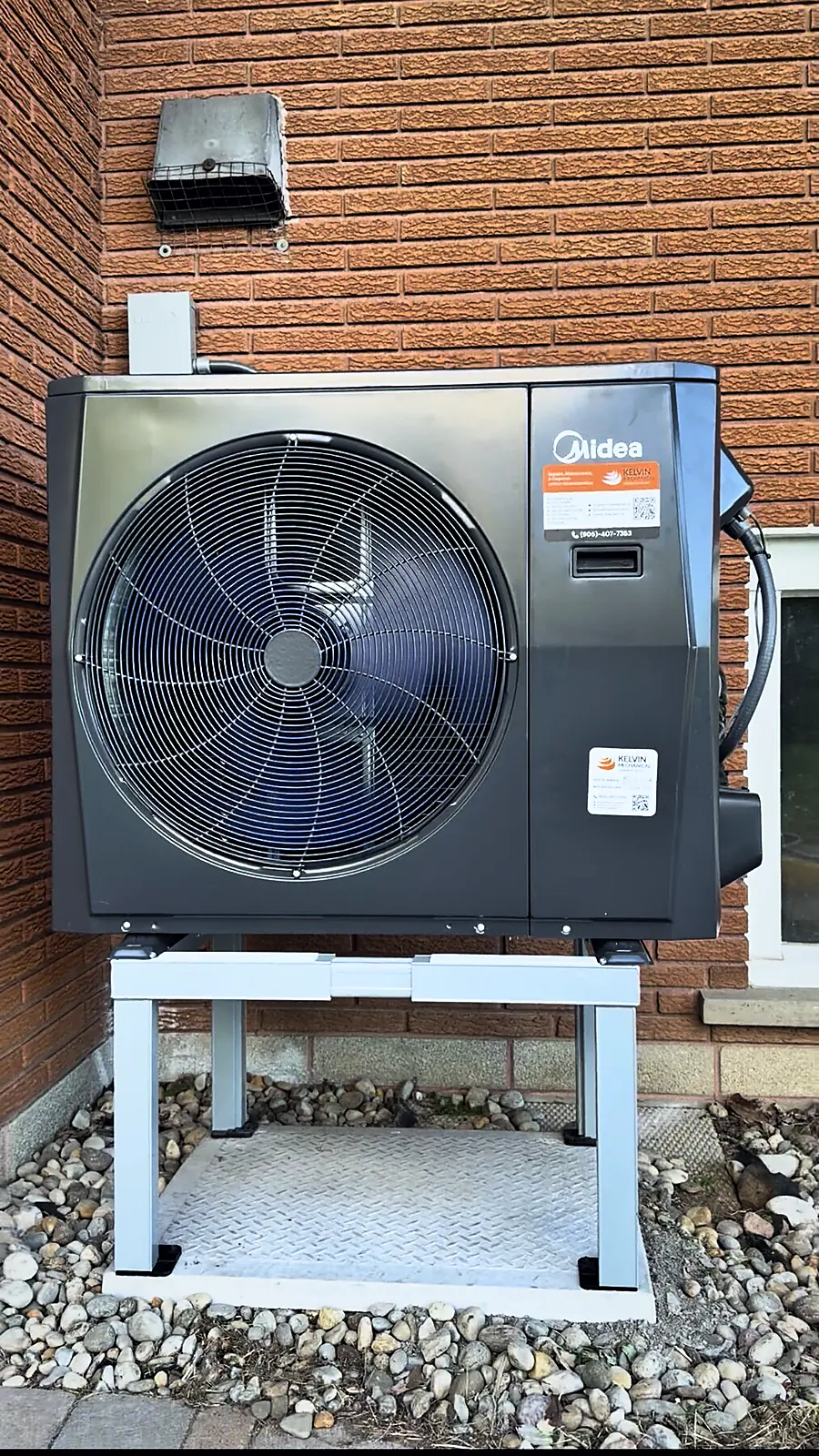
Rather than comparing marketing language, ask for the manufacturer's published capacity at the low outdoor temperatures you actually get in your area, for the exact matched set quoted. Then ask about defrost behaviour, outdoor unit placement and clearances. The outdoor unit sheds frost during winter, so it needs drainage, a raised mount that keeps it clear of snow, and a location that does not blow noise toward a bedroom or a neighbour.
Hybrid setups and where backup heat fits
In a hybrid (dual-fuel) system the heat pump runs through milder weather and the furnace takes over below a changeover temperature set in the controls. That setting balances comfort and operating cost, and it can be changed as your priorities or energy prices change.
In an all-electric home, backup heat usually means electric resistance elements in the air handler, or existing baseboards. Backup heat adds electrical load and costs more to run than the heat pump, so the design question is how often it should run. The load calculation and the lowest outdoor design temperature in your area should drive that decision, not a guess.
Electrical capacity: check the panel early
Heat pumps need a dedicated circuit sized to the nameplate, an outdoor disconnect where required, and enough capacity in the electrical service for the whole house. Backup heat elements add significantly to the load. If you are also planning an EV charger or other large loads, the service size matters even more.
Ask for the electrical requirements in writing before you commit. Some homes need only a new breaker and circuit; others need a panel or service upgrade. Electrical work is done by licensed electrical professionals or trade partners, with permits and ESA notification where required. See panel and circuit work for what that involves.
Neutral criteria for comparing heat pump quotes
- A written load calculation, not just a model number
- Published capacity at low outdoor temperatures for the exact matched set
- Duct assessment: static pressure, return air and supply sizing for ducted systems
- Backup heat plan and the controls strategy for changeover or lockout
- Sound ratings for the indoor and outdoor units, plus outdoor placement
- Manufacturer warranty terms, installer labour warranty terms and any extended plan, kept separate
- Commissioning steps: refrigerant charge verification, airflow checks and a walkthrough
- Local service support and parts availability for the model
Many leading brands make capable equipment. The deciding factors are usually fit to your house, the installation quality and the support behind it. To get a written load calculation and a quote for your own home, start with Build My Quote.
Savings, emissions and rebates without the hype
Operating cost depends on what you heat with now, your electricity rate plan, the equipment, the weather and how you use the home. Compared with electric baseboard heat, a heat pump can reduce electricity use. Compared with natural gas heating, the bill comparison can go either way depending on rates and the system. Because a heat pump moves heat rather than burning fuel, it may reduce household emissions compared with some fuel-burning systems, depending on your electricity source and how you heat today.
Rebate information on this site is Ontario-only. Eligible Ontario customers may qualify for up to $7,500 depending on the program rules, equipment, property and funding available at the time. Read Ontario heat pump rebate basics for how the process tends to work, check rebate eligibility, and look at financing options if you want to spread the cost, noting that any offer is subject to provider approval, terms and expiry.
Rebate programs are run by the program administrator, not by Kelvin Mechanical. Confirm current rules with the program before you sign.
Upkeep that protects winter performance
A heat pump works in every season, so it wears in every season. Filters need regular attention, the outdoor coil needs clear space around it, and snow and ice should not be allowed to build up on or around the unit. Condensate drains, defrost operation, refrigerant circuit checks and electrical connections belong in a yearly service. See heat pump maintenance for what that visit covers.
If performance drops or the unit shows a fault, heat pump repair is the route. Early attention to a weak airflow or a frozen coil usually costs less than waiting.