
Residential gas piping
Residential Gas Line Extensions for Furnaces, Water Heaters and More
Adding a furnace, tankless water heater, range, BBQ or generator adds gas load. We plan the line, size it for total demand and work with licensed gas-fitting professionals on permits and inspections.
- ScopeResidential gas line extensions
- SizingBased on total appliance load
- PermitsHandled with licensed professionals
 Serving the GTA and nearby Ontario
Scope
Gas line work for the home
- New gas lines for furnaces, boilers and water heaters, including tankless units
- Extensions for kitchen ranges, fireplaces and outdoor BBQ or patio connections
- Standby generator gas supply, with load and meter capacity reviewed
- Pipe sizing from appliance BTU/h demand, pipe length and number of fittings
- Shut-off valves, sediment traps and approved connectors at each appliance
- Pressure testing of new piping before it is put in service
- Permits and inspections where required, arranged with licensed gas-fitting professionals
- Review of whether the utility meter or regulator needs an upgrade
Process
From gas load to inspected line
Every job starts with a conversation and a look at the equipment. You see the options in plain language before anything is booked.
- 1
List every gas appliance
We add up the demand from existing and planned appliances, including the new one. Tankless heaters, ranges and generators can pull far more gas than the equipment they replace.
- 2
Plan the route and size the pipe
Route, pipe material, length and the number of fittings set the pipe size. Piping through finished space, outdoors or underground each has its own rules, so we walk the path with you before quoting.
- 3
Permits and licensed work
Gas fitting is regulated work. Kelvin Mechanical works with licensed and qualified professionals and trade partners, depending on the project scope, and permits and inspections are arranged where required.
- 4
Install, pressure test and inspect
Piping goes in with proper supports, valves and sediment traps, then is pressure tested and checked for leaks before it is put in service. Inspection follows where it is required.
- 5
Connect appliances and locate the shut-off
Appliances are connected and started, and we show you where each shut-off valve is. Keep that location clear and make sure everyone in the household knows it.
In pictures
What this work looks like
 Kelvin job photo
 Kelvin job photo
 Illustration
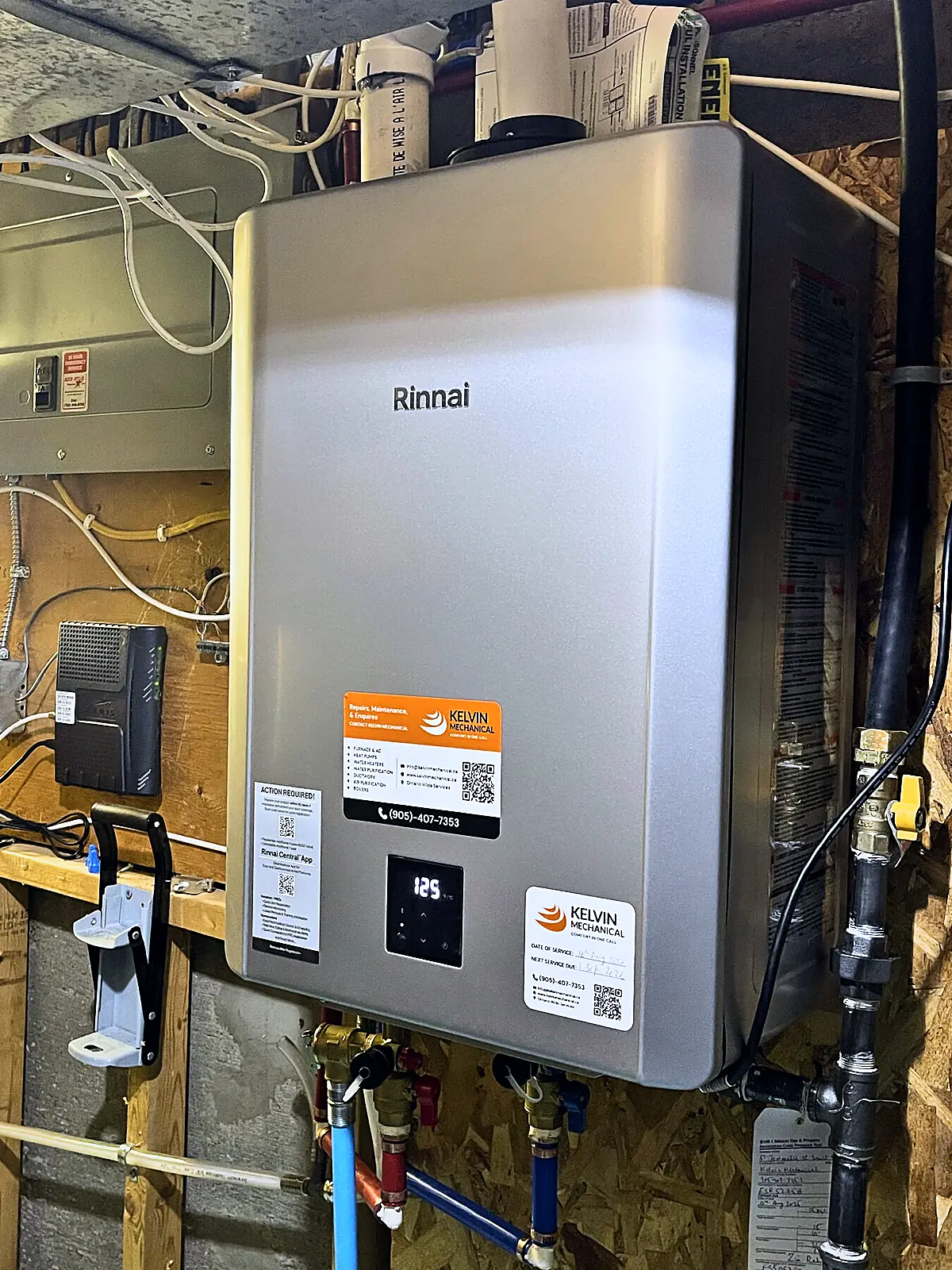
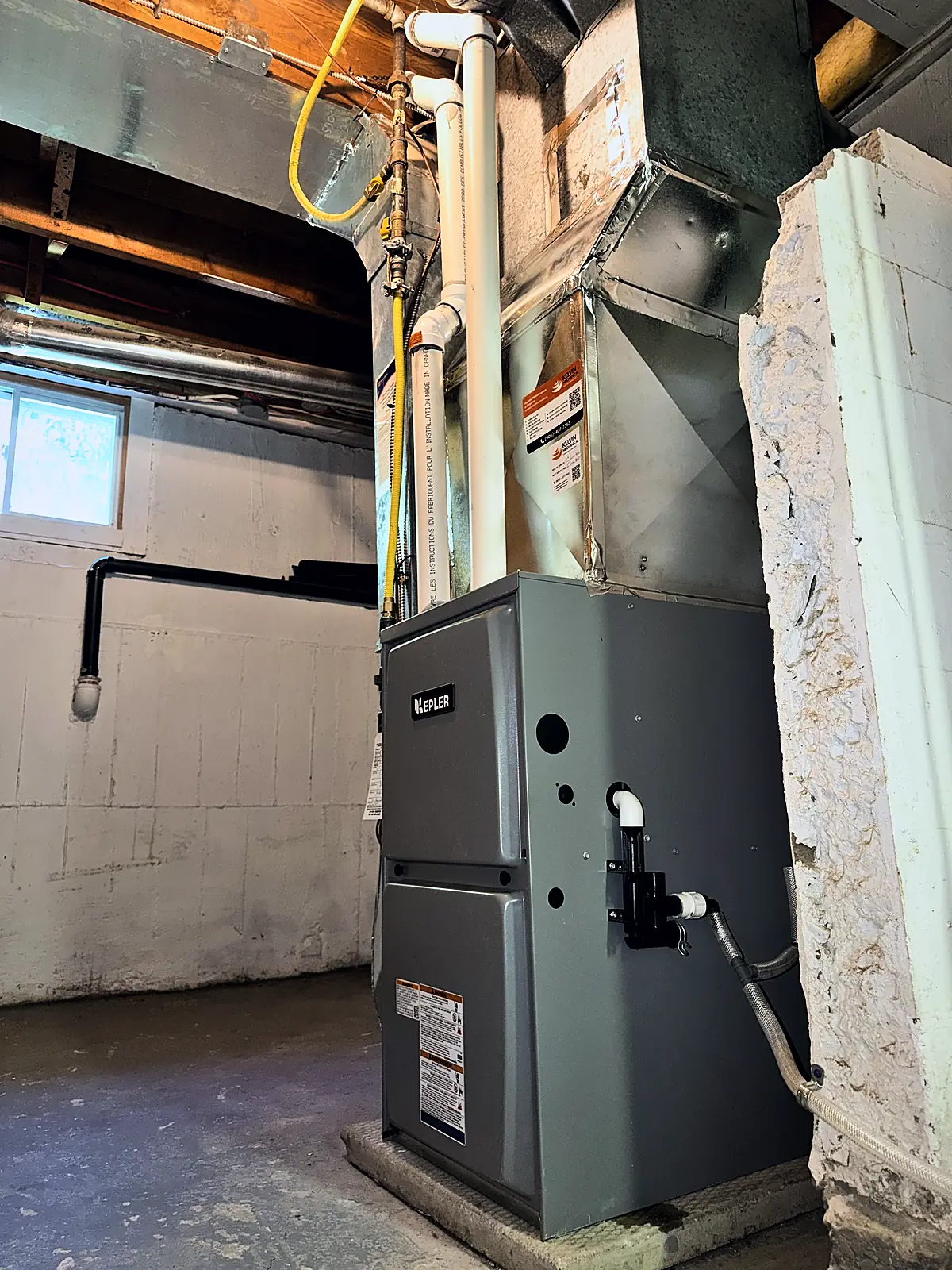
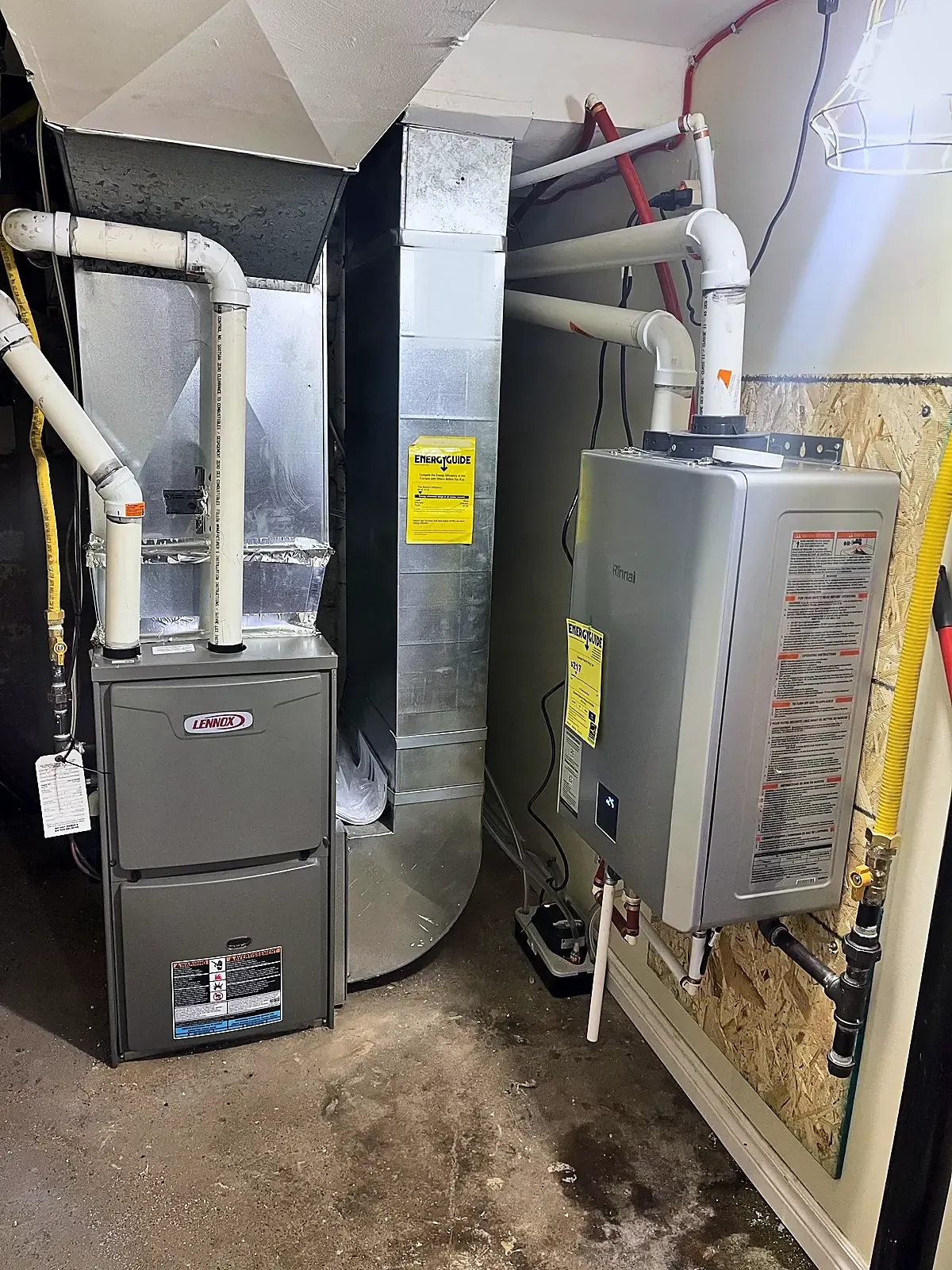
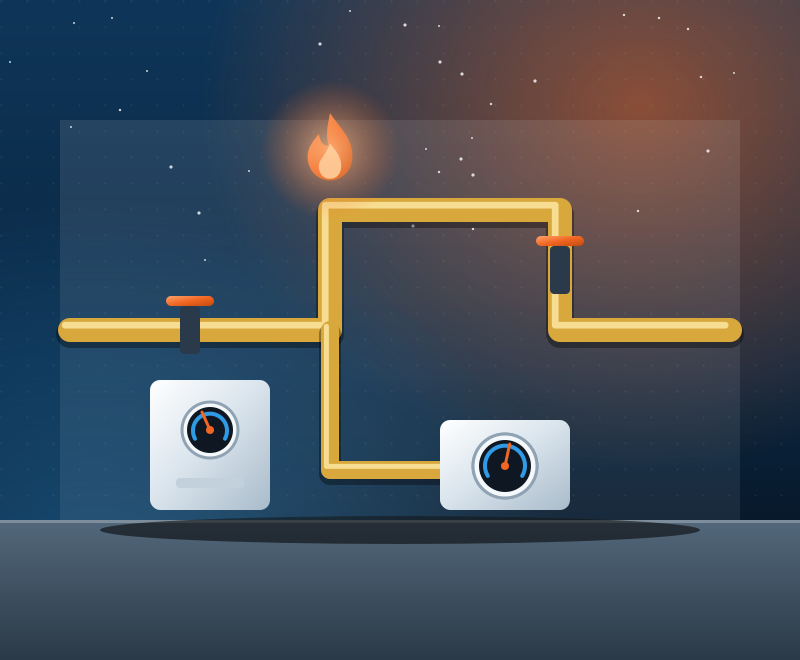
Photos from Kelvin Mechanical jobs. Labelled illustrations stand in where no job photo exists yet.
Good to know
Gas lines for each kind of appliance
Furnaces, boilers and water heaters
Replacing a furnace or adding a tankless heater often means a larger or longer line. We check capacity against the full home load. See furnace installation and tankless water heaters.
Stoves and fireplaces
Ranges and gas fireplaces need accessible shut-offs, correct connectors and, for fireplaces, proper venting. Moving a range often means a short extension from existing piping.
BBQs and outdoor appliances
Outdoor lines need weather-rated materials, protection from damage and a shut-off at the house. Long or underground runs are reviewed on site before we quote.
Generators
A standby generator draws a large gas load, so the meter, regulator and pipe may need upgrading, and the utility may be involved. The transfer switch is electrical work, covered under electrical panel and circuits.
If you smell gas
Leave the building at once. Do not use switches, lighters or phones inside. From outside, call 911 and your gas utility's emergency line, and do not try to find or fix a leak yourself. Return only when the utility says it is safe. Commercial properties have their own page: commercial gas lines.
Ontario notes
Gas lines in Ontario: utilities, rules and realities
Enbridge Gas and your meter
In much of the GTA, Enbridge Gas supplies natural gas and owns the meter and the supply line up to it. Adding a large appliance can mean asking the utility whether the meter or regulator can handle the load. Their process and timing are separate from ours, so it is worth asking early.
Regulated work and permits
Gas fitting is regulated work in Ontario. Permit and inspection requirements depend on the work and the municipality, and rules change. Kelvin Mechanical works with licensed and qualified professionals and trade partners, depending on the project scope. Never run a gas line yourself or hire someone who skips the permit.
Natural gas and propane
Where the network reaches, natural gas is the usual fuel. Rural and edge-of-network homes often use propane, which needs different regulators, tank placement and appliance settings. Moving between fuels is a project of its own, so tell us which you have so we can plan correctly.
Older homes and finished basements
Houses built between the 1950s and 1990s often have gas piping that was sized for fewer appliances, and finished ceilings can limit the route. We look at the path before quoting, since piping through finished space, outdoors or underground each has its own rules.
Help centre
Questions about Gas Lines
Can I run a gas line myself?
No. Gas fitting is regulated work that needs a licensed gas-fitting professional, with a permit and inspection where required. A do-it-yourself connection risks leaks, fire and carbon monoxide problems.
How is the pipe size decided?
From the total BTU/h demand of the appliances on the line, the pipe length and the number of fittings, using the code's sizing tables. That is why adding a tankless heater or generator can mean a bigger line.
Do you arrange permits and inspections?
Permits and inspections are handled with licensed gas-fitting professionals or trade partners where required. We explain the steps at the site review so there are no surprises.
What should I do if I think I have a gas leak?
Leave immediately and call 911 and your gas utility from outside. Do not turn anything on or off. Wait for the utility to confirm it is safe before anyone goes back in.
What affects the price of a gas line extension?
Pricing varies with pipe length, route, access, appliance load, permits and whether the utility needs to upgrade anything. A quote follows a site review, and you can start with Build My Quote.
How much gas can my meter and regulator handle?
That depends on the meter and regulator size and the combined load of every appliance on the line. Adding a tankless water heater, a generator or a larger furnace can push the total higher. Enbridge Gas controls the meter and regulator. We list your appliance loads and confirm whether the utility needs to be involved.
Does Enbridge Gas need to be involved in a new gas line?
Work inside your property is done by qualified gas professionals, while the utility owns and services the meter and the supply up to it. If the meter or service needs upgrading or moving, Enbridge Gas is involved and the timing is theirs. We explain which parts apply to your project at the site review.
Can I convert my electric stove or dryer to natural gas?
Often yes, if there is a gas line nearby or one can be extended. You need a gas-ready appliance, approved connectors, a shut-off valve and, for a dryer, a proper vent to the outdoors. Gas work is regulated, so it is done by qualified professionals with permits where required.
Can I add a gas line for an outdoor BBQ or fire table?
Yes, in many homes. The line needs weather-rated materials, protection from damage, a shut-off at the house and a quick-connect or fixed connection suited to the appliance. A long or buried run is reviewed on site before we quote. Check your municipality's rules for outdoor gas appliances.
Is natural gas or propane used in Ontario homes?
Natural gas is common in towns and cities where the utility network reaches. Homes beyond the network often use propane delivered to a tank or cylinders. Appliances are set up for one fuel or the other, and some can be converted with the right kit. Propane tanks have their own placement rules.
What does a gas line pressure test involve?
New piping is sealed, filled with a test pressure and watched for any drop, and fittings are checked for leaks before gas is turned on. The test is done before the line is put in service and before inspection where required. A line that does not hold pressure is corrected and tested again.
Should I worry about old gas piping in an older home?
Old black iron piping can corrode at fittings or be too small for modern appliances, and flexible stove connectors wear out. We can look at accessible piping during a visit, but we do not inspect the utility's supply line. If you smell gas at any time, leave and call 911 and your gas utility.
Where we do this work
Gas Lines in Toronto, the GTA and Hamilton
Toronto Mississauga Brampton Vaughan Markham Oakville Burlington Hamilton All service areas Heating and cooling services
Quote and booking
Request: Gas Lines
Share a few details and we will follow up. A written quote comes after a site review. There is no online checkout.
- City and service type help us route your request
- Urgency and property details let us prepare properly
- Optional equipment photos speed up repairs and replacements
Prefer to talk? +1 905-407-7353
Gas smell or carbon monoxide alarm? Leave the building and call 911 first. Do not use this form.