
Thermostats and controls
Smart Thermostat Installation and Wiring for Ontario Heating and Cooling
A smart thermostat only works as well as its wiring and compatibility. We match the thermostat to your furnace, air conditioner or heat pump, configure it properly and show you how to use it.
- ScopeSelection, wiring and setup
- SystemsFurnace, AC, heat pump, zoned
- Example brandecobee
 Serving the GTA and nearby Ontario
Scope
Thermostat checks before anything is mounted
- Compatibility review for single-stage, two-stage and modulating furnaces
- C-wire check, and options when the existing wiring has no common wire
- Heat pump setup: reversing valve (O/B) setting, auxiliary heat and lockout temperatures
- Dual-fuel and hybrid logic so the furnace and heat pump do not fight each other
- Zoning compatibility, with zone panels and dampers confirmed before controls change
- Humidifier, ventilator and accessory terminals wired and configured
- Scheduling, remote access and alerts set up around how the household lives
- Privacy and account settings reviewed with you before we leave
Process
How a thermostat swap is done properly
Every job starts with a conversation and a look at the equipment. You see the options in plain language before anything is booked.
- 1
Identify what it controls
We confirm whether the thermostat runs a furnace, AC, heat pump, boiler or a combination. Line-voltage baseboard heaters need a different thermostat, and many smart models are low-voltage only.
- 2
Check the wires and power
We photograph and label the existing wires, check for a C-wire and test the transformer. With no C-wire, we discuss adding one or using a power-extender accessory instead of guessing.
- 3
Configure for the equipment
Stages, reversing valve polarity, fan control, auxiliary heat and lockouts are set to suit the equipment, not left on factory defaults. For a hybrid system we set the furnace and heat pump switchover logic with you.
- 4
Test and schedule
We test heating and cooling calls, the fan, and any humidifier or accessory outputs. Then we set a schedule that suits the household and explain setbacks in plain terms.
- 5
Review privacy and connectivity
You choose what data is shared and who has account access. We explain Wi-Fi needs and how the thermostat behaves if the internet drops.
In pictures
What this work looks like
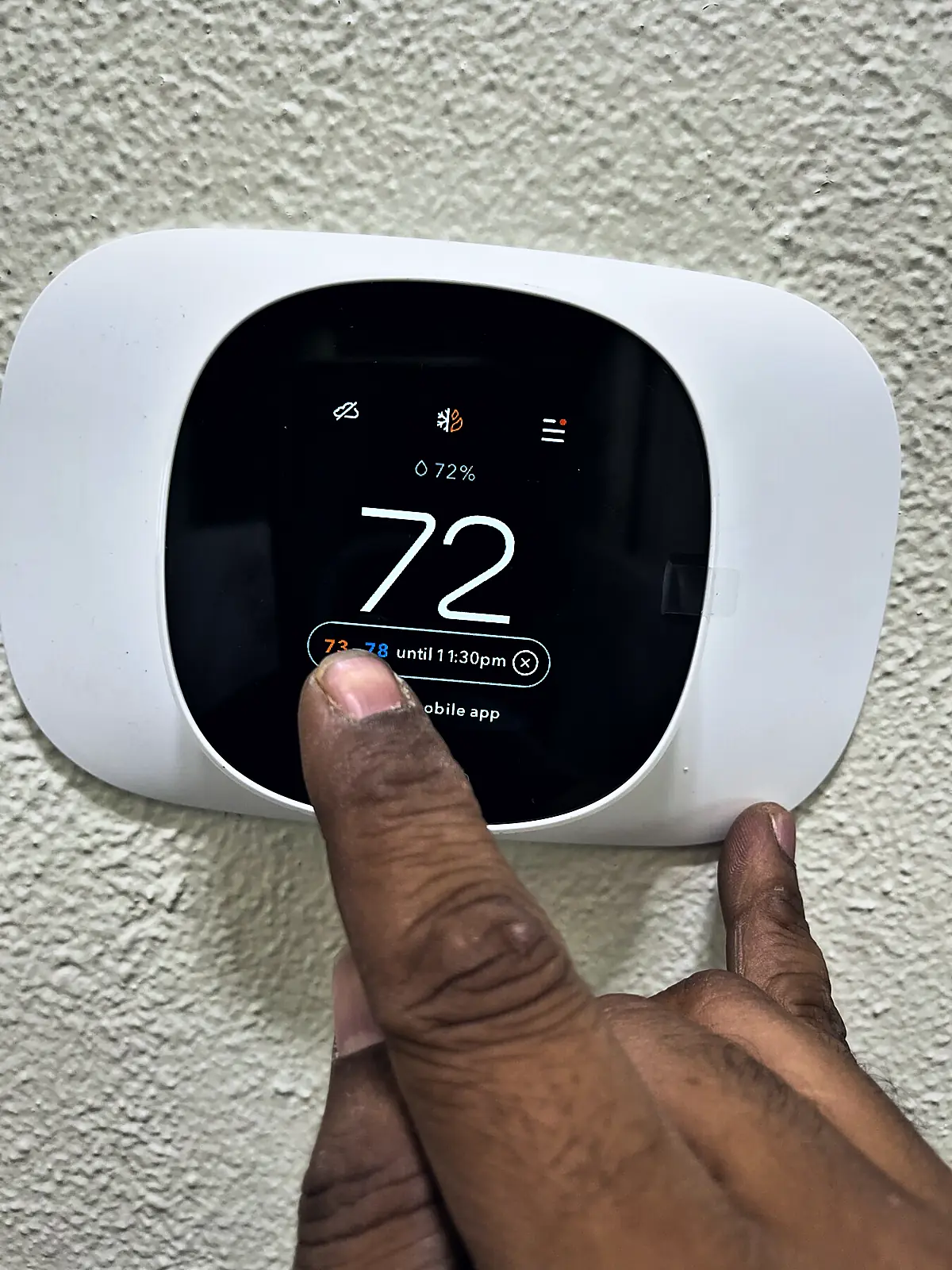
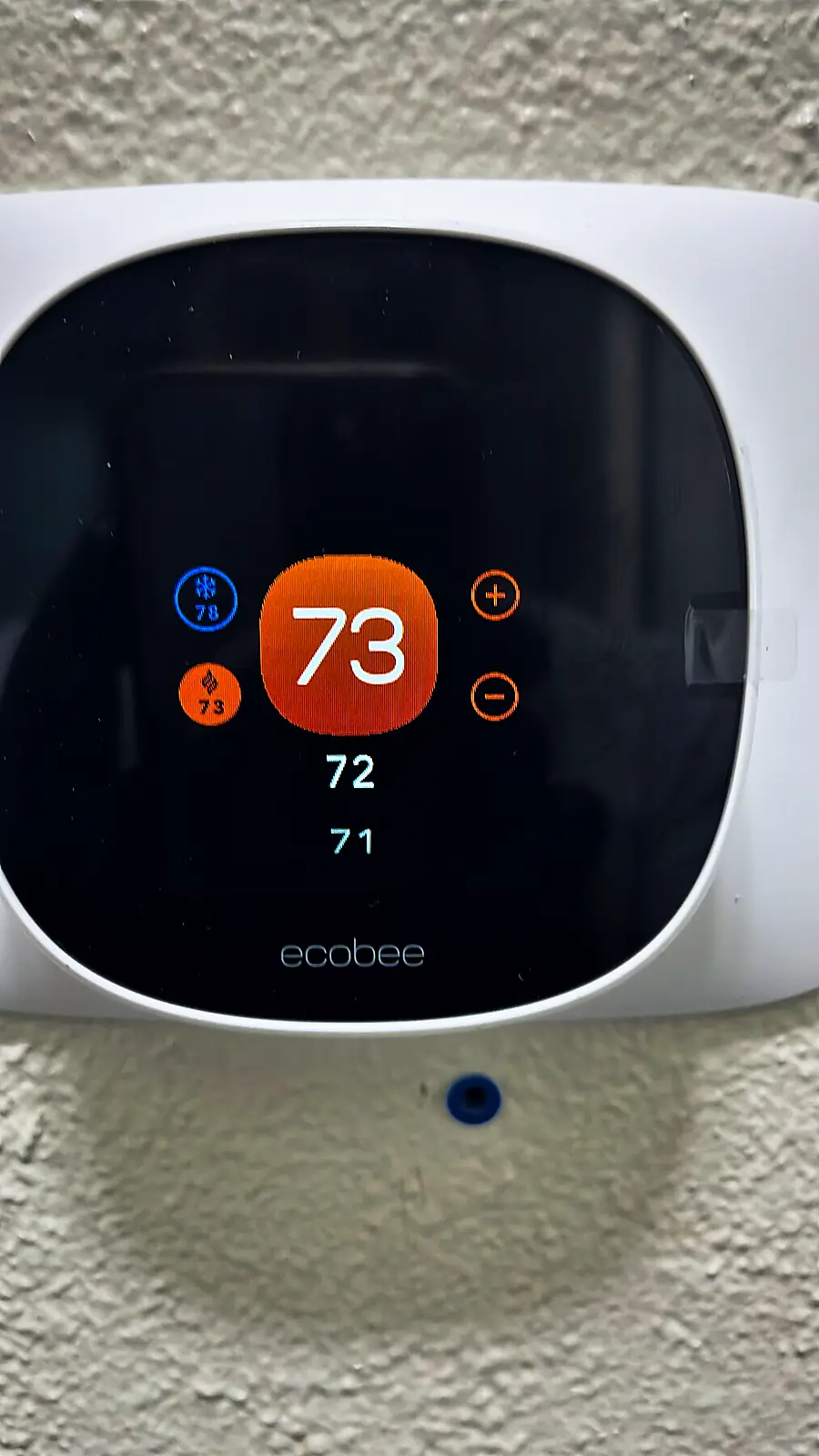 Kelvin job photo
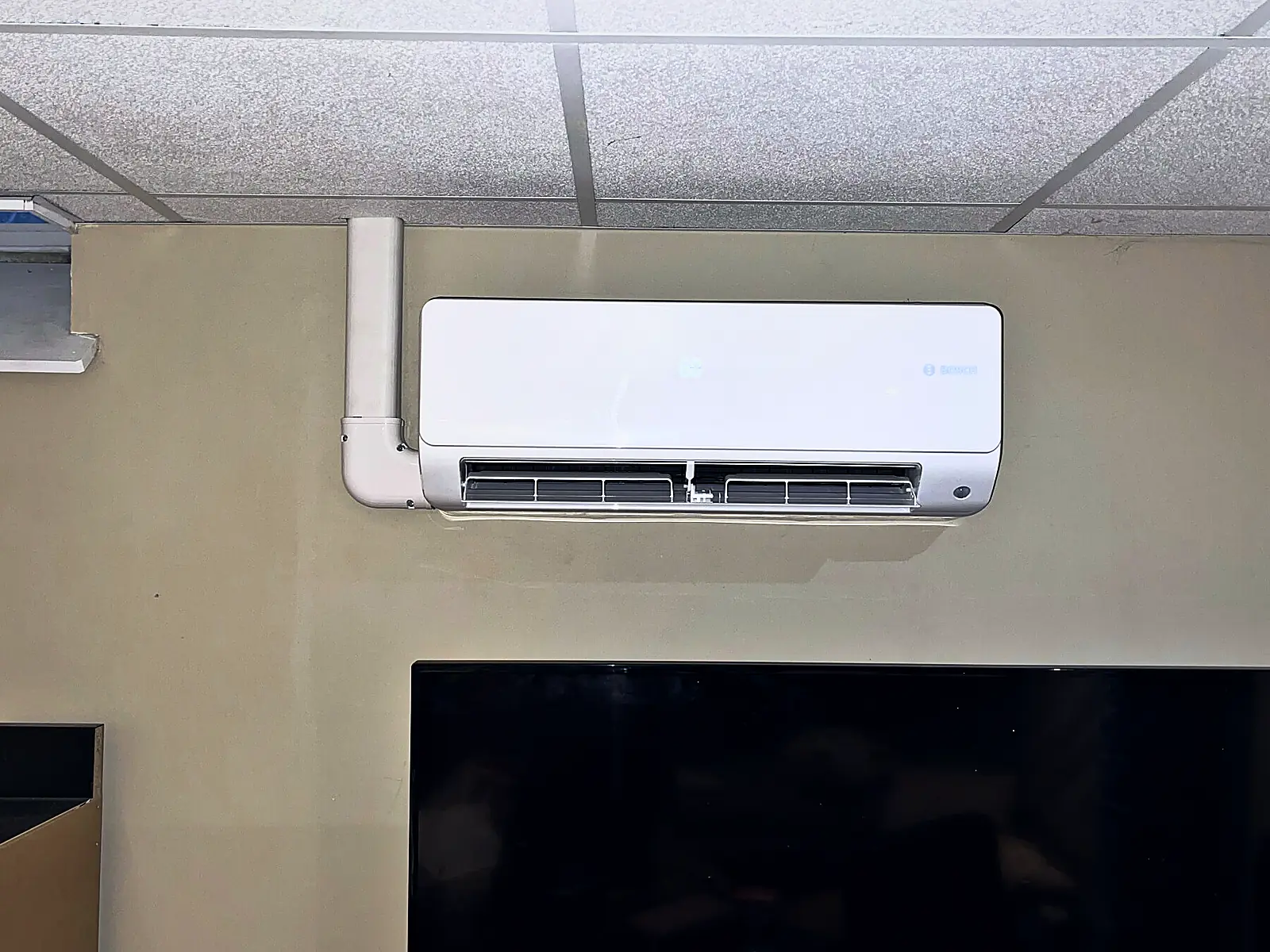 Kelvin job photo
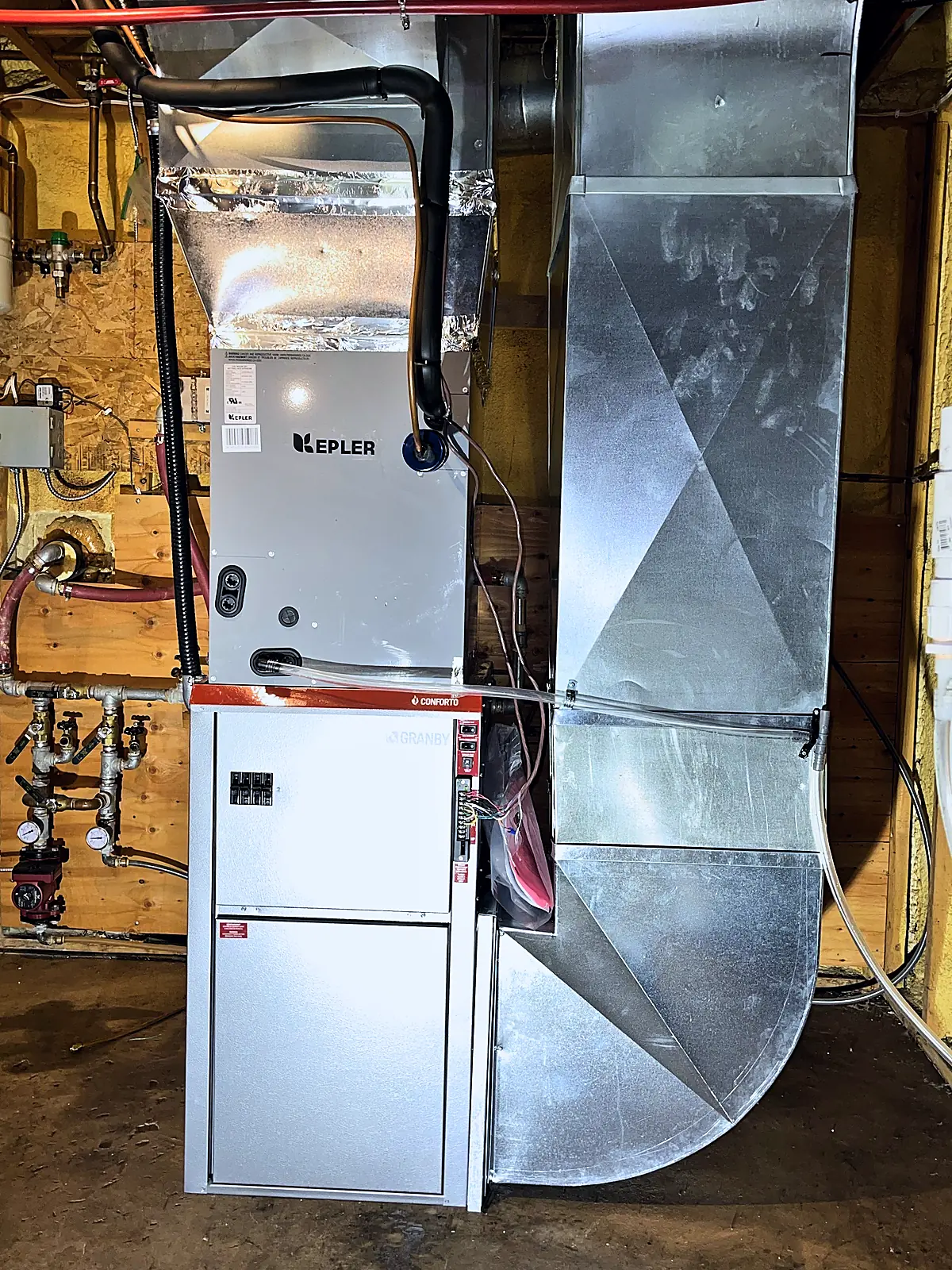 Kelvin job photo
Photos from Kelvin Mechanical jobs in the GTA and nearby Ontario.
Good to know
Where smart thermostats get complicated
Two-stage and modulating equipment
Many smart thermostats run two-stage heating or cooling when they have the right terminals. Modulating furnaces and variable-capacity systems often need the manufacturer's communicating control for full performance, and a standard smart thermostat may run them in a simplified mode. We check before you buy.
Heat pumps and reversing valves
Heat pumps use an O or B terminal to switch between heating and cooling, and the wrong setting gives cool air in winter and warm air in summer. Auxiliary heat and defrost behaviour need correct settings too. See heat pump installation.
Zoned systems
Zone panels already manage dampers and several thermostats. A smart thermostat may work with a panel, replace it or conflict with it, depending on the brand. We verify before changing anything.
ecobee and other brands
ecobee is a common example, with room sensors, scheduling and remote access. Other brands may suit your system better, so we recommend on compatibility and the features you will use, not on a logo.
Programs, savings and your data
Some utilities or programs may offer thermostat incentives or demand-response enrolment. Availability, eligibility and terms change and depend on the provider, so check current rules before you buy; see rebate eligibility for how we approach Ontario programs. Savings depend on your schedule, home and equipment. Thermostats also collect runtime and usage data, so review account access and any sharing with a utility program.
Ontario notes
Smart thermostats in Ontario: wiring, rates and programs
Older wiring in 1950s to 1990s homes
Thermostat cable in older Ontario homes often has only two or four wires, which can leave no common wire. Options include running new cable, repurposing a spare wire or using a power-extender accessory. We check what the wall and equipment support before you buy.
Time-of-use electricity and heat pumps
Ontario electricity plans can differ by time of day, so scheduling matters most for electric heating and cooling, such as heat pumps and air conditioners. For a gas furnace, the thermostat mainly affects gas use and blower power. Compare your actual plan before expecting savings.
Hybrid and dual-fuel control
Homes that combine a heat pump with a furnace need switchover logic that decides which source runs at each outdoor temperature. A thermostat that handles it incorrectly can run the wrong equipment at the wrong time. We set the changeover to match the equipment design and your energy rates.
Programs, privacy and data
Utility and provincial programs may offer thermostat incentives, but eligibility and terms change. Review current rules before you buy. Thermostats also record runtime and usage data, so check account access and any sharing with a program. See rebate eligibility for how we approach programs.
Equipment we install and service

Brand names and logos belong to their owners. Availability depends on the product line and region.
Help centre
Questions about Smart Thermostats
Do I need a C-wire for a smart thermostat?
Many smart thermostats need continuous power, so a C-wire is the cleanest answer. Without one, options include running a new wire, repurposing a spare wire or using a power-extender accessory. We check what the wall and the equipment can support.
Will a smart thermostat work with my heat pump?
Most can, if they support heat pump terminals and the reversing valve (O/B) and auxiliary heat are configured correctly. Hybrid and dual-fuel systems need extra switchover logic. Tell us the equipment and we confirm compatibility.
Can it control a two-stage or modulating furnace?
Two-stage equipment works with many models that have the right terminals. Modulating equipment usually needs the manufacturer's communicating thermostat for full modulation. Staged equipment is covered under furnace installation.
Is ecobee the only choice?
No. ecobee is one example that often comes up for homes that want room sensors and remote access. We help you choose among suitable brands based on your system, wiring and the features you will use.
Who can see my thermostat data?
That depends on the brand's account settings and any program you join. Review what is collected, who has access and whether you have agreed to share it with a utility or third party. We walk through the main settings at install, and the brand's privacy policy has the final word.
Will a smart thermostat save money on my Ontario heating and cooling bills?
It can, depending on your schedule, home, equipment and settings, but no thermostat can promise a specific saving. A schedule that matches when you are home, plus sensible setbacks, is where most of the benefit comes from. Wiring and setup matter, since a poorly configured smart thermostat can waste what it was meant to save.
Can I use a smart thermostat with electric baseboard heaters?
Baseboard heaters in many older Ontario homes and basements run on line voltage, and they need a thermostat rated for it. Most smart thermostats are low-voltage only. Some line-voltage smart models exist, and electrical work is done by licensed electrical professionals or trade partners, with permits and ESA notification where required. Tell us what type of heating you have.
How does a smart thermostat work with Ontario time-of-use electricity rates?
Many Ontario households can choose time-of-use pricing, with different rates at different times of day. A smart thermostat can shift schedules for a heat pump or air conditioner to suit your plan. Savings depend on your rates, equipment and habits, and the rates change, so check your provider's current plans.
Will a smart thermostat control my humidifier or HRV?
Many models have accessory terminals for a humidifier, HRV or ERV, but wiring and settings differ by equipment, and the thermostat has to be set up to match. We confirm the terminals, configure the accessory and test it after install. See humidifier installation if you are adding one.
What happens to a smart thermostat when the Wi-Fi or power goes out?
Most keep basic local control when the internet drops, though remote access and some features pause. After a power outage, the thermostat restarts and usually restores its settings, but behaviour varies by model. We explain how the one we install behaves and where the settings are stored.
Can I install a smart thermostat myself?
Simple low-voltage swaps are common do-it-yourself jobs when the power is switched off first, but mistakes can damage a control board. Heat pump, dual-fuel, zoned and line-voltage systems need correct configuration, such as reversing valve and auxiliary heat settings. We recommend a professional install for those systems.
Where should a smart thermostat go in my house?
Choose an interior wall in a room you use often, away from direct sunlight, drafts, kitchens and supply registers. Exterior walls and spots near stairwells can give misleading readings. In larger or two-storey homes, remote sensors can help. We check the location when we install.
Will a smart thermostat work with a gas fireplace or older wall furnace?
Many gas fireplaces and older wall heaters use a millivolt control, which is different from the low-voltage system most smart thermostats need. Some can be controlled with a compatible accessory, while others cannot. Tell us what the thermostat controls, and we confirm what will work before you buy.
Where we do this work
Smart Thermostats in Toronto, the GTA and Hamilton
Toronto Mississauga Brampton Vaughan Markham Oakville Burlington Hamilton All service areas Heating and cooling services
Quote and booking
Request: Smart Thermostats
Share a few details and we will follow up. A written quote comes after a site review. There is no online checkout.
- City and service type help us route your request
- Urgency and property details let us prepare properly
- Optional equipment photos speed up repairs and replacements
Prefer to talk? +1 905-407-7353
Gas smell or carbon monoxide alarm? Leave the building and call 911 first. Do not use this form.