
Serving the GTA and nearby Ontario info@kelvinmechanical.ca +1 905-407-7353

Restaurant HVAC

Restaurant HVAC: Dining Room Comfort, Kitchen Air Balance and Equipment Service

Heating, cooling and ventilation coordination for dining rooms, bars and kitchens, planned around service hours and the heat and grease the kitchen produces.

  • ScopeInstall, repair and maintain
  • SpacesDining rooms, bars, kitchens, patios
  • SchedulingPlanned around service hours
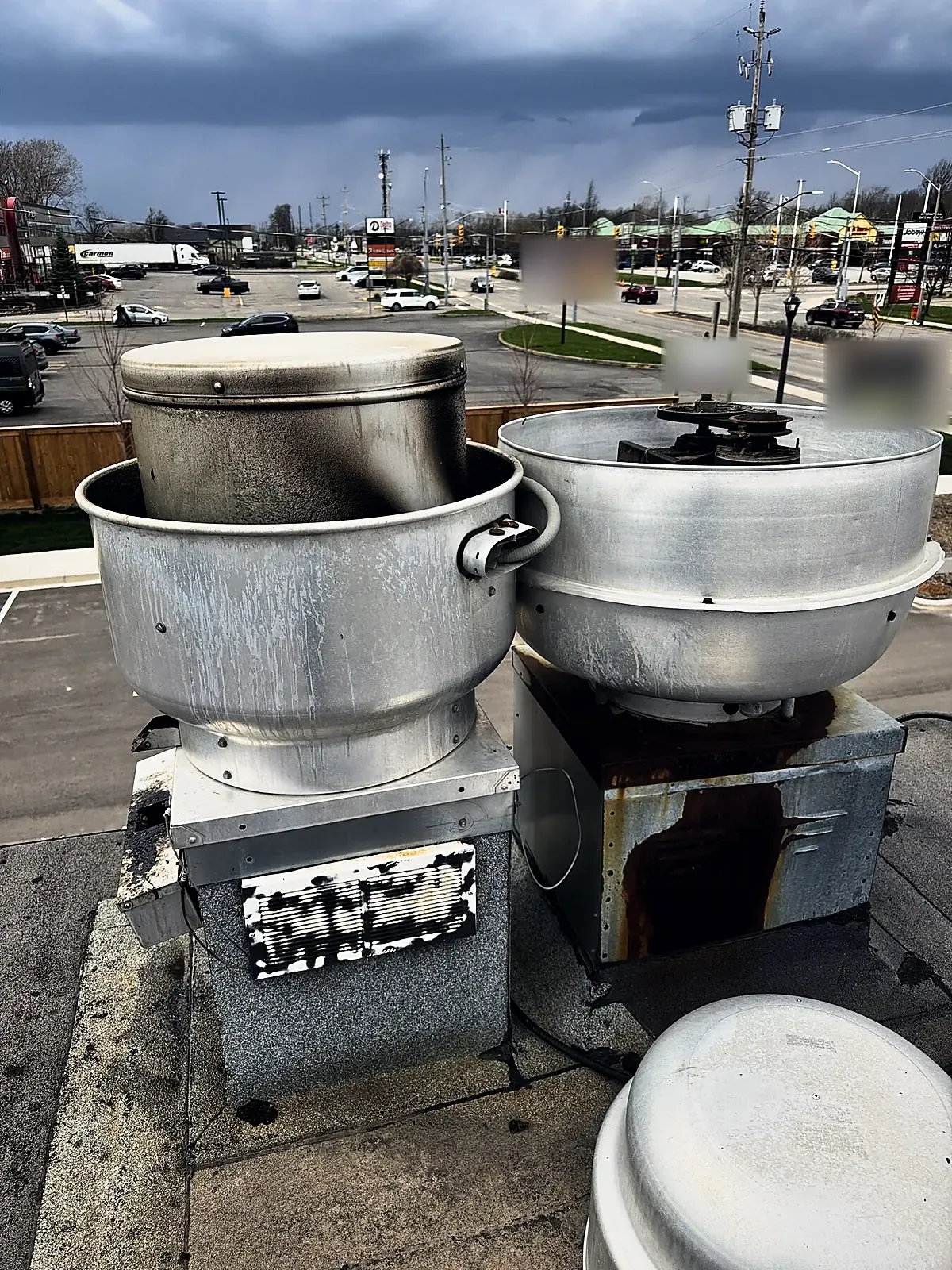
Two rooftop upblast exhaust fans for a commercial kitchen hood, with a plaza behindServing the GTA and nearby Ontario

Scope

Restaurant systems we look after

  • Dining room cooling and heating through rooftop units, packaged units or split systems
  • Make-up air balance so the kitchen stays slightly negative to the dining room
  • RTU placement reviewed against exhaust discharge to limit grease and odour intake
  • Heat load review for cooking lines, dish rooms and bar areas
  • Coil, condenser and filter cleaning schedules matched to grease and dust conditions
  • Thermostat zoning between dining room, bar, kitchen and back-of-house
  • Washroom and storage exhaust checks
  • Service and replacement work planned for closed hours, subject to availability

Process

Planning restaurant work around service hours

Every job starts with a conversation and a look at the equipment. You see the options in plain language before anything is booked.

Request a restaurant HVAC quote

  1. 1

    Walk the service flow

    We visit during a normal service period when possible, noting where it runs hot or cold, how the cooking line is arranged and which doors and patios affect the dining room. If service hours make that impractical, photos and a short call with the manager fill the gap.

  2. 2

    Map air in and air out

    Every exhaust fan, hood and supply source is listed, along with the make-up air unit. The aim is a kitchen that sits slightly negative to the dining room so odours move toward the hood, not the guests.

  3. 3

    Write a scope with closed-hour windows

    The written scope separates work that can happen during service from work that needs the kitchen or dining room shut down. Parts are ordered ahead so the closed window is spent on the job, not on waiting.

  4. 4

    Work in stages

    Where possible, one system is serviced at a time so the dining room keeps cooling or heating. Power and gas isolation is agreed with the manager before any shutdown.

  5. 5

    Re-test at cooking load

    Airflow and pressure are checked again with the cooking line and exhaust running. The make-up air readings and thermostat settings go into the service note.

Interactive

Make-up air balance

How much make-up air comes in compared with the air your exhaust fans push out?

Simplified picture of building pressure. We measure airflow and pressure on site before proposing changes.

Ask us about it

Make-up air balanceTry it
60%

In pictures

What this work looks like

Rooftop unit serviceKelvin job photo
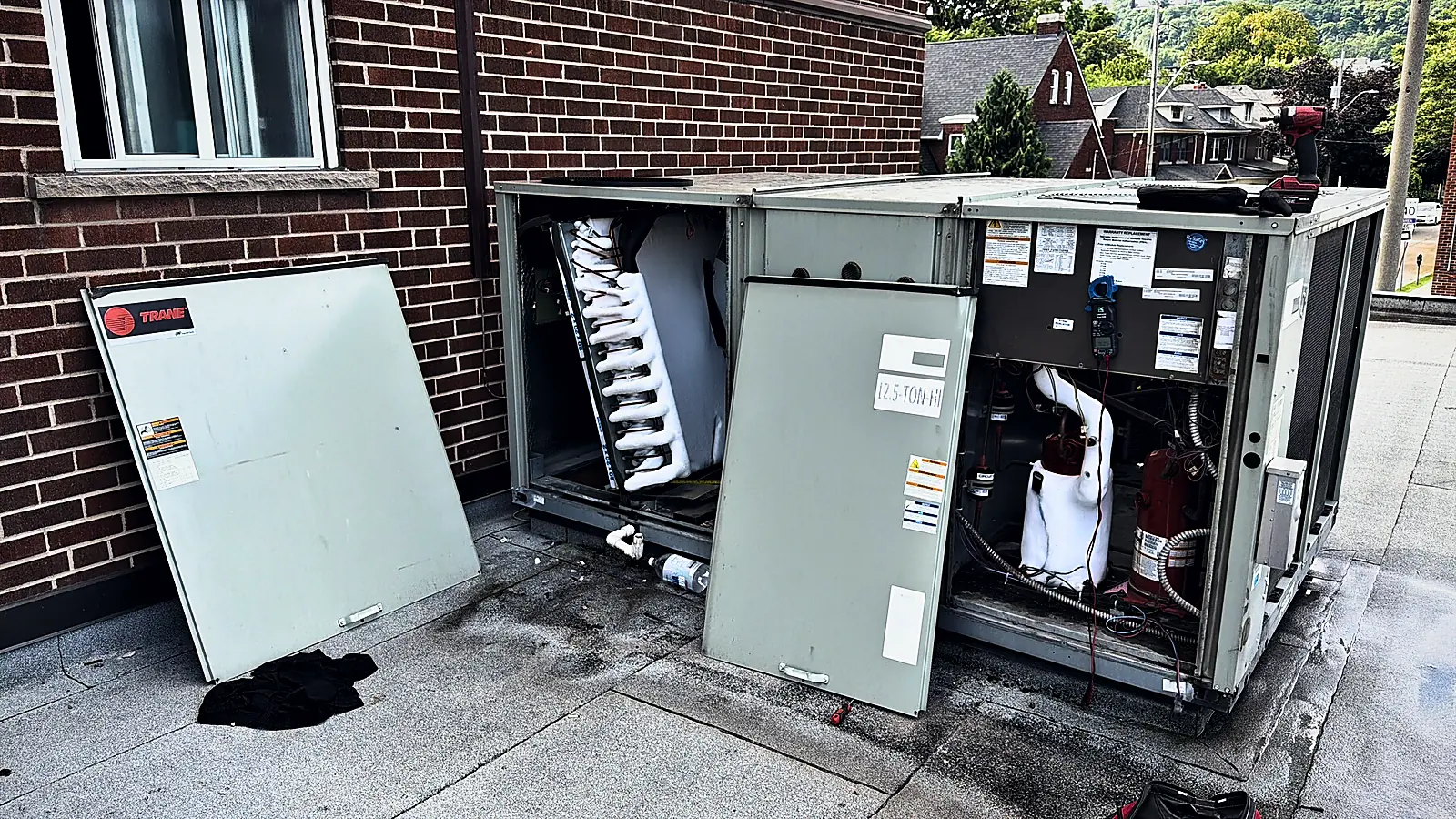
Rooftop unit servicePanels open on a 12.5-ton rooftop unit
Blower and motorKelvin job photo
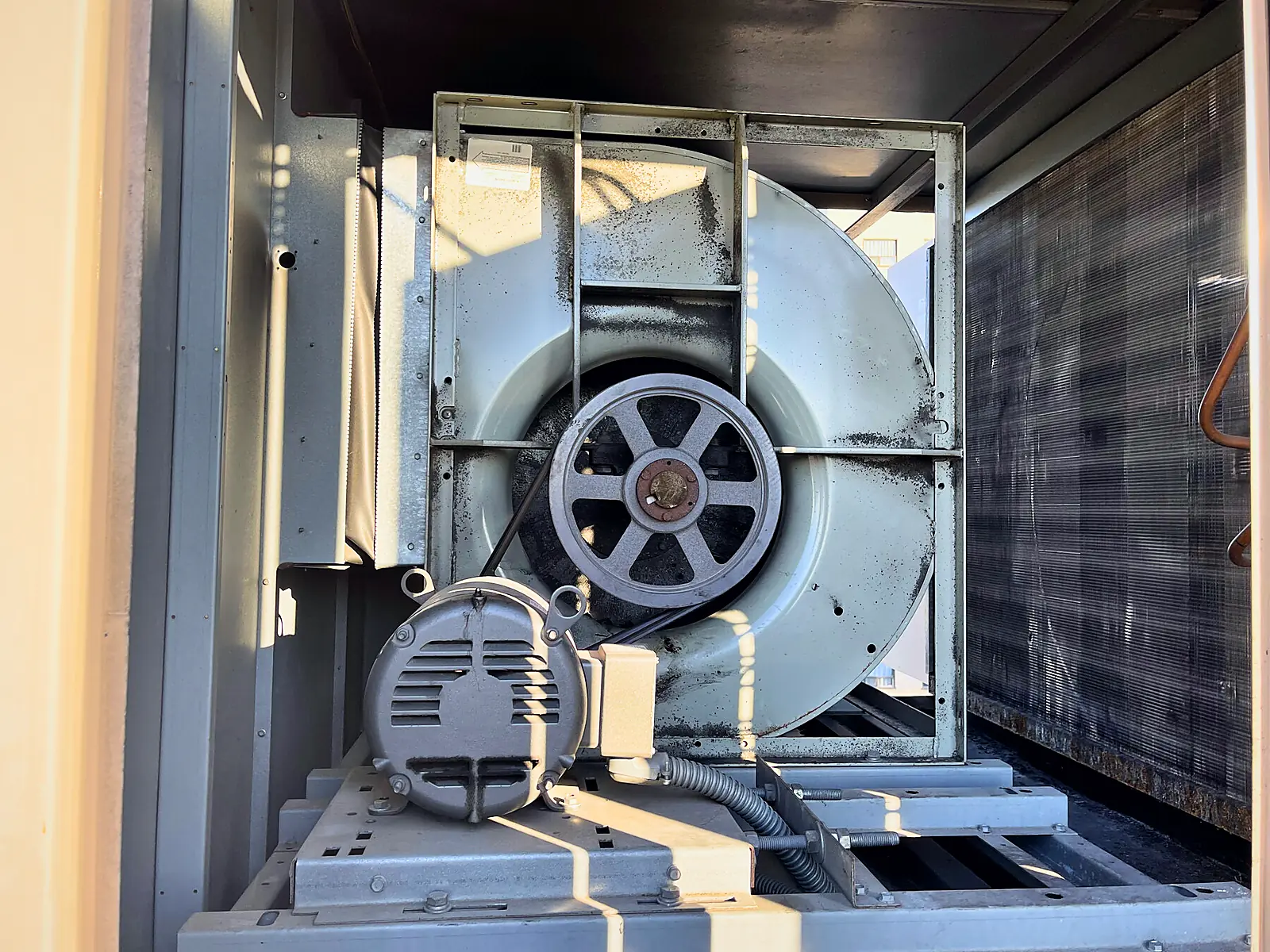
Blower and motorVentilation fan section
Rooftop duct section and pipingKelvin job photo
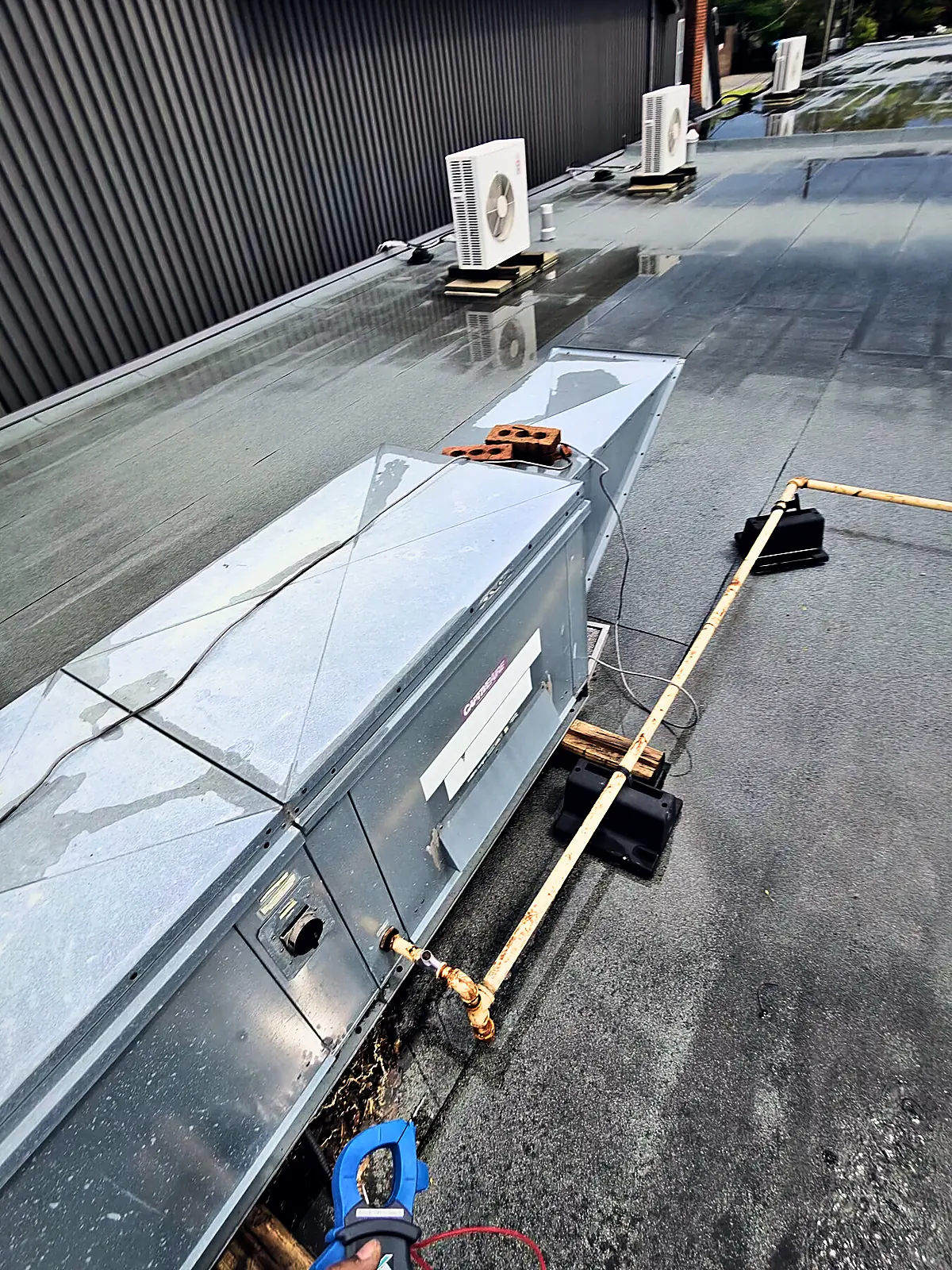
Rooftop duct section and pipingDuct and pipe supports on a flat roof

Photos from Kelvin Mechanical jobs in the GTA and nearby Ontario.

Good to know

What drives restaurant comfort complaints

A hot dining room near the pass

Radiant heat from the cooking line, plus air pulled toward the hood, shifts the load in one corner. A better supply layout or a thermostat in the wrong place can both be part of the story.

Greasy coils and fouled filters

Grease-laden air coats coils and filters near exhaust discharge. Airflow drops, coils lose capacity and compressors work harder, so cleaning schedules matter more here than in an office.

Pressure fights at the doors

Hard-to-open doors, cold drafts at the entry and odours drifting into the dining room usually point to exhaust outrunning the make-up air. Balancing fixes the cause instead of chasing the symptom.

Peak-load surprises

A full Friday night with patio doors open can exceed what a unit handles on a quiet afternoon. Load, equipment age and refrigerant condition are reviewed together.

Install, repair, maintain

01

Installation: planned around opening hours

Replacement of dining-room units and make-up air equipment is scheduled for closed periods where possible. Balance and interlock tests are part of the finish.

02

Repair: restore comfort without guesswork

We diagnose the failed part, whether a blower, burner, controller or compressor component, and give written options. The dining room and kitchen are kept in mind when we plan the order of work.

03

Maintenance: tuned to grease and heat

Cleaning intervals for coils and filters follow what we see on the roof and in the kitchen. Planned visits cut the odds of a breakdown on a busy weekend.

Trades we coordinate with, not replace

Fire-suppression systems, hood-and-duct cleaning and commercial refrigeration (walk-in coolers and freezers) are specialist trades and are outside our scope. We coordinate access and timing with them and keep our service notes clear about which equipment we touched.

What should an Ontario restaurant check each season?

A restaurant works its HVAC hard in every season, so a short seasonal routine is easier to live with than one large annual visit. The checks below are a starting point that we adjust for each kitchen after a site walk.

Spring is cooling readiness before the patio season. Summer is about keeping coils and filters clean under heavy load. Fall is when the heating side, the make-up air burner and the entrance drafts need attention. Winter is about intakes, snow and keeping the doors from fighting the exhaust.

Write each result down. A simple note after every visit shows which units are aging, which coils foul fastest and where comfort complaints keep returning.

  • Spring: clean condenser coils, clear condensate drains and test cooling before the first hot week
  • Summer: check filters often and watch rooftop units near the exhaust for grease on the coils
  • Fall: test the make-up air burner, discharge temperature and exhaust interlock before the cold arrives
  • Winter: keep intakes and flues clear of snow and note door drafts at entrances
  • All year: record filter sizes, belt condition and any change in noise or comfort

Customer reviews

What a customer says

As a Sana Grill restaurant in Stoney Creek we had a great experienc with Zia last month.his not just a gret profisional contractor his kind gentelmn out his own soul In his work.alwys give him a calll when we need se. Thing relted to het pump or AC. Shkar

Allan K. Google review

Five-star Google reviews, copied as written with shortened names. Read more reviews

Help centre

Questions about Restaurant HVAC

Can you work outside our opening hours?

We can plan work for closed hours or slow periods. Availability depends on the schedule and the scope, and any after-hours arrangement is confirmed in writing before the visit.

Why is my dining room hot when the kitchen exhaust is running?

Exhaust fans pull conditioned air out of the building. If make-up air does not replace it, the dining room loses cooling capacity and the space turns uncomfortable. A balance check usually finds the cause.

Do you clean hoods or install fire suppression?

No. Hood-and-duct cleaning and fire-suppression work belong to specialist trades. We coordinate with them and handle the fans, make-up air and HVAC side. See kitchen ventilation support for details.

Do you service walk-in coolers?

Commercial refrigeration is outside our scope. We service the HVAC and make-up air side and coordinate with your refrigeration contractor when equipment shares a roof or a power supply.

What should I send for a restaurant quote?

Nameplate photos of rooftop and make-up air units, the hood layout, opening hours and access details. Add them to a request through Build My Quote.

Why is my restaurant cold near the entrance in winter?

Cold drafts at the door usually mean the exhaust is pulling more air than the make-up air supplies, so outdoor air is drawn in through the entrance. Heavy door traffic adds to it. A balance check of the exhaust, the make-up air unit and the dining room units usually finds the cause. A vestibule or door change is a separate question.

How often should restaurant rooftop units be serviced?

Restaurants often need more frequent coil and filter attention than offices, because grease and dust coat the equipment. A common approach is seasonal visits with extra cleaning checks near the exhaust discharge. The schedule depends on cooking volume and roof layout. Details on planned visits are under commercial maintenance.

Why does my rooftop unit pull kitchen exhaust smells into the dining room?

If the outdoor air intake of a rooftop unit sits near the kitchen exhaust discharge, it can draw smells and grease back inside. Wind direction and roof layout matter. Moving an intake or a fan is a design decision that involves your landlord and often a designer, so we document what we see and discuss the options in writing.

Do I need a permit to replace restaurant HVAC equipment?

Often yes, depending on what changes. Gas piping, new roof equipment and electrical work can each need a permit or a notification. A like-for-like swap may be simpler than a new layout. Rules differ by municipality and change, so we confirm the steps in the written scope. Landlord approval is a separate step.

How does an open patio door affect restaurant air conditioning?

Open patio doors let hot, humid air in, add load to the dining room units and change the pressure balance with the kitchen. On a busy summer evening that can push a system past what it handles on a quiet afternoon. Planning for peak conditions, not average ones, is part of sizing and balancing.

What should I do if my restaurant loses air conditioning on a hot day?

Check the thermostat mode, the breaker and the filter. Do not keep resetting a unit that trips repeatedly. Food safety and opening decisions are yours, so follow your local public health guidance. For service, call +1 905-407-7353. Emergency service is subject to availability, and the commercial emergency pathway lists what to have ready.

How do I plan restaurant HVAC replacement around a lease or renovation?

Start with the lease terms on equipment and roof access, then agree timing with your landlord. Book site walks before the busy season, since lead times depend on equipment and suppliers. A written scope lists the work, the shutdown windows and the trades involved, so the landlord, the contractor and the manager can all review it.

Should a restaurant kitchen be air conditioned too?

Many kitchens rely on make-up air rather than full cooling, but heat from cooking lines can be significant. Options range from tempered or cooled make-up air to spot cooling, and the right one depends on the layout, the exhaust and the equipment. It is a design question, so we review the space before recommending anything.

Where we do this work

Restaurant HVAC in Toronto, the GTA and Hamilton

Toronto Mississauga Brampton Vaughan Markham Oakville Burlington Hamilton All service areas

Quote and booking

Request: Restaurant HVAC

Share a few details and we will follow up. A written quote comes after a site review. There is no online checkout.

  • City and service type help us route your request
  • Urgency and property details let us prepare properly
  • Optional equipment photos speed up repairs and replacements

Prefer to talk? +1 905-407-7353

Gas smell or carbon monoxide alarm? Leave the building and call 911 first. Do not use this form.