
Water heating overview
Tank, Tankless or Heat Pump: Choosing a Water Heater for Your Ontario Home
Compare atmospheric and power-vented gas tank, electric tank, gas and electric tankless and hybrid heat pump water heaters by household demand, venting, combustion air, electrical supply, water quality, upkeep and rental or ownership. Then go straight to the page that fits.
- ComparesGas tank, electric tank, tankless, hybrid
- ServiceInstall, repair and maintenance
- Next stepSite review, then a quote
 Serving the GTA and nearby Ontario
Scope
Six water heater types, plus sizing and ownership
- Atmospheric (natural-draft) gas tank: stored hot water, a draft hood venting into a sound chimney, liner or B-vent, combustion air drawn from the room, no electrical outlet needed
- Power-vented gas tank: a blower pushes exhaust through certified PVC or CPVC pipe to a sidewall termination, room combustion air, needs a 120 V outlet
- Electric tank: no flue and no combustion air, needs a dedicated 240 V circuit sized to the nameplate, and recovers more slowly than most gas tanks
- Gas tankless: hot water on demand, with real demands on gas line sizing, category venting to the manufacturer listing, a 120 V supply for controls and a condensate drain on condensing models
- Electric tankless: no flue or vent, but a whole-home unit draws a very large electrical load, often several 240 V circuits, that many panels cannot support
- Hybrid heat pump tank: draws heat from room air, so it needs room volume, airflow, a condensate drain and a dedicated 240 V circuit
- Size by peak overlap (showers, laundry, dishwasher), not by headcount alone
- Renting, financing and buying outright are separate arrangements, each with its own terms
Process
Narrowing the choice for your household
Every job starts with a conversation and a look at the equipment. You see the options in plain language before anything is booked.
- 1
Count your real peak hour
Family size matters, but overlap matters more. Two showers, a dishwasher and a laundry load at once is a different job from one shower at a time. Tell us about bathrooms, soaker tubs and visiting family.
- 2
Check what the house can vent
An atmospheric gas tank on a chimney, a power-vented tank through a sidewall and a condensing tankless on plastic pipe all need different routes, and every gas unit needs enough combustion air. Electric and hybrid units need no flue, but they have their own space and electrical needs.
- 3
Test the water
Hard water scales tankless heat exchangers and electric elements, and it builds sediment in tanks. Ontario water varies by municipality and between well and municipal supply, so a test of your own tap beats a regional guess. Treatment options exist if the test shows a problem.
- 4
Weigh the upkeep
Tanks want periodic flushing and an anode check. Tankless units want descaling and a clear condensate path. Hybrid units add filter and drain care. A unit that costs less to buy can cost more to look after.
- 5
Decide on rental or ownership
Renting, financing and owning work differently, and rental agreements carry their own exit and buyout terms. Offers are conditional and subject to provider approval, terms and expiry. Read through financing options before you sign anything.
In pictures
What this work looks like
 Kelvin job photo
 Kelvin job photo
 Kelvin job photo
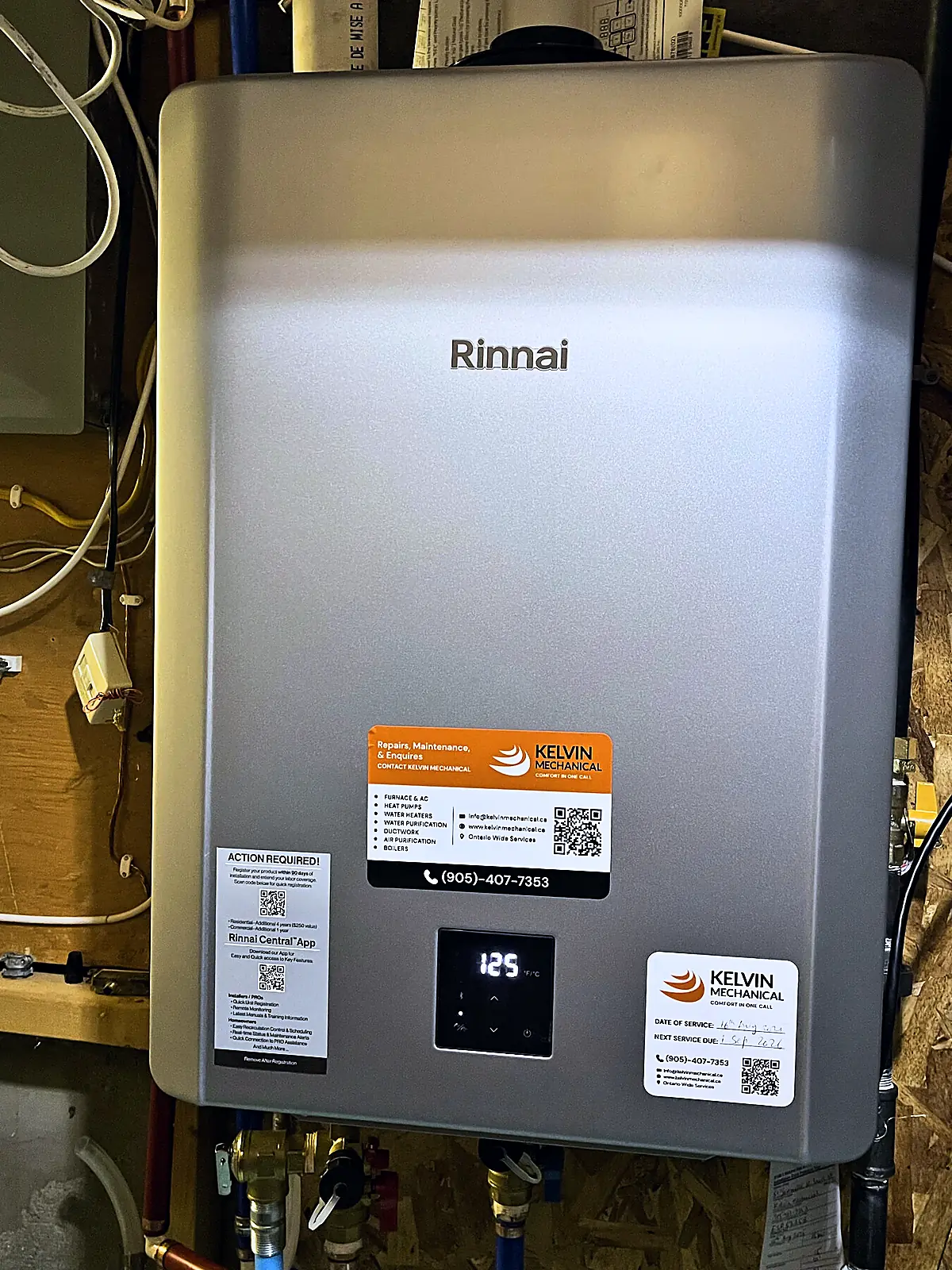
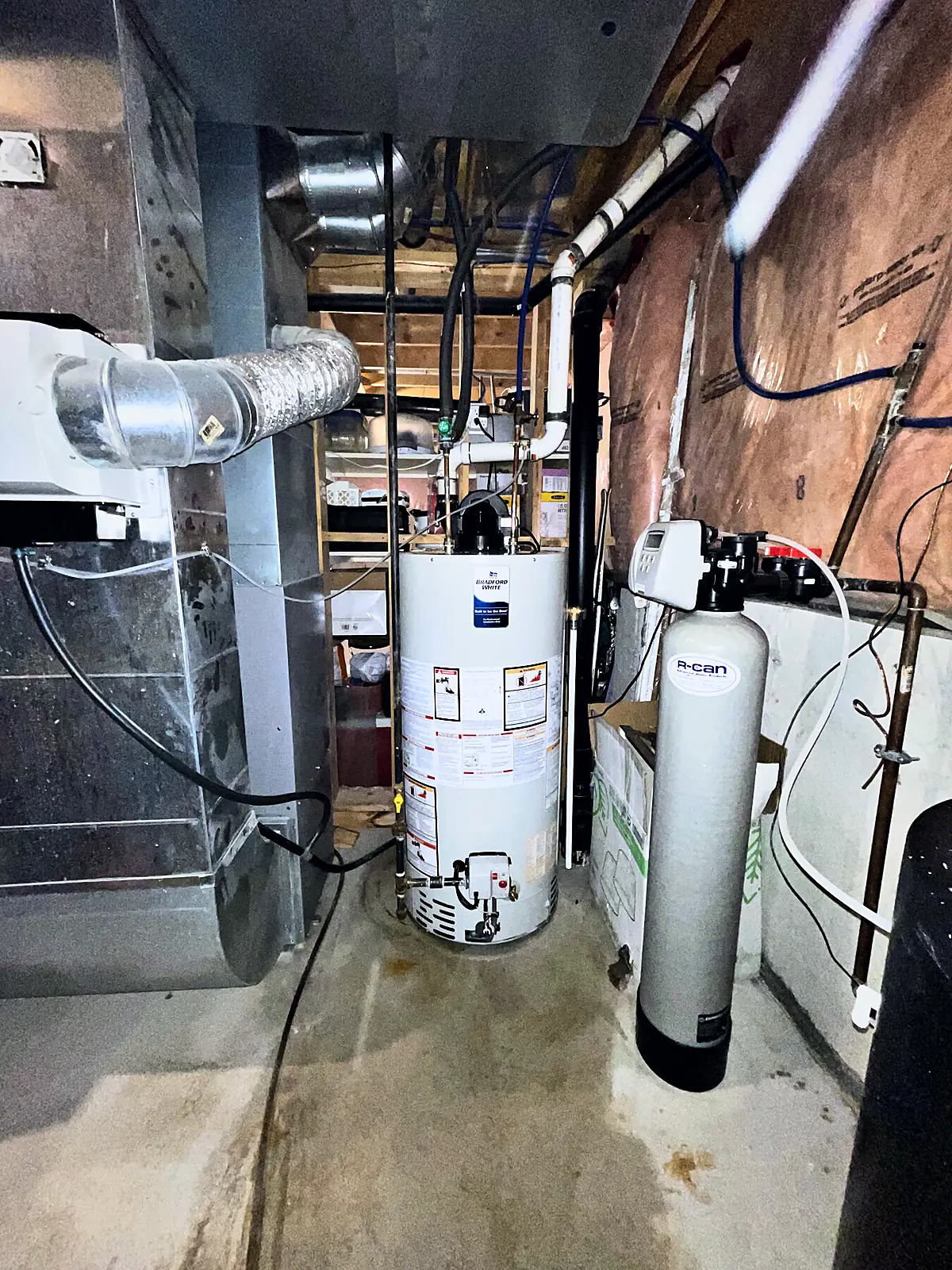
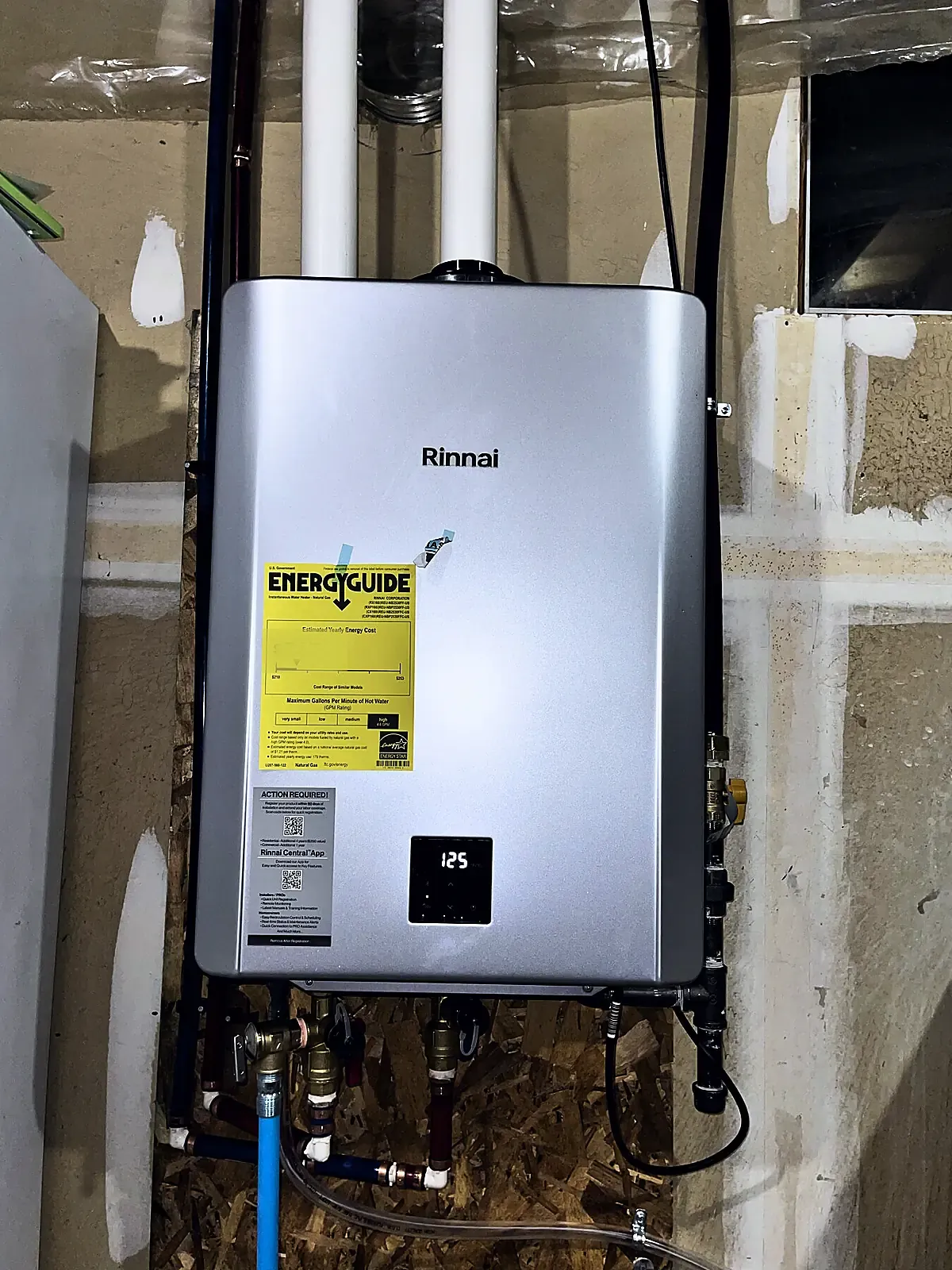
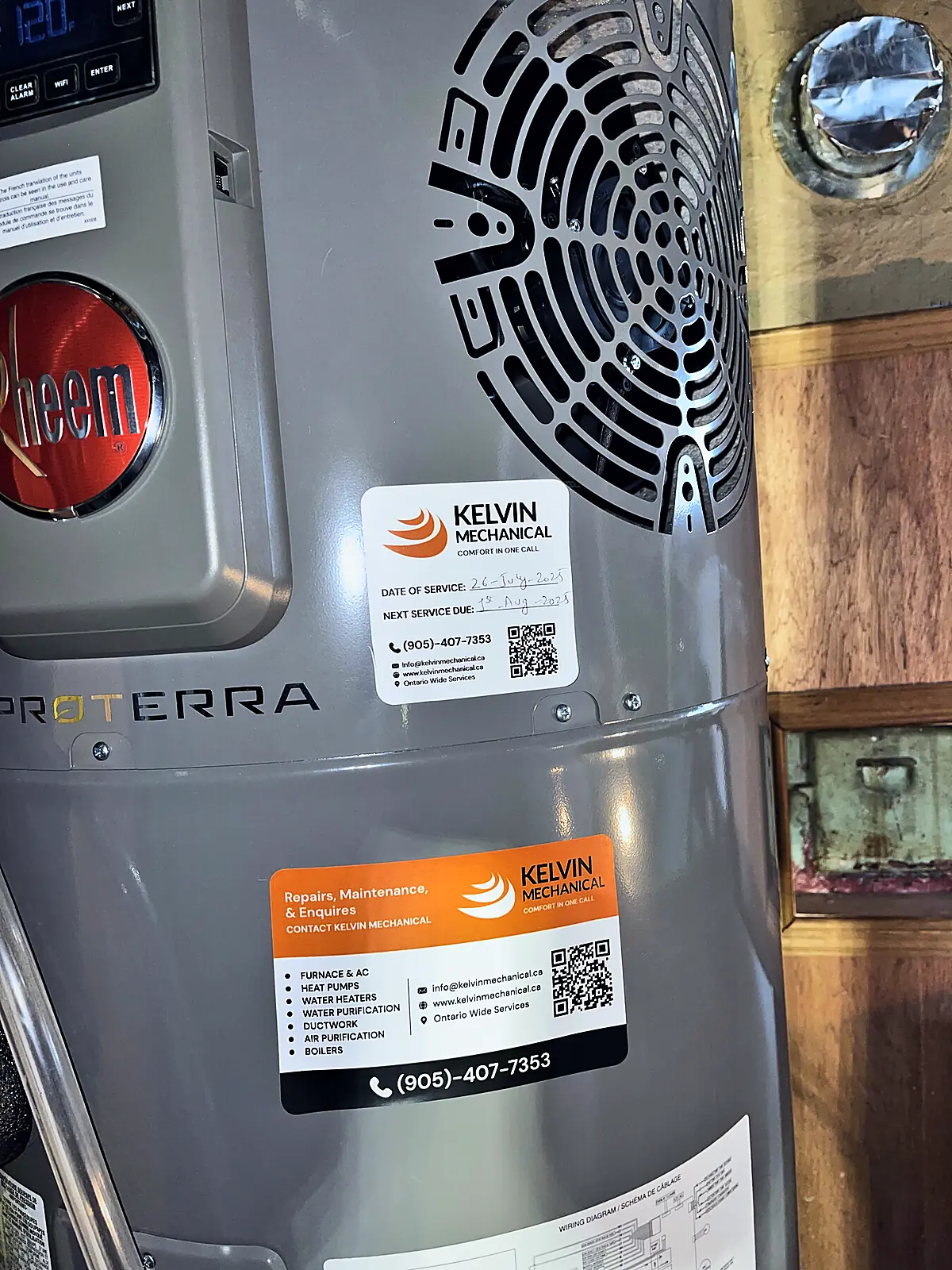
Photos from Kelvin Mechanical jobs in the GTA and nearby Ontario.
Good to know
How each type tends to fit a home
Conventional and power-vented gas tank water heaters
The familiar choice for many Ontario homes, and both are storage tanks. An atmospheric (natural-draft) unit vents through a draft hood into a chimney, liner or B-vent, takes its combustion air from the room and needs no electrical outlet. A power-vented unit uses a blower and plastic vent pipe, which opens up sidewall routing when the chimney is not suitable, and it needs a 120 V outlet. A direct-vent tank, which draws combustion air from outdoors through a sealed pipe, is a less common variant. All of them store a fixed volume, so back-to-back showers can run the tank down until it recovers. See water heater installation.
Electric tank
Useful where there is no gas service or no practical vent route. There is no flue and no combustion air to arrange, but it needs a dedicated 240 V circuit sized to the nameplate. Recovery is generally slower than gas, so tank size matters more. Operating cost depends on your electricity plan and usage.
Tankless (gas or electric)
Heats water as it flows, so there is no stored volume to run out, and output is a flow rate at a given temperature rise. A gas unit needs a correctly sized gas line, category venting to the manufacturer listing, combustion air, a 120 V supply for its controls and, on condensing models, a condensate drain. An electric unit needs no vent but draws a very large electrical load that many panels cannot support. Water hardness and scale control matter for both. See tankless water heaters.
Hybrid and heat pump
Moves heat from surrounding air into the tank, which can use less electricity than a standard electric tank under the right conditions. It needs room volume, airflow, a condensate drain and a dedicated 240 V circuit, and it cools its room. See electric and heat pump models.
Want the comparison in one place?
Our selection guide sets the types out side by side. Pricing varies with equipment, venting, installation complexity and warranty options; a quote follows a site review.
Ontario notes
Ontario notes for choosing a water heater
Size for January, not July
Incoming water is coldest in an Ontario winter, which is when a tank recovers slowest and a tankless unit works hardest. Sizing for winter demand and for the busiest hour of the day, including laundry and guests, avoids a unit that is fine in July and short in January.
Gas, propane, electric and what the house allows
Natural gas through Enbridge Gas is the main fuel across the GTA, with propane in some rural homes and electric tanks in many condos. The fuel you have, the vent route and the panel capacity set what is realistic. Gas work is regulated in Ontario, so we plan the supply and venting carefully.
Older chimneys and shared venting
Homes built from the 1950s to the 1990s often share a chimney between the furnace and water heater. If the furnace is later replaced with a sealed-combustion model, the water heater can be left on an oversized flue. A liner, a power vent or a switch of type may then be the sensible fix.
Water quality across Ontario varies
Hardness differs between municipalities and between municipal and well supplies. Hard water shortens life and efficiency for tanks, elements and tankless heat exchangers. A test of your own tap guides the maintenance schedule and shows whether a softener is worth discussing. See softener installation.
Equipment we install and service




Brand names and logos belong to their owners. Availability depends on the product line and region.
Customer reviews
What customers say
Kelvin Mechanical installed our Midea air conditioner and GE water heater, and we are very happy with the overall service. The pricing was a great value compared to the quality of work provided. The workmanship was very good, clean, and professional. Everything was completed properly, and both the AC and water heater are working great. I would definitely recommend Kelvin Mechanical for HVAC and water heater installation.
Technicians installed a thankless hot water heater in my home yesterday and did an absolutely outstanding job. They were true professionals and answered all my questions. Thank you guys. 👏
Been a great experience with kelvin Mechanical with my house tankless water heater from Rinnai 160, 100% recommended
Five-star Google reviews, copied as written with shortened names. Read more reviews
Help centre
Questions about Water Heaters
How big a water heater does a family of four need?
There is no single number. Many four-person homes do well with a mid-sized tank, but bathroom count, tub size and overlapping use can push that up or favour tankless. We size from how your household actually uses hot water.
Can I switch from a gas tank to an electric or heat pump model?
Often, yes, if there is room and an electrical circuit that suits the unit. We check panel capacity and breaker space first. Hybrid models also need airflow and a condensate drain.
Is tankless always the smarter choice?
No. Tankless suits some homes well, but it depends on gas supply, venting and water hardness. A properly sized tank can be the better fit for others.
How long does a water heater last?
It depends on the type, water quality, upkeep and how much hot water you use. Manufacturer warranty terms vary by model. We talk through expected service life for the specific model when we quote.
Should I rent or own my water heater?
That depends on how you weigh monthly payments, upkeep and total cost over time. If you rent, check your agreement for removal and buyout terms before booking any change. Financing and rental offers are conditional and subject to provider approval, terms and expiry.
What is the difference between a conventional and a power vent water heater?
Both are storage tanks; the difference is how they vent. A conventional (atmospheric) gas tank vents by natural draft through a draft hood up a sound chimney, liner or B-vent and needs no outlet. A power-vented tank uses a blower to push exhaust through certified PVC or CPVC vent pipe, often out a sidewall. That gives more routing choice when the chimney is unsuitable, but it needs a 120 V outlet. Both take combustion air from the room. We check the vent route before recommending either. See water heater installation.
What size water heater does a 2,000 sq ft house need?
Floor area is a weak guide. What matters is how many people use hot water at the same time, the bathroom count, tub size and laundry habits. A mid-sized tank may suit one 2,000 sq ft home and fall short in another. We size from your peak overlap, then confirm the unit fits the space.
Is a heat pump water heater a good fit for Ontario homes?
It can be, in the right room. A hybrid moves heat from surrounding air into the tank, which can use less electricity than a standard electric tank. It needs space, airflow and a drain, and it cools its room. Cold winter basements limit it. See electric and heat pump models.
Which type of water heater suits a basement?
Most Ontario water heaters live in basements. A gas tank needs a vent route and combustion air. An electric tank needs only a circuit. A hybrid heat pump unit suits a larger, heated basement with a drain nearby. A floor drain, flood risk and finished space around the unit also matter. We review the location on site.
Why does an electric water heater recover more slowly than gas?
Electric elements generally add heat more slowly than a gas burner, so a tank takes longer to catch up after heavy use. That is why tank size matters more with electric. We size around your busiest hour, and a larger tank or a different type may be the answer if your household uses a lot at once.
What should I check before buying a water heater online or at a store?
Check the fuel, tank volume, dimensions, vent type, connection sizes and warranty terms against your house. Confirm who will install it and whether permits or notifications apply. A unit that suits the shelf may not suit your chimney or panel. Send us the model and a photo of your current heater and we will tell you what the swap involves.
Do I need an expansion tank on my water heater?
Maybe. When the water supply is a closed system, because of a backflow device or pressure-reducing valve at the meter, heated water has nowhere to expand and pressure rises. An expansion tank handles that. We check for a closed system during the visit and recommend one where it is needed.
Where we do this work
Water Heaters in Toronto, the GTA and Hamilton
Toronto Mississauga Brampton Vaughan Markham Oakville Burlington Hamilton All service areas
Quote and booking
Request: Water Heaters
Share a few details and we will follow up. A written quote comes after a site review. There is no online checkout.
- City and service type help us route your request
- Urgency and property details let us prepare properly
- Optional equipment photos speed up repairs and replacements
Prefer to talk? +1 905-407-7353
Gas smell or carbon monoxide alarm? Leave the building and call 911 first. Do not use this form.