
Commercial maintenance
Planned Commercial HVAC Maintenance Visits and Written Service Notes
Scheduled checks of filters, belts, coils, drain pans, burners and controls, followed by a written note so owners and property managers can plan ahead.
- ScopeScheduled visits and repairs
- CadenceSeasonal or quarterly by equipment
- RecordsWritten note after each visit
 Serving the GTA and nearby Ontario
Scope
Items on a planned maintenance checklist
- Filter changes with sizes recorded so staff and the next visit can match them
- Belt tension, sheave wear, bearing and motor amp draw checks on belt-drive units
- Condenser and evaporator coil inspection and cleaning
- Condensate drain pan, trap and line clearing, with overflow switch checks
- Gas heat section checks: ignition, flame, heat exchanger condition and venting
- Economizer, damper, thermostat and schedule review
- Electrical checks: contactors, capacitors, wiring, disconnects, voltage and phase
- Written service note with readings, photos and recommended follow-up
Process
How a maintenance agreement is built
Every job starts with a conversation and a look at the equipment. You see the options in plain language before anything is booked.
- 1
Inventory the equipment
We list every unit with its location, nameplate details, age and condition. The list is the base for visit frequency and checklists.
- 2
Set visit frequency by equipment type
Rooftop and packaged units often get seasonal visits, while kitchen exhaust, shop heaters and dusty environments may need more. The schedule follows the equipment and the building, not a template.
- 3
Write a checklist for each unit
Each unit gets a checklist that matches its parts: belts, burners, coils, drains, dampers and controls. Readings are recorded so changes show up over time.
- 4
Carry out visits and leave a note
Visits are coordinated with the building contact. Each ends with a written note listing what was checked, readings, parts replaced and recommendations.
- 5
Review once a year
We go through the notes with you and flag aging equipment, repeat faults and replacement planning. Adjustments to frequency or scope are made in writing.
In pictures
What this work looks like
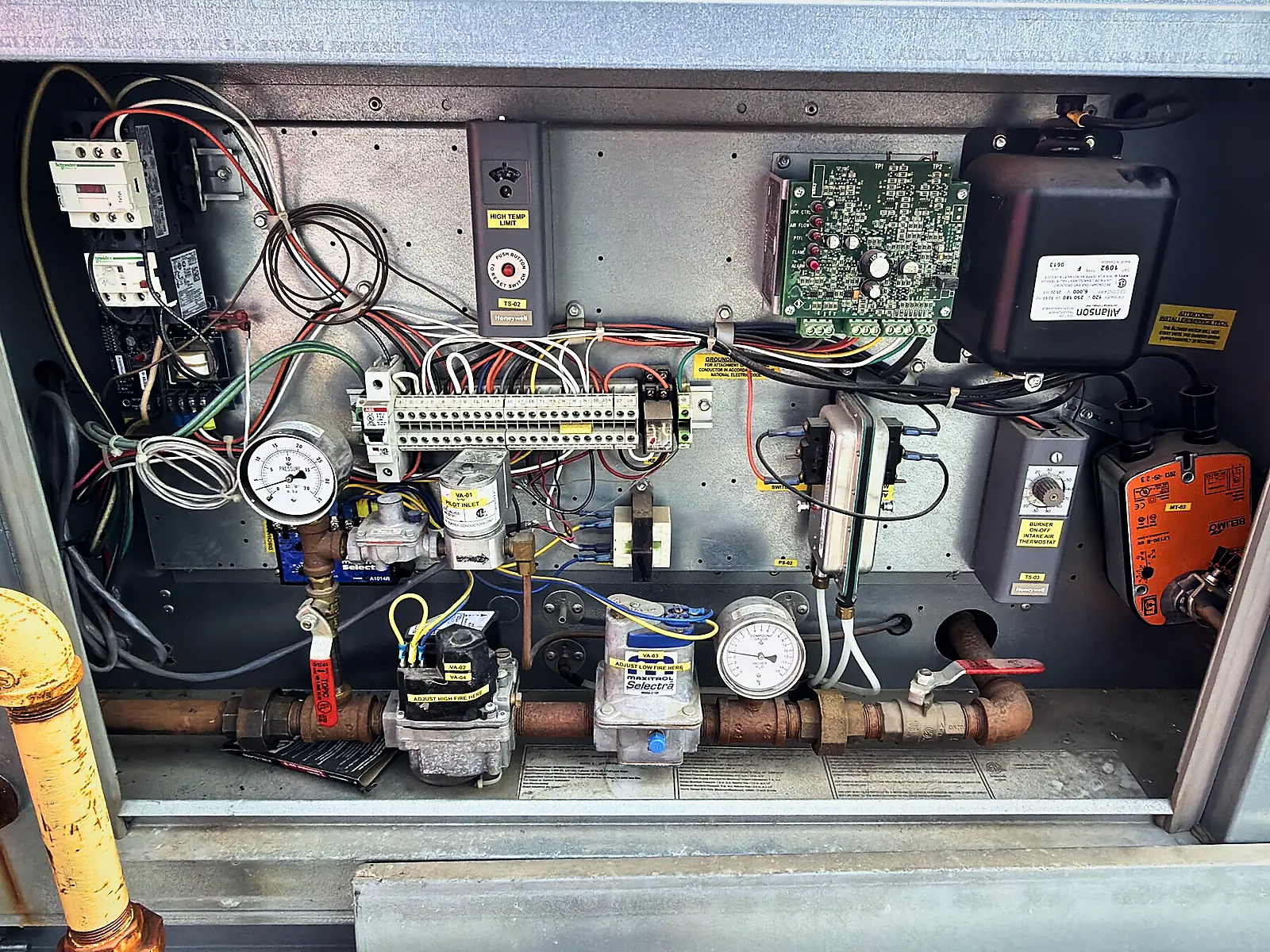
 Kelvin job photo
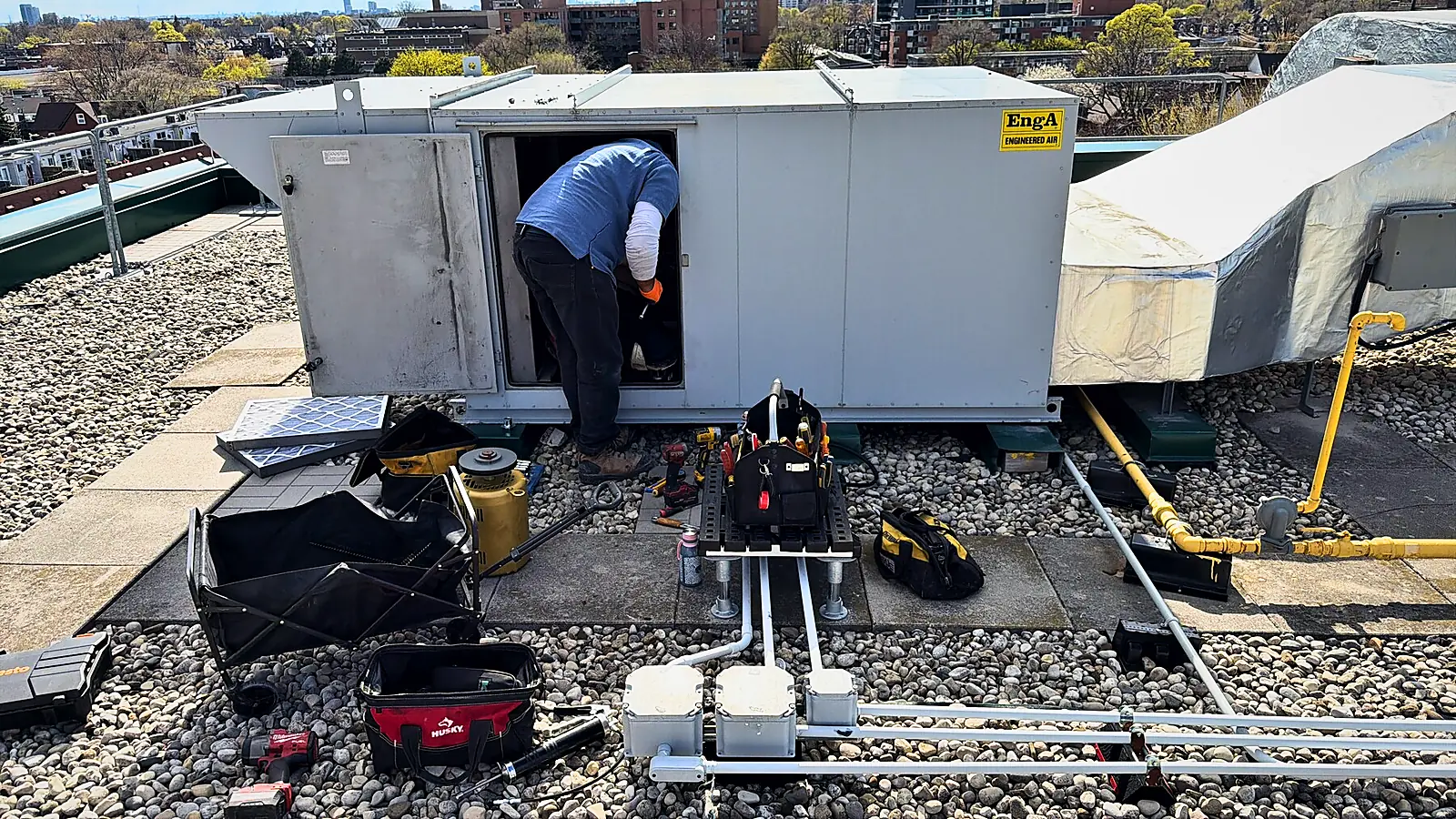
 Kelvin job photo
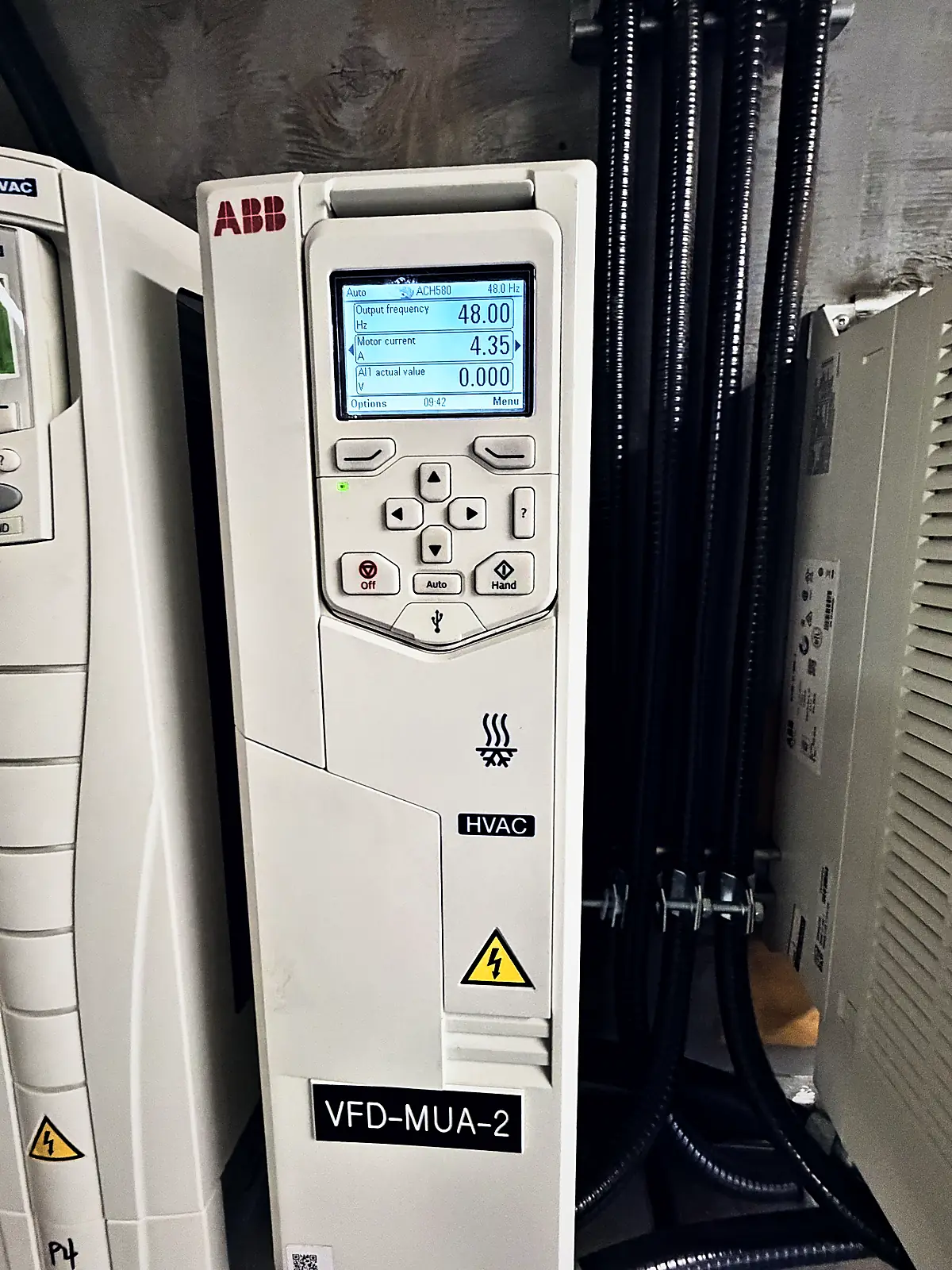
 Kelvin job photo
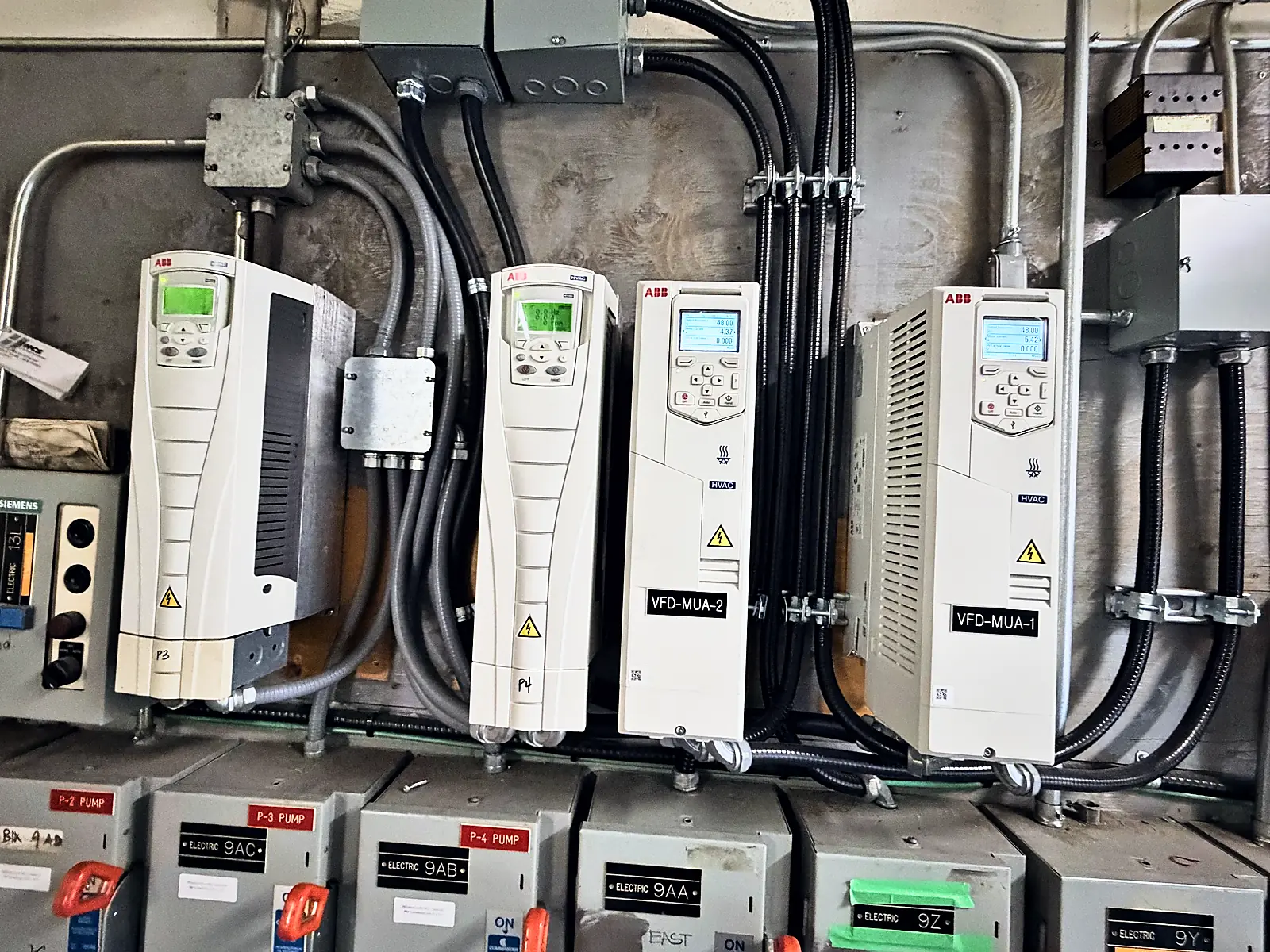
Photos from Kelvin Mechanical jobs in the GTA and nearby Ontario.
Good to know
Checklist groups by season and equipment
Cooling season checklist
Coils, condensate drains, contactors, capacitors, refrigerant circuit readings and airflow are checked before hot weather. A clogged drain pan or dirty coil is easier to fix in spring than during a heat wave.
Heating season checklist
Burners, flame sensors, heat exchangers, venting, gas pressure and safety controls are checked before the cold. Unit heaters and gas-fired rooftop sections are included.
Ventilation and exhaust checklist
Exhaust fan belts, bearings and amp draw, make-up air filters and interlocks, and ERV/HRV cores are checked at an agreed rhythm. Weatherhoods and screens are cleared at the same visit.
Controls and records
Schedules, setpoints and setbacks are reviewed so equipment runs when the building is occupied. Notes are stored per site for owners and managers.
Install, repair, maintain
Installation: maintenance-ready from day one
New equipment is installed with filter sizes, access and readings recorded for later visits. The start-up record becomes the baseline.
Repair: found early, quoted in writing
Problems found during a visit are explained and quoted in writing before parts are ordered. Follow-up visits are booked at a time that suits the building.
Maintenance: the core of this service
Visits are planned by equipment and season, and every visit ends with a written note. Agreement terms are confirmed in writing.
What an agreement covers
Agreements are written per site. Repairs, parts and emergency calls are handled as stated in the agreement. Pricing varies with the number and type of units, visit frequency and access conditions; a quote follows a site review.
Ontario notes
Commercial maintenance notes for Ontario seasons
Two demanding seasons
Ontario equipment works through cold winters and hot, humid summers. Heating parts are checked before the cold, and cooling parts before the heat. A single annual visit leaves one season unchecked, which is why many buildings split visits by season.
Spring debris and seasonal clean-up
Winter leaves salt dust, grit and debris around outdoor equipment. Spring brings leaves, seeds and pollen that clog coils and screens. A spring visit includes cleaning coils, clearing intakes and checking drains that may have iced up during the winter.
Warranty and record keeping
Manufacturer warranties often expect maintenance records. Written service notes with dates, readings and filter sizes help show that equipment was looked after. Check your warranty terms, because they vary by manufacturer and by equipment, and keep the notes together for each building.
Planning replacements ahead
A written equipment list by age and condition helps owners plan replacements over several seasons instead of reacting to a breakdown. Lead times and approvals take time in Ontario's busy seasons, so early notice from the service notes is useful.
Help centre
Questions about Commercial Maintenance
What is the difference between a maintenance visit and a repair?
A maintenance visit follows a checklist to keep equipment running and spot early problems. A repair fixes a fault. Findings from a visit may lead to a repair, which is quoted separately in writing.
How often should rooftop units be serviced?
Commonly before the cooling and heating seasons, but it depends on equipment type, operating hours and environment. Kitchens and dusty spaces often need more frequent visits. See rooftop unit service for the equipment-specific list.
Will you service equipment you did not install?
In most cases, yes. The first visit starts with an equipment inventory, nameplate photos and a baseline set of readings.
Do maintenance customers get priority emergency service?
Any priority terms are written into the agreement, so nothing is assumed. Emergency service remains subject to availability. The commercial emergency pathway explains what to have ready.
Can I set up maintenance for one building only?
Yes. A single building or a single unit can be scheduled. For larger portfolios, see property management HVAC for how multi-building arrangements work.
What should a commercial HVAC maintenance agreement include?
A good agreement lists the equipment, the visit frequency, the checklist for each unit, what is reported after each visit, how repairs and parts are handled and how emergency calls work. It also names the building contact and the access arrangements. Terms are confirmed in writing, and pricing follows a site review.
Does skipping maintenance affect my equipment warranty?
It can. Many manufacturer warranties expect regular maintenance and may ask for records. Read your warranty terms, and keep service notes with dates, readings and filter sizes. We record these at each visit so the history is there if a question comes up. Terms vary by manufacturer and by equipment.
When should I schedule HVAC maintenance in Ontario?
Spring, before the cooling season, and fall, before the heating season, are the usual times. Kitchens, shops and dusty spaces may need more. Booking ahead leaves time to order parts if something is found. Availability depends on the season and the schedule.
What happens during a spring cooling check on commercial AC?
The visit covers coils, condensate drains, contactors, capacitors, refrigerant circuit readings and airflow. Filters are changed and sizes recorded. Findings go into a written note. Doing this in spring leaves time to order parts before the first hot week. See rooftop unit service for the equipment list.
How often should commercial HVAC filters be changed?
It depends on the space. Offices may need a change every few months, while kitchens, shops and busy retail may need them more often. Check filters monthly at first and change them when they load. Record the size so staff can reorder, and note the date in the visit log.
Which maintenance tasks can my own staff do?
Staff can usually check and change filters, keep the area around equipment clear, clear snow from ground-level pads where it is safe and note unusual noises or display codes. Gas, electrical and refrigerant work belongs to qualified professionals. Nobody should go onto a roof without proper access and fall protection.
What records should I keep from HVAC service visits?
Keep the service note, readings, photos of nameplates, filter and belt sizes, parts replaced and any recommendations, filed by building and unit. These make warranty questions, repair decisions and replacement planning easier. We provide a written note after each visit, and you can keep them in one folder.
Is maintenance still worthwhile on an older rooftop unit?
It can be, because visits show whether the unit is still sound or nearing the end of its life. Readings and notes make replacement planning easier. Maintenance does not promise a set lifespan, but it can reduce surprise failures. We tell you plainly if a unit looks like a poor candidate for more repairs.
Where we do this work
Commercial Maintenance in Toronto, the GTA and Hamilton
Toronto Mississauga Brampton Vaughan Markham Oakville Burlington Hamilton All service areas
Quote and booking
Request: Commercial Maintenance
Share a few details and we will follow up. A written quote comes after a site review. There is no online checkout.
- City and service type help us route your request
- Urgency and property details let us prepare properly
- Optional equipment photos speed up repairs and replacements
Prefer to talk? +1 905-407-7353
Gas smell or carbon monoxide alarm? Leave the building and call 911 first. Do not use this form.