
Commercial emergency
Emergency Help for a Business With No Heat, No Cooling or Failed Ventilation
A clear emergency pathway for light commercial buildings: what to do first, what to have ready and what to expect. Emergency service is subject to availability.
- ScopeNo heat, no cooling, ventilation failure
- AvailabilityEmergency service is subject to availability
- FeeDiagnostic fee may apply; confirmed at booking
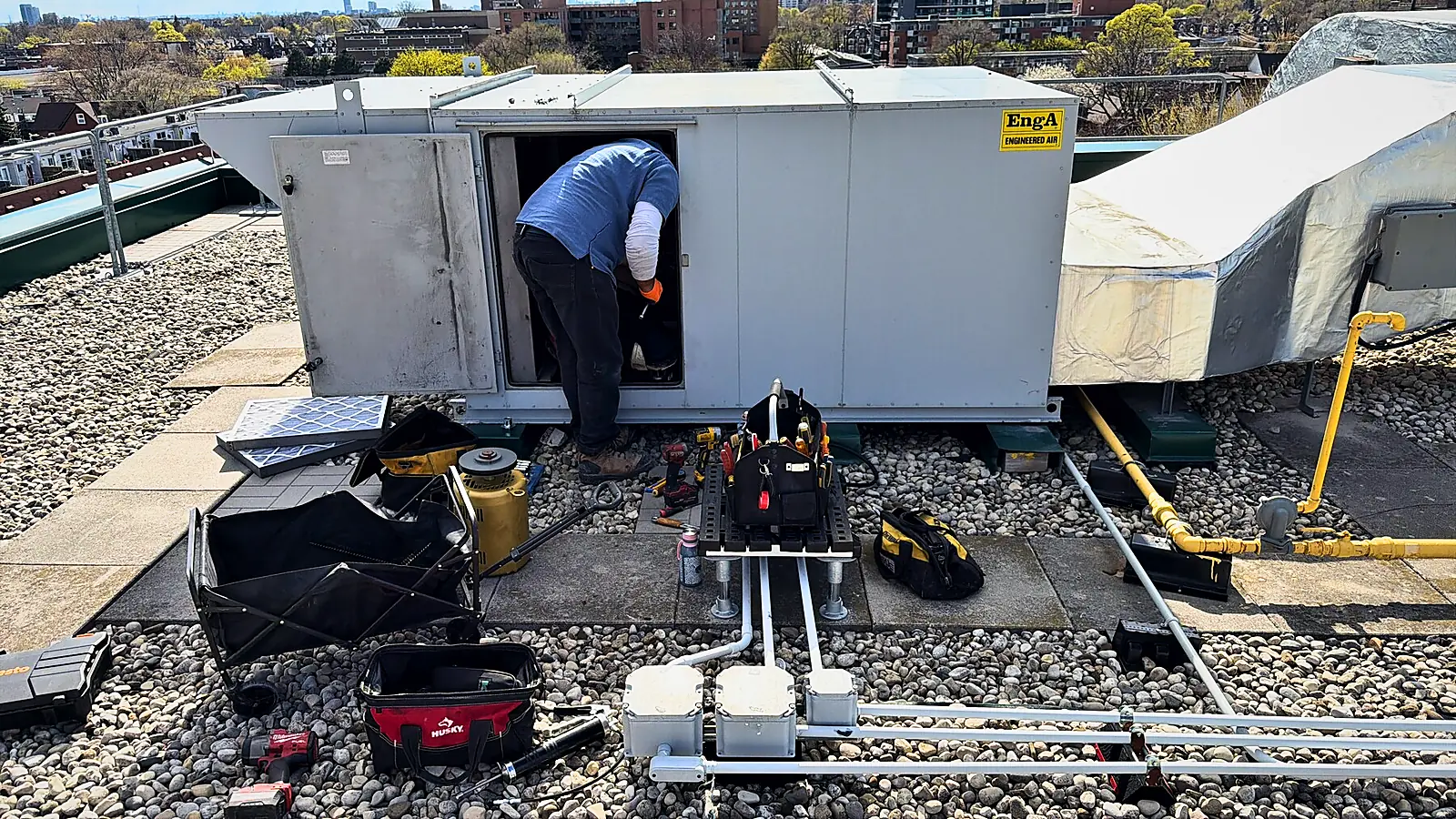 Serving the GTA and nearby Ontario
Scope
Breakdowns this pathway is for
- No-heat and no-cooling calls on rooftop units, packaged units, unit heaters and furnaces
- Ventilation failures: exhaust fans, make-up air units and ERV/HRV units that have stopped
- Tripped safeties, lockouts, failed capacitors, contactors, motors, belts and control boards
- Safe shutdown and isolation of a failed component when full repair has to wait for parts
- Written explanation of the fault, the options and the next step before work proceeds
- Parts sourcing, with a follow-up visit if the part is not on the truck
- Coordination with your property manager, landlord or building contact
- Referral to the right trade when the fault lies with the utility, the electrical supply, the roof or refrigeration equipment
Process
The emergency pathway, from call to follow-up
Safety comes first, then a call. We confirm the site and the equipment before anything is booked, and we say plainly what we can and cannot do.
- 1
Make it safe first
If you smell gas, see smoke or hear a carbon monoxide alarm, leave the building and call 911 or the gas utility. Those situations come before a service call.
- 2
Call with the basics
Phone +1 905-407-7353 with the address, the type of unit, what has stopped and when. Photos of the nameplate and display help if you can send them.
- 3
Triage and booking
We ask a few questions to understand the fault and the urgency, then tell you what we can offer at the time. A diagnostic fee may apply and is confirmed at booking.
- 4
Diagnose and stabilize
On site, we find the fault, make the unit safe and, where possible, repair it. If parts are needed, we explain the options and the follow-up plan.
- 5
Follow up in writing
You receive a written note with the fault, the work done and any recommendations. For repeat faults, see commercial maintenance to plan visits before the next failure.
In pictures
What this work looks like
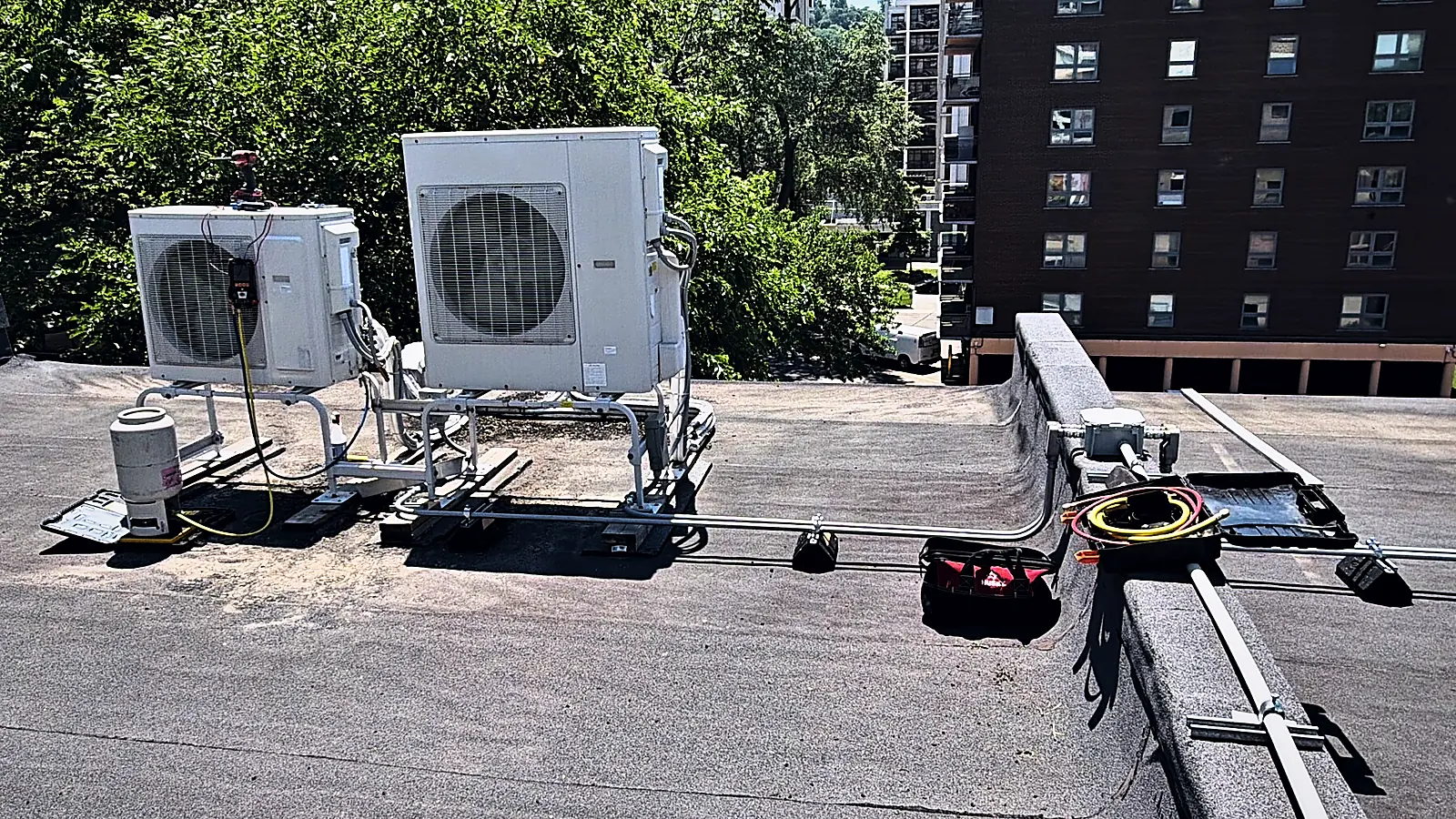 Kelvin job photo
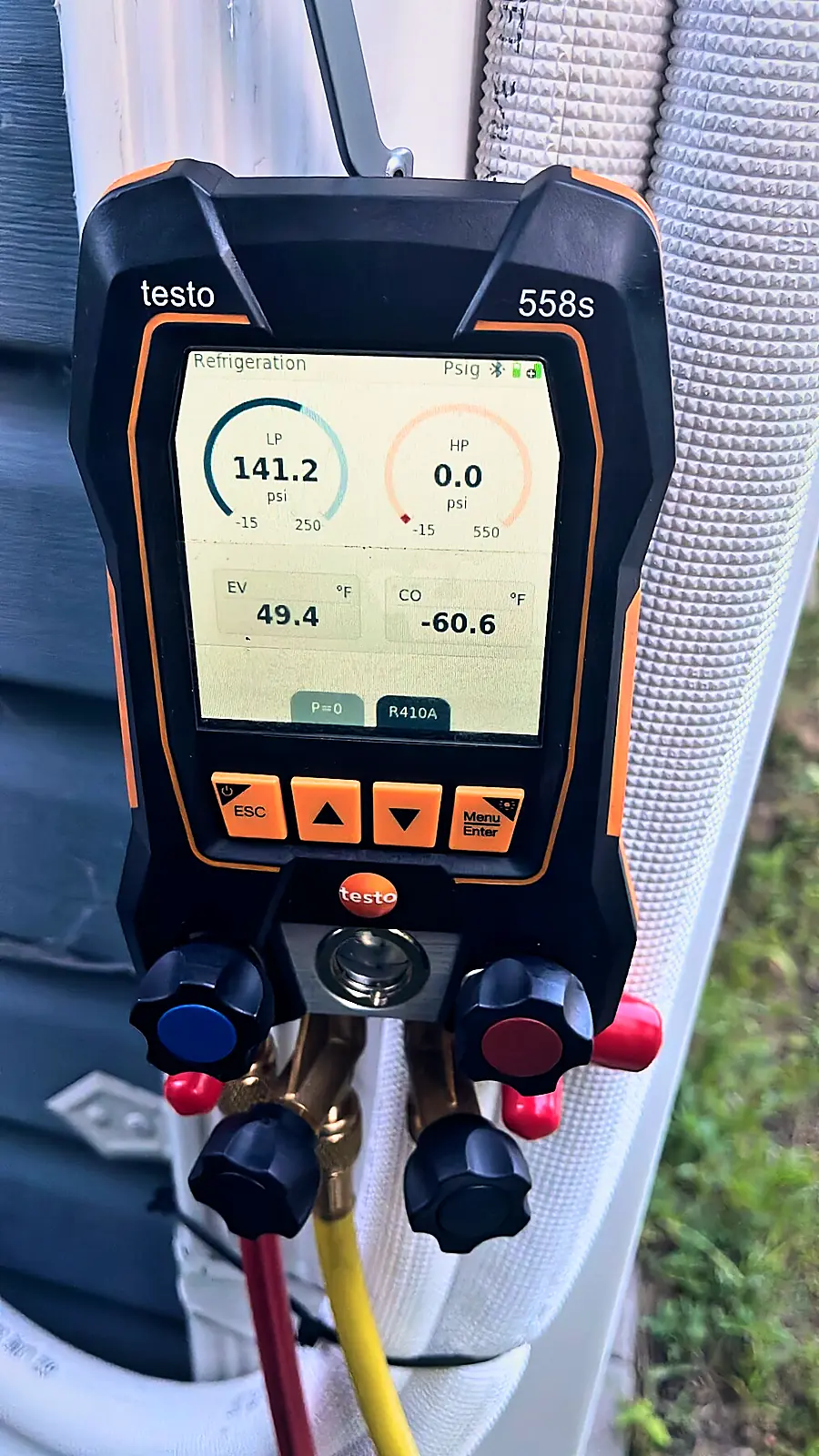 Kelvin job photo
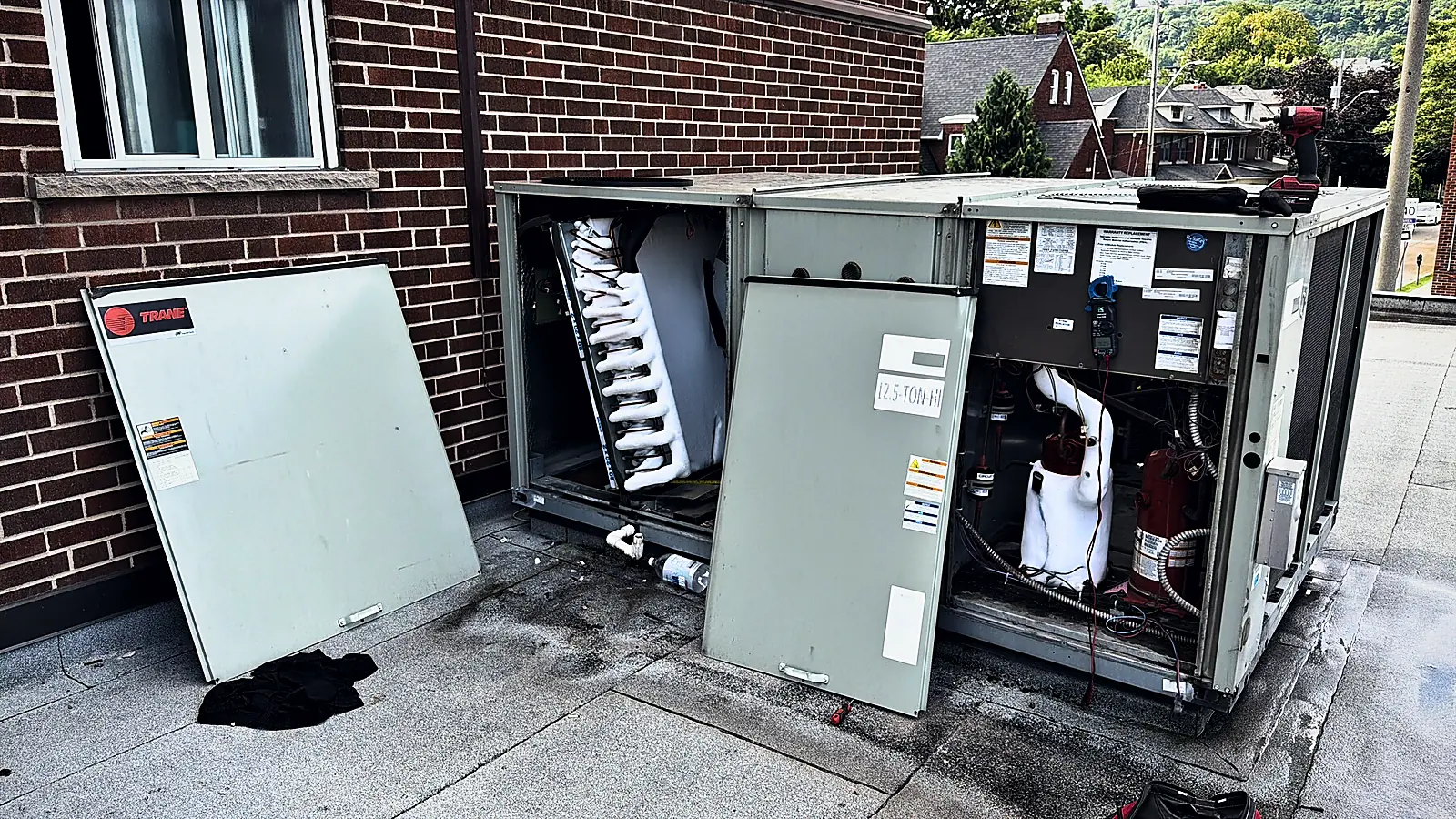 Kelvin job photo
Photos from Kelvin Mechanical jobs in the GTA and nearby Ontario.
Good to know
What to have ready before you call
Equipment photos
A clear photo of each nameplate, the thermostat or controller display and any error code helps us decide which parts and tools to bring. Email them to info@kelvinmechanical.ca if you can.
Access details
Tell us who will meet the technician, how the roof or mechanical room is reached and whether a key, fob or ladder is needed. Do not send alarm codes by email.
Fault history
When did it stop? Was there a noise, a smell, a trip or recent work? Even small details narrow the search.
What the outage affects
Opening hours, tenants, food storage or sensitive equipment help us understand how urgent the call is. We cannot promise a result, but we can work with the information.
Install, repair, maintain
Installation: temporary and permanent fixes
When a unit cannot be repaired, we outline the replacement path, lead time and any interim options. Permanent work is scoped in writing after a site review.
Repair: restore safe operation first
We prioritize safe operation, then diagnose and repair the failed part where practical. You get a clear explanation before work proceeds.
Maintenance: stopping the repeat call
After an emergency, a planned visit can address the cause and neighbouring wear. Written notes help owners and managers plan.
No response-time promise
Emergency service is subject to availability. We do not promise a response time, and a diagnostic fee may apply, confirmed at booking. For homes, see emergency heating and cooling.
Ontario notes
Commercial emergency notes for Ontario weather and utilities
Cold snaps and pipe protection
In a deep cold snap, a building without heat can cool quickly, and water lines in cold corners are at risk. Keep interior doors closed to hold heat and note where water lines run near exterior walls. Heat comes back through a repair, a safe interim measure or a replacement plan.
Heat waves, humidity and food storage
Hot, humid Ontario weather puts pressure on cooling systems and on food storage. Decisions about food safety and opening are yours, and local public health guidance applies. We focus on the HVAC side and tell you what we find and what the options are.
Gas, carbon monoxide and fire come first
Gas smells, smoke and carbon monoxide alarms are emergencies, not service calls. Leave the building and call 911 or the gas utility first. Once the building is safe, we can look at the equipment. This applies to every heater, make-up air unit and rooftop unit with a gas section.
Landlords, utilities and the building
A commercial outage can involve the landlord, the property manager or the utility. Power or gas outages are the utility's to fix, and roof equipment may need landlord approval. Gather the right contacts before you call, and note who authorizes the work.
Help centre
Questions before you book
Do you offer emergency service for businesses?
Emergency service is subject to availability. Call +1 905-407-7353 and we will tell you what is possible at the time. We do not promise a response time.
How fast will a technician arrive?
We cannot promise a time. It depends on availability, location, the fault and the workload. We give you an honest picture when you call.
Is there a fee to come out?
A diagnostic fee may apply, and it is confirmed at booking. Repairs and parts are quoted separately in writing.
What if the part is not available?
We look at supplier options, interim measures and whether replacement makes more sense. You get the options in writing, with follow-up visits booked as needed.
Can a restaurant stay open with a failed unit?
That depends on which unit failed and your local requirements. A failed exhaust fan or make-up air unit can affect whether cooking can safely continue. We advise on the equipment side, and the decision to operate rests with you and any authority having jurisdiction. See restaurant HVAC.
What should I do first if my business loses heat in winter?
Make sure everyone is safe, and if you smell gas or hear a carbon monoxide alarm, leave and call 911 or the gas utility. Check the thermostat and the breaker. Keep doors closed to hold heat and protect water lines in cold areas. Then call +1 905-407-7353 with the address, the unit type and what has stopped. Service is subject to availability.
What should I check before calling about a failed rooftop unit?
Check the thermostat mode and setpoint, the breaker and the disconnect, and note any display code. See whether filters are clearly blocked if you can reach them. Do not climb onto an icy or wet roof. Photos of the nameplate and the display help us plan parts and tools for the visit.
Is it safe to reset a tripped breaker on my HVAC unit?
Resetting once is common, but if it trips again, stop. A repeated trip points to a short, a failing motor or a compressor problem, and forcing it can damage equipment or create a hazard. Leave it off and call +1 905-407-7353. Note when it tripped and whether you heard or smelled anything unusual.
Can you help with commercial emergencies on evenings, weekends or holidays?
Availability outside normal hours depends on the schedule and the workload, so we cannot promise it. Call +1 905-407-7353 and we will tell you plainly what we can offer at the time. A diagnostic fee may apply and is confirmed at booking.
Who authorizes emergency repairs in a leased commercial space?
It depends on the lease. The landlord or property manager may need to approve work on roof equipment or shared systems, while the tenant may approve work on equipment serving only their unit. Have the property manager's name and phone number ready so approvals do not hold up the repair.
Why does a rooftop unit stop during a heat wave?
High outdoor temperatures raise pressures and load. Dirty coils, low airflow, a weak capacitor or a tripped high-pressure safety are common triggers, and power dips can also trip equipment. A unit that was already struggling often fails in the first hot, humid week. Planned spring visits help find these problems early.
Why would a commercial exhaust fan or make-up air unit suddenly stop?
Common causes are a broken belt, a tripped overload, a failed interlock or switch, a burner lockout or a power problem. Because the two are linked, one stopping can affect the other. Note any display code and call +1 905-407-7353. A kitchen should follow its own safety rules about whether cooking can continue.
What if the outage comes from the power or gas supply, not my equipment?
If the building has no power or no gas, the cause may be with the utility rather than the equipment. Check other lights and appliances, and look at your meter if you can reach it safely. Call the utility if supply is the issue. We can help once supply is restored and equipment needs a check.
Where we do this work
Commercial Emergency Service in Toronto, the GTA and Hamilton
Toronto Mississauga Brampton Vaughan Markham Oakville Burlington Hamilton All service areas
Quote and booking
Request: Commercial Emergency Service
Share a few details and we will follow up. A written quote comes after a site review. There is no online checkout.
- City and service type help us route your request
- Urgency and property details let us prepare properly
- Optional equipment photos speed up repairs and replacements
Prefer to talk? +1 905-407-7353
Gas smell or carbon monoxide alarm? Leave the building and call 911 first. Do not use this form.