
Commercial gas piping
Commercial Gas Piping for Rooftop Units, Make-Up Air, Kitchens and Unit Heaters
Gas piping sized, installed, tested and inspected for HVAC and kitchen equipment by licensed gas-fitting professionals and trade partners, with permits and inspections where required.
- ScopeGas piping for HVAC equipment
- WorkSizing, install, testing, inspection
- Gas workLicensed gas-fitting professionals
 Serving the GTA and nearby Ontario
Scope
Gas piping work, from supply to appliance
- Pipe sizing from total connected load, run length and allowable pressure drop
- Gas supply to rooftop units, make-up air units, unit heaters and cooking equipment
- Meter and regulator capacity review, with utility coordination when more supply is needed
- Shutoff valves, unions and sediment traps placed at each appliance
- Roof pipe supports, weather protection and flexible connectors suited to the equipment
- Pressure testing and leak checking before the line goes into service
- Permit and inspection coordination where required
- Start-up so gas pressure is confirmed at the appliance under load
Process
Gas line work, from load list to inspection
Every job starts with a conversation and a look at the equipment. You see the options in plain language before anything is booked.
- 1
List every appliance and its input
Each rooftop unit, make-up air unit, unit heater and cooking appliance has an input rating on its nameplate. The total connected load drives pipe size, meter capacity and regulator choice.
- 2
Check the supply
We look at the meter, regulator, existing piping and available pressure. If more capacity is needed, the gas utility has to be involved, because meters and regulators are theirs.
- 3
Design the route and size the pipe
The route balances length, access, roof penetrations, supports and protection from weather and damage. Pipe is sized for the load and the allowable pressure drop at the farthest appliance.
- 4
Install, test and inspect
Piping is installed, pressure tested and leak checked, then inspected where a permit applies. Licensed gas-fitting professionals or trade partners carry out and sign off the gas work.
- 5
Purge, light off and confirm pressure
After approval, the line is purged and appliances are started. Gas pressure is read at the appliance under load, as part of the rooftop unit or make-up air start-up.
In pictures
What this work looks like
 Kelvin job photo
 Kelvin job photo
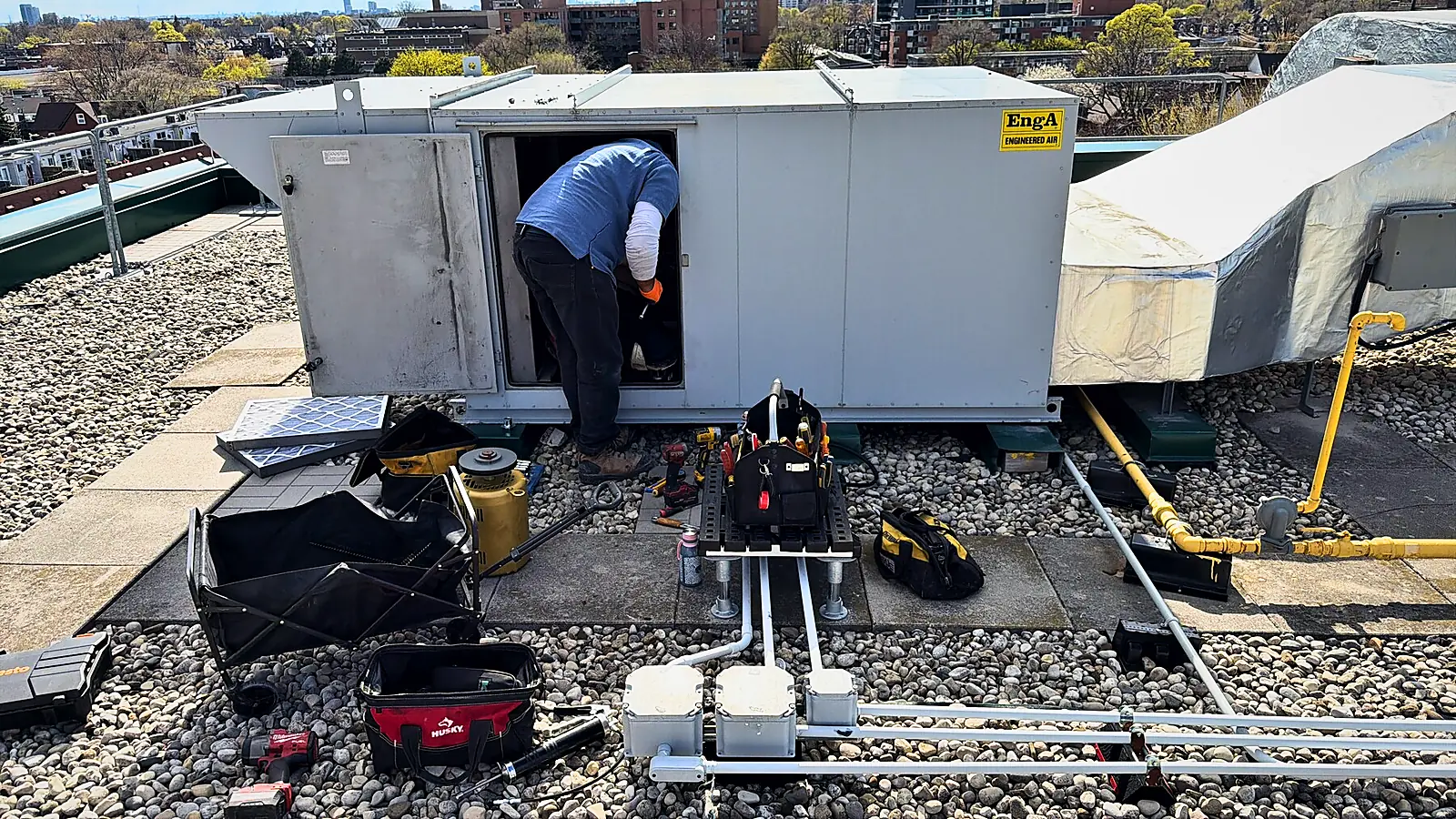
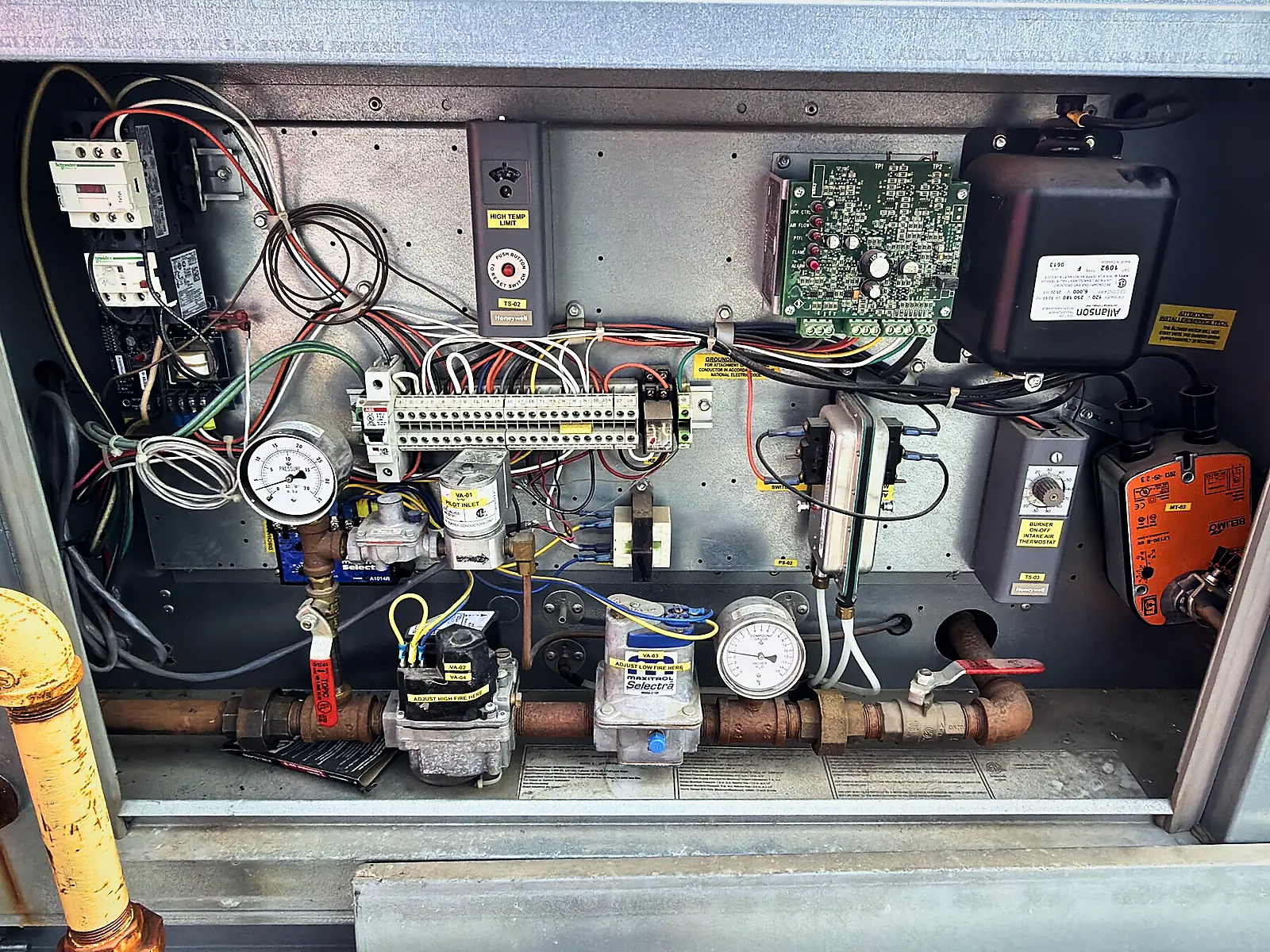
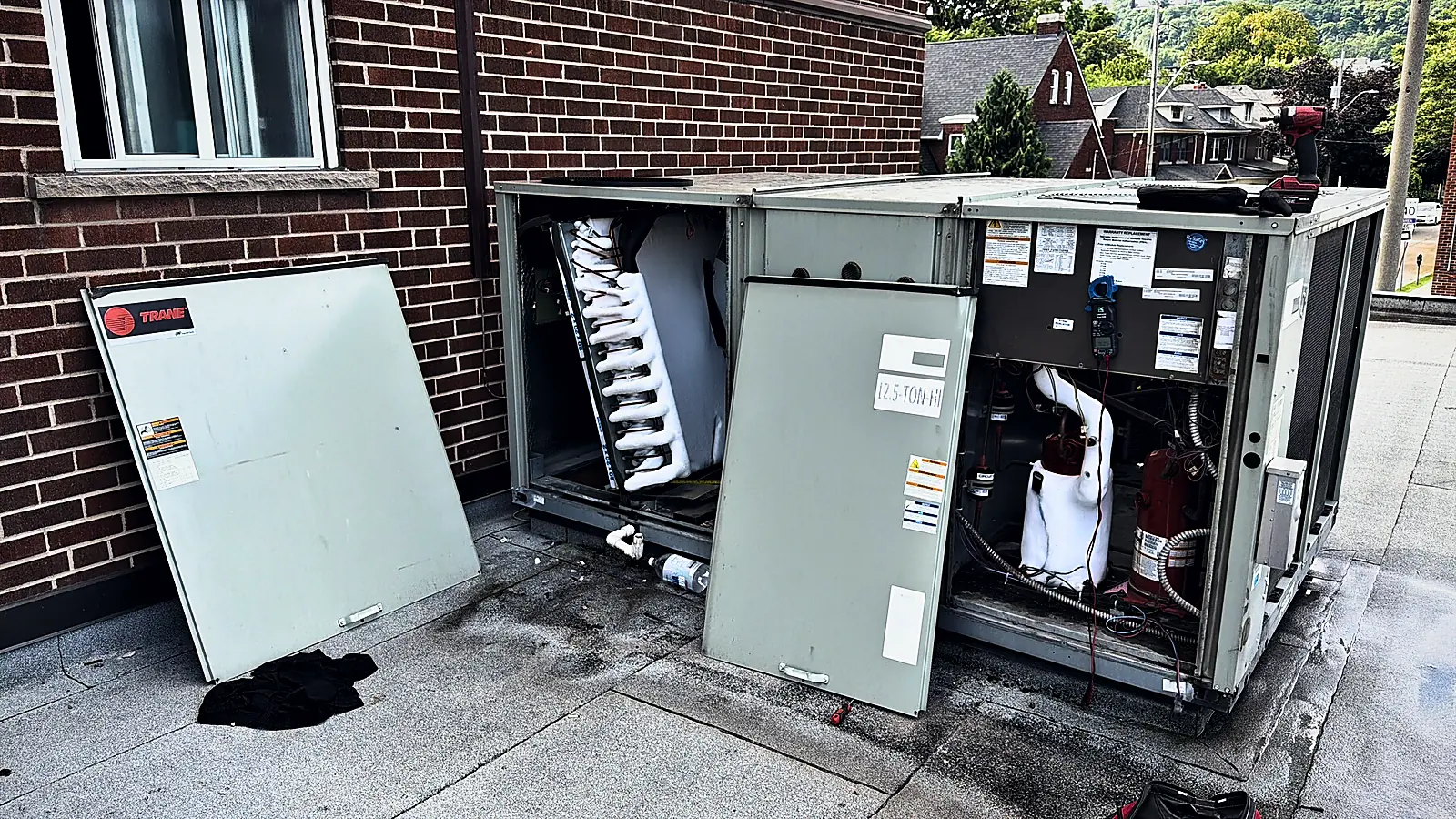
Photos from Kelvin Mechanical jobs in the GTA and nearby Ontario.
Good to know
Gas piping details that cause delays
Undersized meter or regulator
A new RTU or make-up air unit can push a building past what its meter and regulator supply. Finding this early avoids stalled start-ups, but upgrades involve the gas utility and take their own time.
Roof routing and supports
Roof piping needs supports that do not damage the membrane, protection from foot traffic and weather, and clear routing around equipment. Roofing details stay with your roofer.
Kitchen connections and shutoff
Cooking appliances use flexible connectors rated for the application, and the gas supply often ties into a shutoff controlled by the hood system. That interlock is coordinated with the suppression trade, not altered by us.
Existing piping with an unknown history
Old lines are tested before they are reused. Corroded fittings, missing supports and undocumented branches are common findings that change the scope.
Install, repair, maintain
Installation: sized, supported and tested
New runs are sized from the connected load and tested before service. Permits and inspections are coordinated where required.
Repair: leaks, valves, connectors and supports
Damaged connectors, failed shutoff valves and loose supports are repaired by licensed gas-fitting professionals. If you suspect a leak, leave the building and call the gas utility first.
Maintenance: visual checks of exposed piping
Planned visits note corrosion, supports, valve operation and connector age on exposed piping. Findings go into the service note.
Who does the gas work
Kelvin Mechanical works with licensed and qualified professionals and trade partners, depending on the project scope. Gas piping is performed by licensed gas-fitting professionals, with permits and inspections where required. Utility meters and regulators belong to the gas utility.
Ontario notes
Commercial gas piping notes for Ontario: utility, permits and weather
Enbridge Gas and meter capacity
Enbridge Gas is the main gas utility across much of southern Ontario, and the meter and regulator belong to the utility. When a new rooftop unit or make-up air unit adds load, the meter may need review. Raising this early keeps the equipment order and the utility steps in sync.
Permits and inspections
New or altered gas piping normally involves a permit and an inspection, and the process depends on the work and the authority having jurisdiction. Rules differ by municipality and change, so we confirm requirements before work starts. Pressure testing and leak checks are carried out before the line goes into service.
Roof piping in an Ontario winter
Snow, ice and big temperature swings are hard on exposed roof piping. Supports, coatings and weather protection need to cope with expansion, foot traffic and snow load. We note corrosion, loose supports and connector age during planned visits, and roofing details stay with your roofer.
Natural gas and propane sites
Many GTA buildings use natural gas, while some rural and edge-of-town sites use propane. The two fuels need different pressures and equipment ratings. Tell us which fuel the building has, and we will plan pipe sizing and appliance compatibility around it.
Help centre
Questions about Commercial Gas Lines
Can you extend a gas line for a new rooftop unit?
Usually, if the meter and regulator have the capacity and the route is practical. We check the connected load first and tell you if the utility needs to upgrade supply. See rooftop units for the equipment side.
Do I need a permit for commercial gas piping?
New or altered gas piping normally requires a permit and inspection. Requirements depend on the work and the authority having jurisdiction, and we confirm them in the written scope.
How is a gas line tested?
The piping is isolated and pressure tested for the required duration, then checked at joints for leaks. Inspections are arranged where a permit applies.
What if the meter is too small?
The gas utility decides on meter and regulator upgrades. We help prepare the connected-load information they ask for, and plan the rest of the work around their timeline.
Do you do residential gas lines too?
Yes, residential gas work is covered separately on the gas lines page. This page covers piping for commercial equipment.
Who can install commercial gas piping in Ontario?
Gas work is regulated in Ontario and is carried out by licensed gas-fitting professionals. Kelvin Mechanical works with licensed and qualified professionals and trade partners, depending on the project scope. Ask any contractor who will carry out and sign off the gas work, and how the permit and inspection will be handled.
How do I know what size gas pipe my rooftop unit needs?
Pipe size comes from the total connected load, the length of the run and the allowable pressure drop, using the gas code tables. It is not a guess based on the old pipe. Add up every appliance's input rating from its nameplate, measure the route and have the size confirmed in writing before work starts.
What is a sediment trap on a gas appliance?
A sediment trap, sometimes called a drip leg, is a short vertical section of pipe before the appliance that catches dirt and moisture so they do not reach the valve or burner. It sits just upstream of the connection. We check that each appliance has one where the code and the manufacturer call for it.
Can I reuse an old flexible gas connector on a new unit?
Often not. Connectors have to be rated for the appliance and the application, and many instructions and codes limit reuse after a unit is moved or replaced. We inspect the connector during the site walk and replace it when it is worn, damaged or the wrong type.
What should I do if I smell gas in my commercial building?
Leave the building at once, keep others out and call 911 or the gas utility from a safe place. Do not operate switches or equipment on the way out. Gas leaks come before any service call. Once the utility has made the site safe, we can look at repairs.
Do I need to tell Enbridge Gas before adding a gas appliance to my business?
Not always, but if the new equipment adds load beyond what the meter and regulator supply, the utility gets involved. Meters and regulators belong to the gas utility. We total the connected load first, so you know early whether the utility needs to be contacted.
Can propane equipment use a natural gas line?
Not without changes. Propane and natural gas run at different pressures and need different orifices and regulators. Equipment has to be rated for the fuel or converted as the manufacturer allows, and piping is sized for the fuel in use. Conversion is regulated gas work, so we scope it with the gas-fitting professionals.
What slows down a commercial gas piping project?
Common delays are meter capacity checks with the utility, permit and inspection steps, equipment lead times and tenant or roof access. We raise these in the written scope, because they are easier to plan for than to fix after equipment arrives. No timing is promised until the pieces are known.
Where we do this work
Commercial Gas Lines in Toronto, the GTA and Hamilton
Toronto Mississauga Brampton Vaughan Markham Oakville Burlington Hamilton All service areas
Quote and booking
Request: Commercial Gas Lines
Share a few details and we will follow up. A written quote comes after a site review. There is no online checkout.
- City and service type help us route your request
- Urgency and property details let us prepare properly
- Optional equipment photos speed up repairs and replacements
Prefer to talk? +1 905-407-7353
Gas smell or carbon monoxide alarm? Leave the building and call 911 first. Do not use this form.