
Who the commercial side is built for
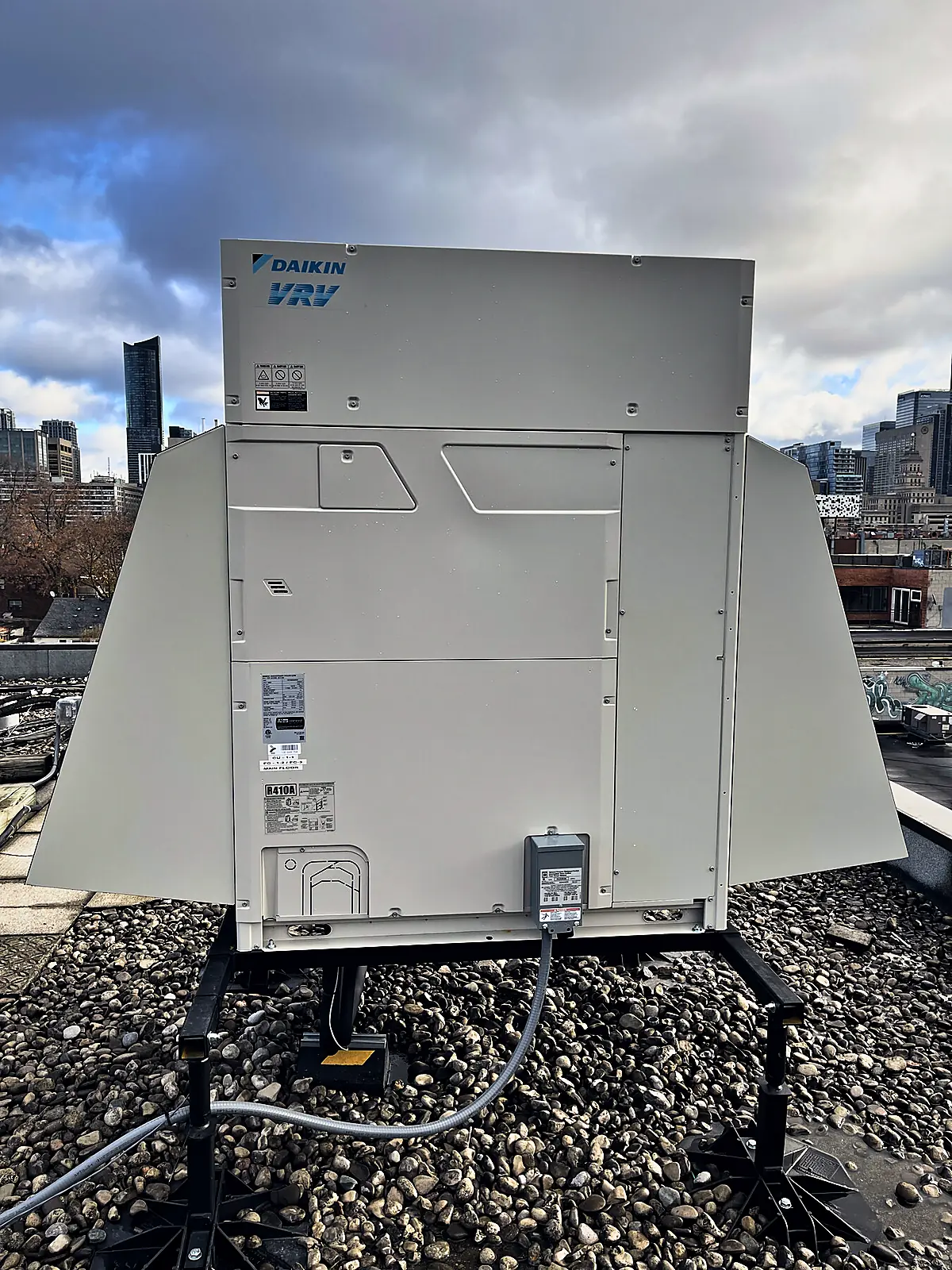
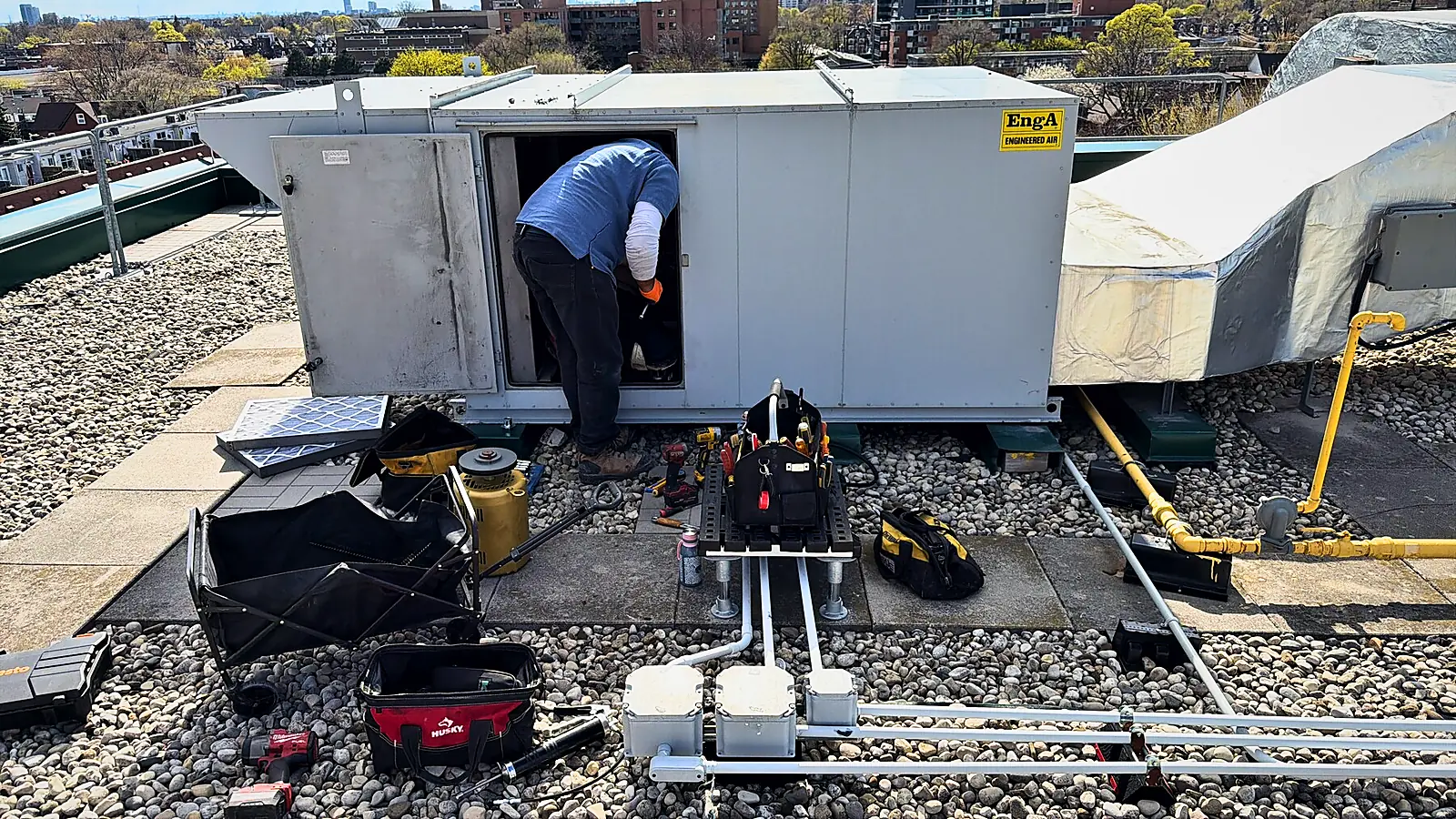
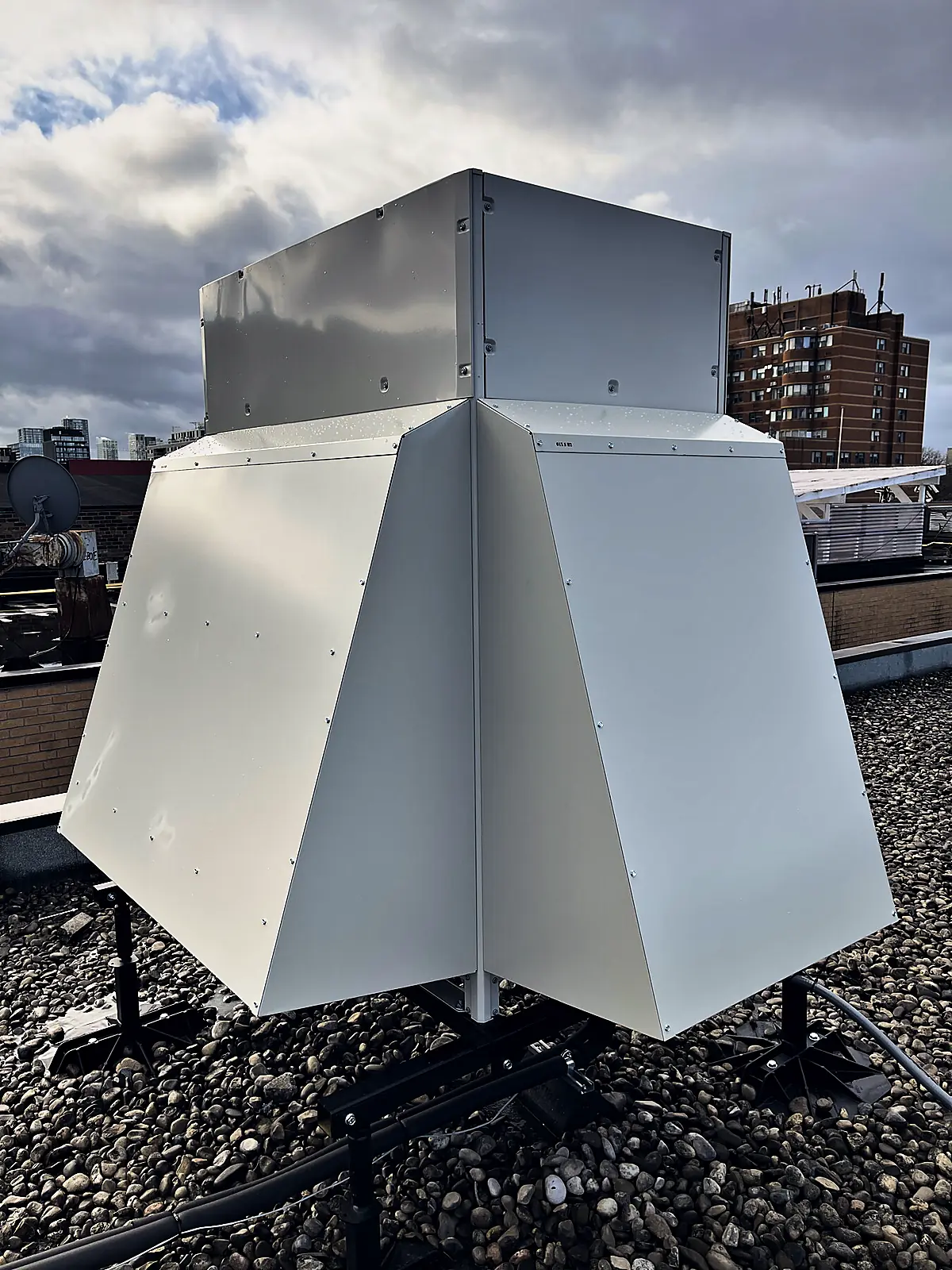
Kelvin Mechanical handles light commercial and mechanical work for small and mid-size buildings: offices, shops, restaurants, garages, plazas and multi-unit properties. The equipment is usually on a roof, on a pad beside the building or in a mechanical room, and the work has to fit around tenants, customers and opening hours.
Serving Ontario homeowners, landlords, property managers and light commercial clients, we keep commercial scheduling, access planning and written scopes separate from residential visits. We serve the GTA and nearby Ontario. The service areas page lists the approved cities.
Property managers and landlords
Tenant calls, planned seasonal visits, equipment lists and written notes for owners, handled through one organized work-order process.
Restaurants and food service
Dining room comfort, make-up air balance and exhaust fan support, planned around service hours and prep schedules.
Garages and workshops
Unit heaters, ventilation and make-up air for bays and shops where large doors, dust and fumes change the heating and air picture.
Small businesses
Rooftop and packaged units, thermostats and schedules for owners who lease a single unit or run a stand-alone building.
Retail and plazas
Customer-facing comfort with equipment on shared roofs, where access, noise and landlord approvals have to be sorted early.
Offices and professional suites
Zoned comfort, fresh air and steady temperatures for staff and visitors, with filters and belts kept on a schedule.
Multi-unit buildings
Common-area ventilation, mechanical room equipment and suite-level units, with work orders and equipment lists kept per building. See property management HVAC.
From site walk to written scope
Every commercial job starts with the building, not a price list. A visit has four parts, and each one is written down so a manager, landlord or owner can review the scope before anything is ordered.
1. Site walk
We look at where the equipment sits, how it is reached, what the space is used for and where the problems show up. Roof hatches, ladders, mechanical rooms and tenant access are noted.
2. Equipment nameplate review
Model, serial number, voltage and phase, gas input, refrigerant type and age are recorded from each nameplate. That shows what can be repaired, what can be replaced like for like and what needs a closer look.
3. Access and shutdown planning
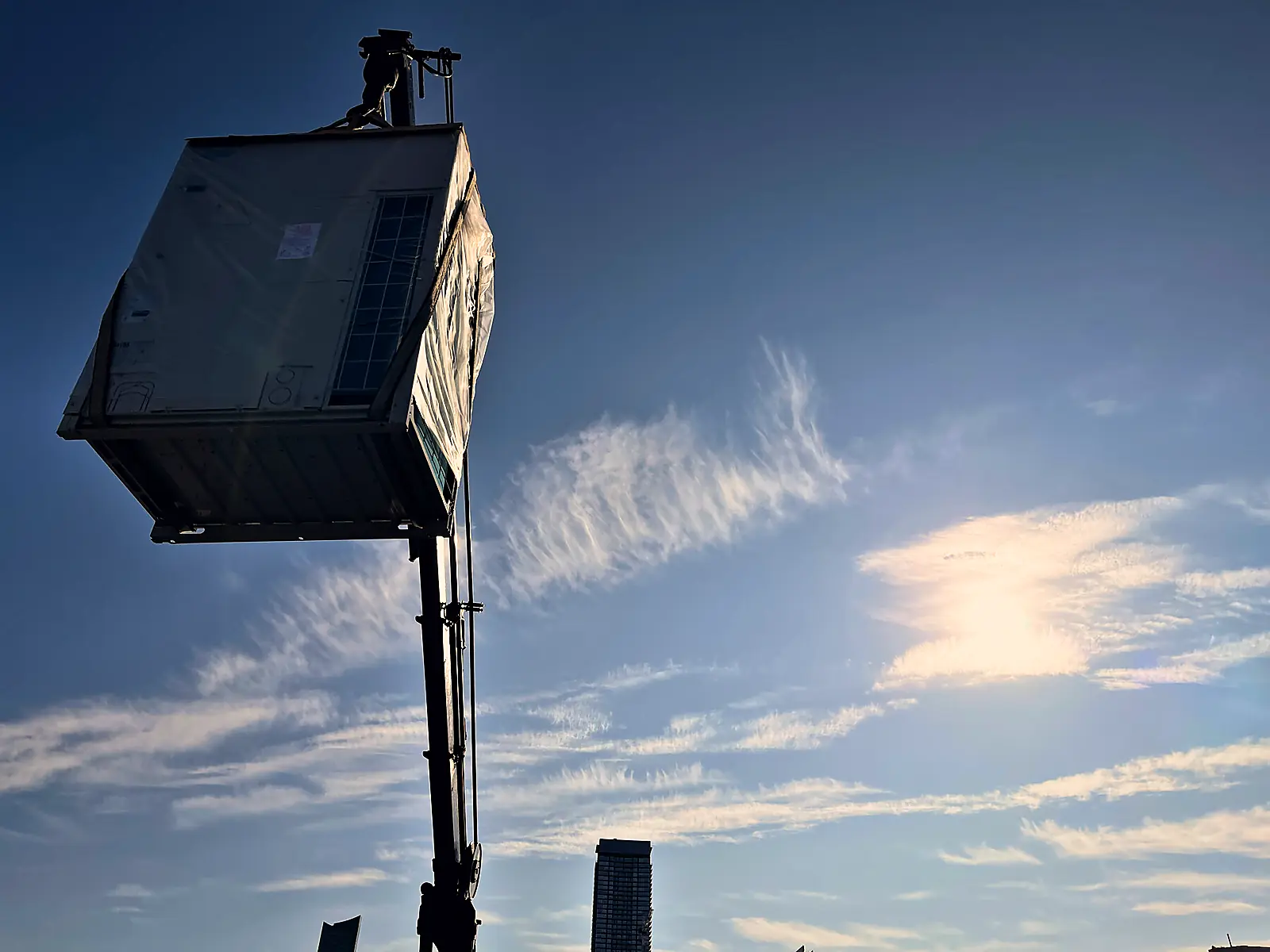
We agree on who opens the building, when power or gas can be isolated and whether work should happen outside opening hours. Crane or lift needs are identified at this stage.
4. Written scope
You receive a written scope listing the work, the equipment, any trades involved and what is excluded. Pricing varies with equipment, venting, ductwork, installation complexity and warranty options; a quote follows a site review.
A diagnostic fee may apply to repair calls; it is confirmed at booking. Start with Build My Quote or call +1 905-407-7353.
What to send with a commercial request
A few details up front let us plan the visit, ask the right questions and bring suitable parts.
- Photos of each equipment nameplate, plus the thermostat or controller display
- How the roof or mechanical room is reached: hatch, fixed ladder, ground pad or lift needed
- A building contact, and the landlord or property manager if approvals are required
- Operating hours, blackout dates and any tenants who need notice
- What stopped or changed, when it started and any error codes shown
- Previous service notes or invoices, if you have them
- For gas work, a photo of the meter and the existing piping route
Planned visits and maintenance agreements
A maintenance agreement is a written schedule: which units, how often, what is checked and what is reported. Filters, belts, coils, drain pans, burners, economizers and controls are looked at on a seasonal or quarterly rhythm that suits each piece of equipment.
Each visit ends with a service note so owners and property managers can plan repairs and replacements instead of reacting to breakdowns. Details are on the commercial maintenance page. Terms and pricing are quoted after a site review.
Installation, repair and maintenance on every system
Each commercial service page covers the same three needs, so you can start from the equipment you have rather than the type of call.
Installation
Site measurements, curb or pad work, gas and power connections, duct transitions and start-up readings are planned before the unit arrives.
Repair
Faults are traced to a part or a setting first. You get written options, including whether repair or replacement makes more sense.
Maintenance
Seasonal checks, clean coils, fresh filters, belt and motor checks and written notes keep small problems from turning into shutdowns.
If equipment fails: the emergency pathway
Commercial emergency service is subject to availability, and we do not promise a response time. Call +1 905-407-7353 with the address, the unit type and what has stopped, and we will tell you plainly what we can offer.
A diagnostic fee may apply and is confirmed at booking. The full pathway, including what to have ready, is on the commercial emergency service page.
If you smell gas, see smoke or hear a carbon monoxide alarm, leave the building and call 911 or the gas utility first.
Where our commercial scope stops
We keep the commercial side honest. Kelvin Mechanical works with licensed and qualified professionals and trade partners, depending on the project scope, and we say so when a job belongs to another trade.
- Large industrial or plant equipment, chillers, cooling towers and central boiler plants
- Commercial refrigeration such as walk-in coolers and freezers
- Fire-suppression systems and hood-and-duct cleaning, which belong to specialist trades
- Roof structure, membrane and flashing repairs, which belong to a roofing contractor
- Gas utility meters and regulators, which belong to the gas utility
- Building automation programming beyond thermostat and unit controller setup
If your building is outside this range, we will say so at the first call rather than take on the wrong job.