
Level 2 home charging
EV and Tesla Wall Charger Installation for Ontario Homes
A Level 2 wall charger turns a garage or driveway into your main charging spot. Kelvin Mechanical checks panel capacity, plans the dedicated circuit and arranges the install through licensed electrical professionals or trade partners, with permits and ESA notification where required.
- Charger typeLevel 2, 240 V wall charger
- ScopeLoad calculation, circuit and install
- VehiclesEVs, Tesla included
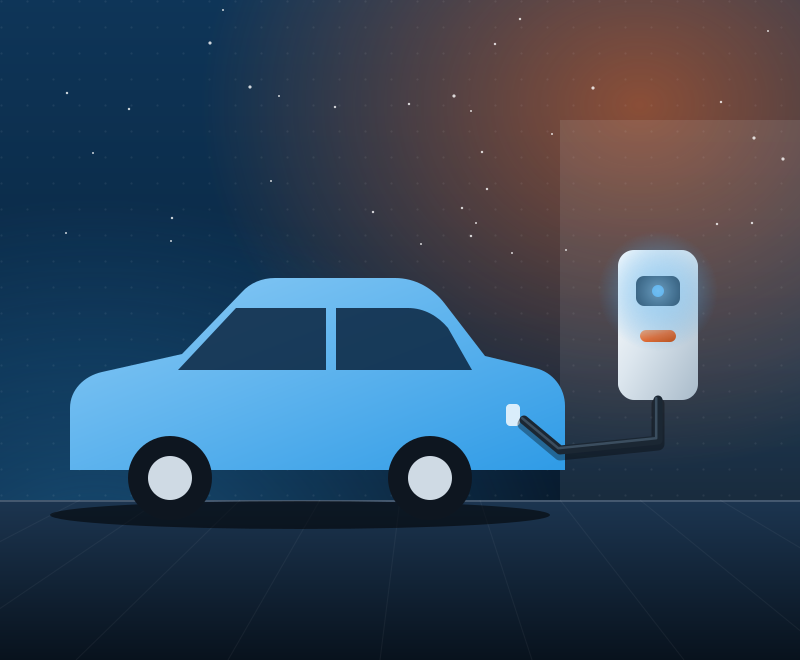 Illustration
Scope
What goes into a home EV charger install
- Site review of the parking spot, wall space, cable route and panel location
- Panel load calculation before a charger circuit is added
- Dedicated 240 V circuit sized to the charger's rated current and the cable run
- Plug-in (outlet) or hardwired connection, chosen to suit the charger model
- Wall mounting in a garage, carport or weather-rated outdoor location
- Wi-Fi, app and scheduling setup where the charger supports them
- Permits and ESA notification where required
- Start-up test and a walkthrough of settings, cable care and reset steps
Process
From parking spot to first charge
Every job starts with a conversation and a look at the equipment. You see the options in plain language before anything is booked.
- 1
Tell us about the vehicle and the spot
We ask what you drive, where it parks and where the panel is. A site review follows so we can see the wall, the cable route and the panel itself.
- 2
Check panel capacity
A load calculation shows whether your panel and service have room for a charger on top of the heating, range, dryer and other loads already there. If they do not, we discuss a panel upgrade, a subpanel or load management before quoting.
- 3
Choose the charger and the connection
We compare outlet and hardwired options, cable length and smart features against your parking layout. The quote follows the site review and reflects the circuit length, wall finish and any panel work.
- 4
Install with the right people
The circuit and charger are installed by licensed electrical professionals or trade partners, with permits and ESA notification where required. We confirm the plan with you before any work starts.
- 5
Test and walk through
We test the circuit and the charger before we leave, then show you the app, the schedule settings and how to store the cable. Keep the manufacturer's paperwork for your warranty.
Interactive
Panel load check before an EV charger
How many large electric loads do you have or plan? Count an EV charger, heat pump, electric range, dryer, hot tub or basement suite.
Every panel decision follows a load calculation to the Ontario Electrical Safety Code; the slider is only a starting point.
In pictures
What this work looks like
 Illustration
 Kelvin job photo
 Illustration
Photos from Kelvin Mechanical jobs. Labelled illustrations stand in where no job photo exists yet.
Good to know
Decisions to settle before the charger goes on the wall
Outlet or hardwired
A plug-in charger uses a dedicated 240 V outlet and can be unplugged or taken with you if you move. A hardwired charger connects straight to the circuit and is often preferred outdoors or for higher-current units. The charger model and the electrical professional's advice decide which suits you.
Connector and compatibility
Most EVs sold in Canada to date use the J1772 connector for Level 2 charging, while Tesla vehicles use the NACS (SAE J3400) connector that other automakers are now adopting. Connector standards are shifting and adapters exist, so confirm what your vehicle needs before you buy. A Tesla wall charger and an EV wall charger are the same kind of equipment: a Level 2 home charger.
Location, weather and cable length
A garage wall near the panel keeps the circuit short. Outdoor and carport locations need weather-rated equipment and a protected cable route. Check where the charging port sits on the vehicle so the cable reaches without strain.
Wi-Fi and app features
Scheduling lets you charge overnight, and energy tracking shows what each session used. Some features need a Wi-Fi signal at the charger, so check coverage on that wall. Features vary by model, so ask what still works if the Wi-Fi drops.
Rebates are conditional
Some EV charger incentives may exist from time to time, and they depend on the program, the equipment and your property. Check the current program rules before you buy, and do not assume a rebate will apply. We can point you to current program information, but we cannot promise eligibility.
Ontario notes
EV charging notes for Ontario homes
Winter, garages and weather-rated gear
Ontario winters mean snow, ice and cold batteries. A charger in a garage or carport is easiest on the equipment and on the owner, while an outdoor wall unit needs weather-rated gear and a protected cable route. Think about where you park in January, not only in July, and keep the cable off the ground where snow can bury it.
Rate plans and scheduling
Ontario electricity customers can usually choose among rate plans, which may include time-of-use, tiered and ultra-low overnight options depending on the utility. A charger with scheduling lets you match charging to your plan. Check the current plans with your utility, because rates and rules change and we do not quote running costs.
Codes, permits and incentives
The Ontario Electrical Safety Code applies to charger circuits, and permits and inspections are needed where required. Municipal rules can differ across the GTA and nearby Ontario. Incentives for chargers may exist from time to time but depend on the program, equipment and property, so confirm current rules before you buy.
Help centre
Questions about EV Chargers
Is a Tesla wall charger different from an EV charger?
No, both are Level 2 home chargers on a dedicated 240 V circuit. The differences are the connector on the cable and the app. Match the connector to your vehicle, or ask about adapters, before you buy.
How fast will a Level 2 charger charge my vehicle?
Speed depends on the charger's rated current, the circuit and the vehicle's onboard charger, so two vehicles can charge at different rates on the same wall unit. Your vehicle manual lists its maximum home charging rate.
Will my panel handle a charger?
Often yes, but a load calculation decides, not a guess. If your panel is full or heavily loaded, the options include a panel upgrade, a subpanel or a charger with load management. See panel upgrades and circuits.
Do I need a permit for an EV charger?
In Ontario, a notification of work must be filed with the Electrical Safety Authority (ESA) before a charger circuit is installed, and the installer must be a Licensed Electrical Contractor. The licensed electrical professional or trade partner handles that paperwork, and we confirm the details, including any municipal requirements, at quote stage.
Can I install a charger now and add solar or a heat pump later?
Yes, and planning the panel for all three at the start usually saves rework. A charger is a steady load that solar and heat pump planning should take into account. Use Build My Quote to describe what you have in mind.
Can an older Ontario home with a small electrical service support an EV charger?
Sometimes. A smaller service may have room once a load calculation accounts for the furnace, range, dryer and other loads. If it does not, the options include a panel upgrade, a subpanel or a charger with load management that shares power with other loads. We cannot say without seeing the panel, so start with photos and a site review.
Can I install an EV charger in a condo or rental unit in Ontario?
Often possible, but it needs permission first. Condo corporations, landlords and property managers usually set their own rules for parking, metering and wiring routes. Ask for written approval before buying a charger. If you manage the property, tell us the setup when you call +1 905-407-7353 so we can plan the circuit and the paperwork around it.
Does cold weather affect EV charging in Ontario?
It can. Cold batteries may charge more slowly and vehicles often use more energy in winter, so many owners find a garage or carport spot useful. Outdoor chargers need weather-rated equipment and a protected cable route for snow and ice. Your vehicle manual explains how winter affects charging, and we plan the install around your parking spot.
Is a Level 1 charger enough, or do I need Level 2?
It depends on how far you drive and how long the vehicle sits parked. Level 1 uses a standard household outlet and charges slowly, which can suit light daily use. Level 2 uses a dedicated 240 V circuit and charges faster, which many households prefer. Check what your vehicle needs, then ask us for a site review of the circuit.
What is EV charger load management?
Load management lets a charger or a panel device reduce charging power when other large loads, such as an oven or dryer, are running. In some cases it lets a home add a charger without a larger service. Whether it is allowed and suitable depends on the code, the equipment and your panel, so the electrical professional confirms the approach.
Can I charge my EV during off-peak hours on an Ontario time-of-use plan?
Many owners schedule charging for off-peak periods on their rate plan. Ontario electricity customers can often choose between rate plans, and the options depend on the utility. A charger or vehicle with scheduling makes this easy. Check your plan and rates with your utility, because we cannot say what a given schedule will cost you.
How is an EV charger installed at a detached garage or a driveway post?
The circuit has to run from the panel to the new location, either inside conduit through the house or along a code-approved outdoor cable route. Distance, trenching, frost and wall finishes all change the scope. A site review lets the electrical professional plan the route and confirm the permit steps. Send photos of the panel, the garage and the parking spot.
Where we do this work
EV Chargers in Toronto, the GTA and Hamilton
Toronto Mississauga Brampton Vaughan Markham Oakville Burlington Hamilton All service areas
Quote and booking
Request: EV Chargers
Share a few details and we will follow up. A written quote comes after a site review. There is no online checkout.
- City and service type help us route your request
- Urgency and property details let us prepare properly
- Optional equipment photos speed up repairs and replacements
Prefer to talk? +1 905-407-7353
Gas smell or carbon monoxide alarm? Leave the building and call 911 first. Do not use this form.