
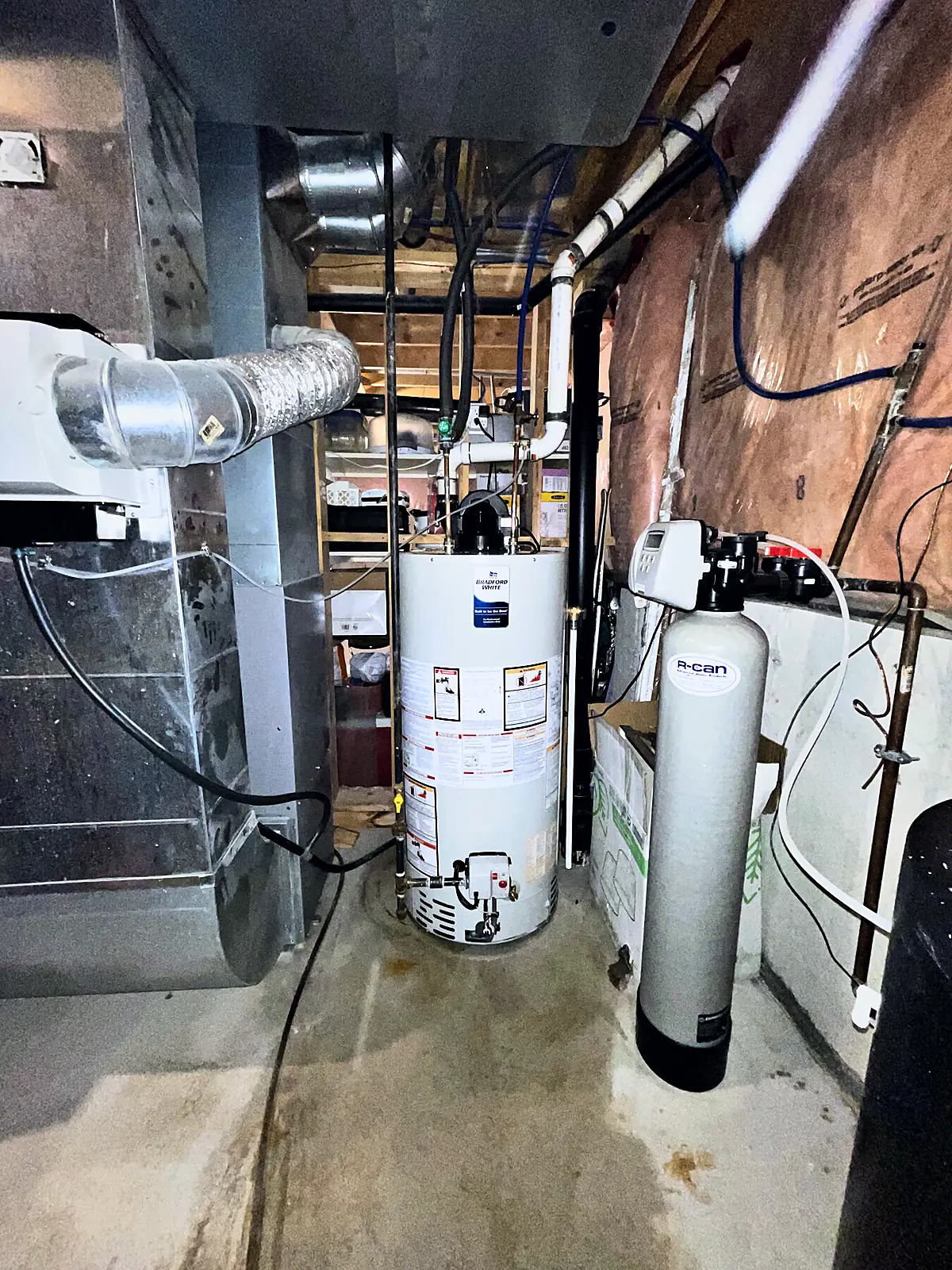
Safety first
- Gas smell: leave the house without touching switches and without using a phone inside, then call your gas utility's emergency line or 911 from outside. Enbridge Gas serves many Ontario homes; the number is on your bill. Do not try to relight anything.
- CO alarm: get everyone out, including pets, and call 911 from outside. Stay out until responders say it is safe.
- Never remove burner or gas valve covers on a gas heater, and do not open the electrical covers on an electric tank; the elements and thermostats behind them carry 240-volt wiring.
- Hot water scalds. Water from a tank, relief valve pipe or drain valve can burn. Keep children and pets away.
None at all, or just not enough?
| What you notice | Often points to | First thing to check |
|---|---|---|
| No hot water anywhere | No gas, no power, no ignition, or a tripped safety control | Power, other gas appliances, the pilot or error code |
| Hot water runs out quickly | Sediment, a failed lower element (electric) or a tank too small for the household | The setting, and how many showers run back to back |
| Lukewarm water only | A failed element, a mixing valve or a setting turned down | The setting on the heater and mixing valve |
| Hot at some taps, not others | A fixture cartridge or mixing valve, not the heater | Whether it follows one tap or the whole house |
| Tankless hot, then cold, then hot | Flow too low to keep the burner lit, or scale on the heat exchanger | Open the tap fully, clean aerators, note any code |
Safe checks you can do: tank water heaters
- Gas control setting. Make sure the knob is set to On, not Pilot or Vacation. Turn it gently; never force it.
- Standing pilot. Look through the small window near the bottom. If the pilot is out and the tank label gives a relight procedure, follow it once, exactly as written, and not at all if you smell gas. If it will not stay lit, the thermocouple or gas control likely needs service.
- Electronic ignition or power vent. These need electricity. Check the plug and breaker. The status light on the gas control may blink a code explained on the tank label.
- Electric tank. Reset a tripped water heater breaker once. If it trips again, leave it off and call: an element or thermostat has likely failed. The high-limit reset button sits behind an electrical cover, so leave that to a technician.
- Temperature setting. Confirm nobody has turned it down.
- Rental tanks. Many Ontario homes rent their water heater. Check the tank sticker or your gas bill; the rental company may need to handle or approve repairs.
Safe checks you can do: tankless water heaters
- Error code. Write down the code on the display or wall controller before switching anything off. Codes vary by brand and are listed in the manual or on a label on the unit.
- Power. A gas tankless heater still needs electricity for its fan and controls. Check the plug and breaker.
- Gas supply. If the stove or furnace has also stopped, contact your gas utility. Do not adjust gas valves yourself.
- Flow too low. A tankless heater only fires above a minimum flow. Open the hot tap fully and clean clogged aerators; if your manual shows how, clean the inlet filter screen.
- Outside vent and intake. Units that vent through a wall can shut down if snow or ice blocks the pipes. Clear them gently by hand.
- Freezing. Units in cold spaces or on exterior walls rely on power for freeze protection. After a winter power cut, look for leaks before assuming the heater is fine.
Hard water is common in many parts of Ontario, and scale is a leading cause of tankless error codes. Regular flushing under water heater maintenance keeps it in check.
Likely causes and how urgent they are
Setting or power: low urgency
A knob set to Vacation, a tripped breaker or an unplugged unit. Usually solved with the checks above.
Pilot or ignition fault: book a repair if it recurs
One relight by the label is fine. A pilot that will not stay lit needs the gas control or thermocouple tested.
Failed element or thermostat (electric): book a repair
Lukewarm water or a breaker that trips again. These sit behind covers with live 240-volt wiring.
Sediment or scale: plan a service
Hot water runs short, the tank rumbles, or tankless codes repeat. Flushing helps.
Relief valve discharging: urgent
Hot water or steam flowing from the pipe on the side of the tank means too much temperature or pressure. Turn the heater off and call.
Leaking tank or water pooling: urgent
Water coming from the tank itself usually means the tank has failed. Shut off the cold supply valve and the power or gas, and call.
When to call
Call right away if the relief valve is releasing hot water or steam, water is pooling under the tank, or you smell gas. For a discharging relief valve, turn the gas control to Off or switch off the breaker, keep clear of the pipe, and never cap the valve. For a leak, close the cold water valve above the heater and switch off the power or gas.
Book a visit if the heater will not restart after the checks above, something trips again, or the same error code returns. See water heater repair for the visit, and tankless water heaters for how those units work. Emergency service is subject to availability.
The cost of a repair depends on the cause, and a quote follows a diagnosis. A diagnostic fee may apply; it is confirmed at booking.
What to tell us when you call
- The model and serial number from the rating plate on the tank or tankless unit
- Gas or electric, tank or tankless, and whether it is owned or rented
- Any error code or status light pattern, written down
- Whether there is no hot water, not enough, or lukewarm only
- What you already tried: breaker, relight, setting change, aerator cleaning
- Photos of the rating plate, the control or display, and any water