
Packaged units
Packaged Air Conditioners, Gas Packs and Packaged Heat Pumps for Commercial Spaces
Self-contained packaged AC, gas/electric and heat pump units for offices, shops and light commercial space, with placement, sizing and duct connections worked out together.
- ScopeInstall, repair and maintain
- TypesPackaged AC, gas/electric and heat pump
- PlacementRooftop or ground-level pad
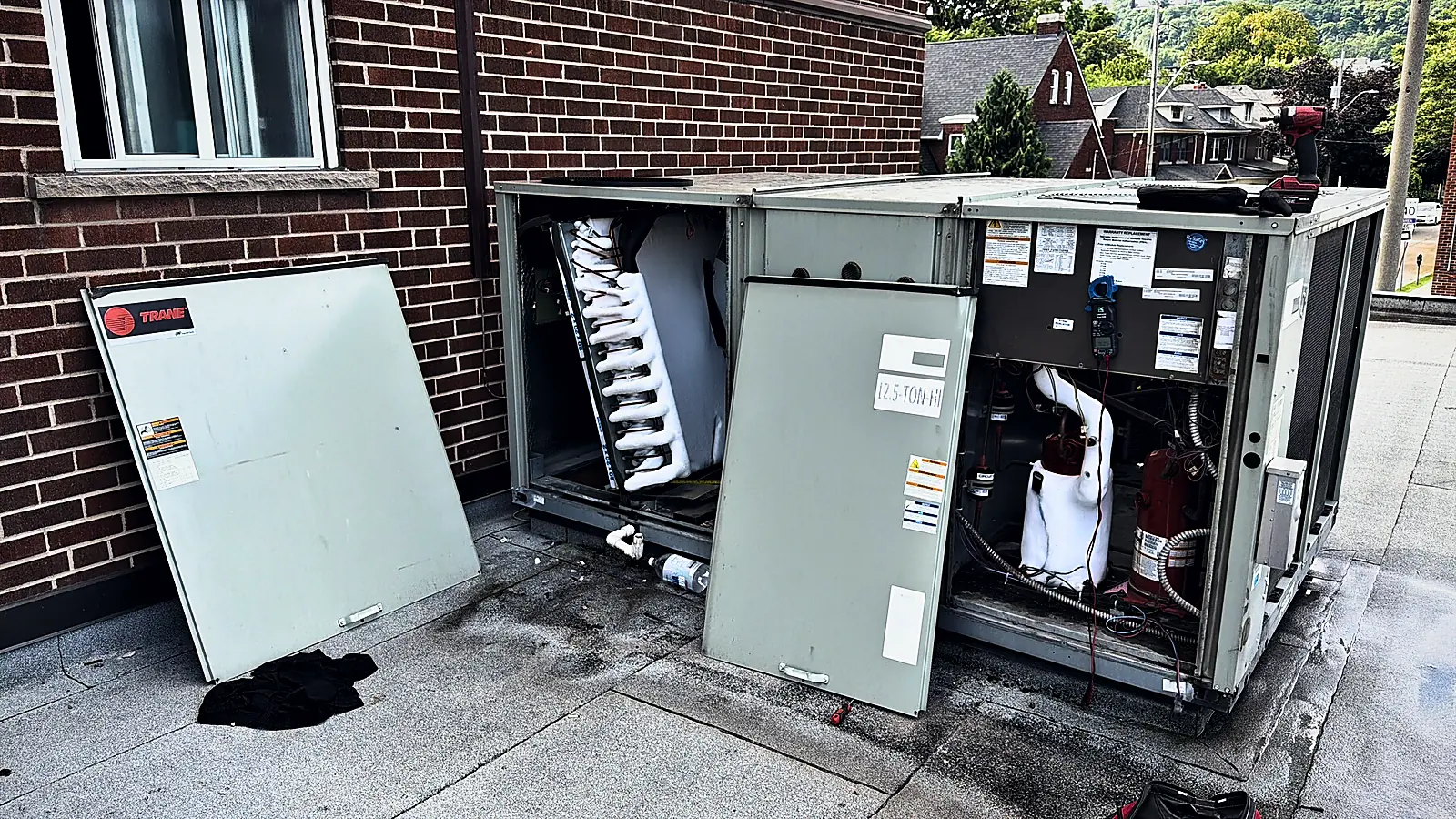 Serving the GTA and nearby Ontario
Scope
Packaged unit work, item by item
- Packaged AC with gas heat, and packaged heat pumps with electric backup heat
- Ground-level pad placement compared with rooftop placement for your building
- Load calculation and ventilation air requirements reviewed before a unit size is chosen
- Duct transitions, flexible connectors and weatherproofing at supply and return openings
- Pad, stand or curb preparation with clearances for airflow and service access
- Condensate drain routing, trap and freeze protection checks
- Thermostat and control wiring, including heat pump changeover and backup heat settings
- Start-up readings: airflow, static pressure, gas input or electric heat draw, refrigerant pressures
Process
How a packaged unit project is scoped
Every job starts with a conversation and a look at the equipment. You see the options in plain language before anything is booked.
- 1
Record the nameplate and the building
We note the existing model, voltage and phase, gas input and refrigerant type, then confirm how the space is used today. Changes in occupancy, equipment heat or ventilation needs since the last install can change the answer.
- 2
Choose rooftop or ground-level placement
Roof placement frees ground space and can shorten some duct runs. A pad beside the building keeps service at ground level and may avoid a crane. Landlord rules, snow drift, noise and duct routing are weighed together.
- 3
Size from a load calculation
Heating and cooling loads come from the building envelope, windows, occupancy, lighting, equipment heat and ventilation air. The result is checked against the existing ductwork, because a correctly sized unit still struggles on ducts that cannot carry its airflow.
- 4
Set the unit and make the transitions
The unit goes on its curb, pad or stand, then supply and return ducts are connected with sealed, insulated transitions. Gas, power and condensate connections follow, with piping detail on the commercial gas lines page.
- 5
Commission and leave a record
Start-up covers airflow, static pressure, gas input or electric heat draw, refrigerant pressures and thermostat operation. A short note lists settings and filter sizes for your files.
In pictures
What this work looks like
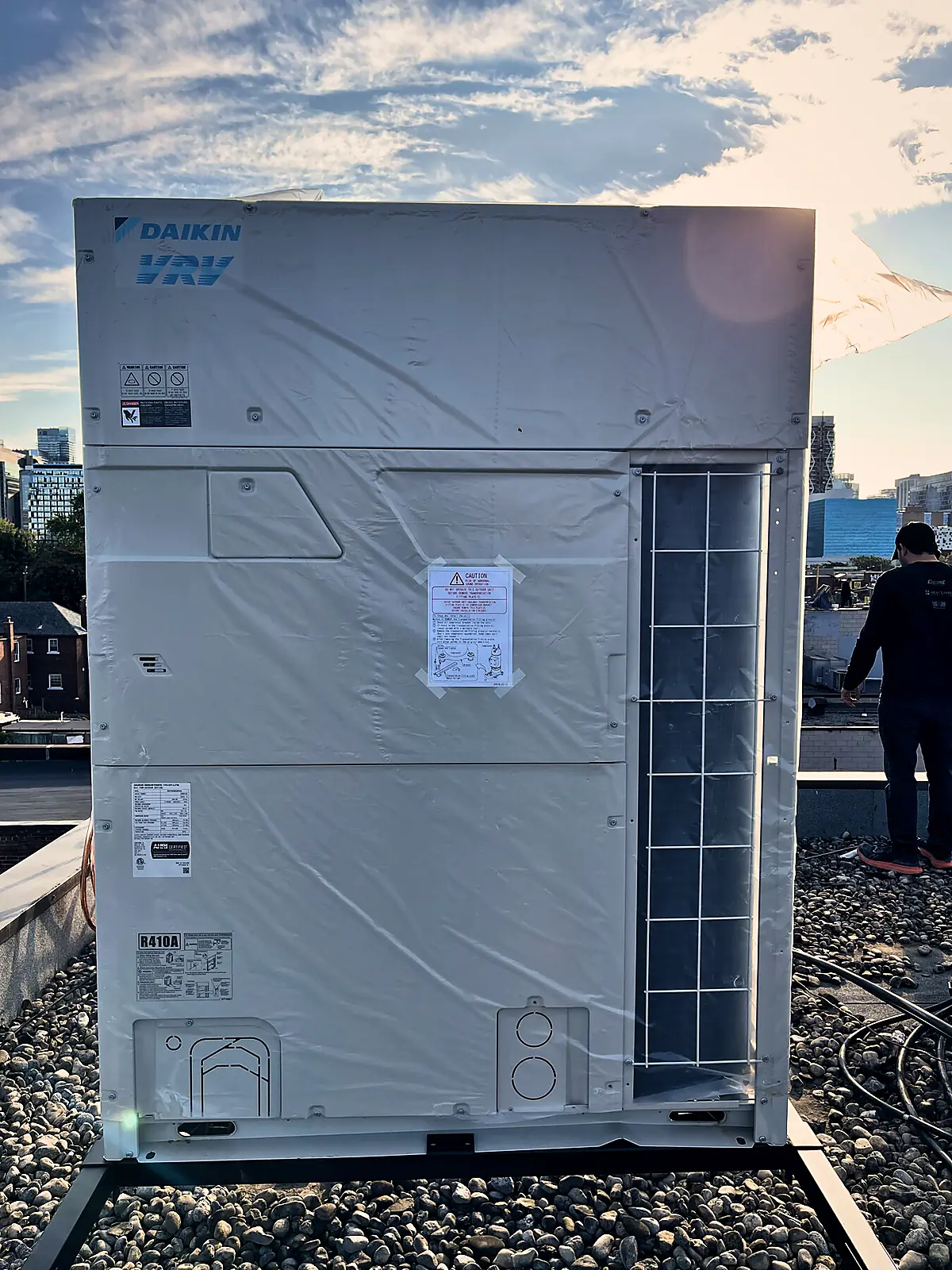 Kelvin job photo
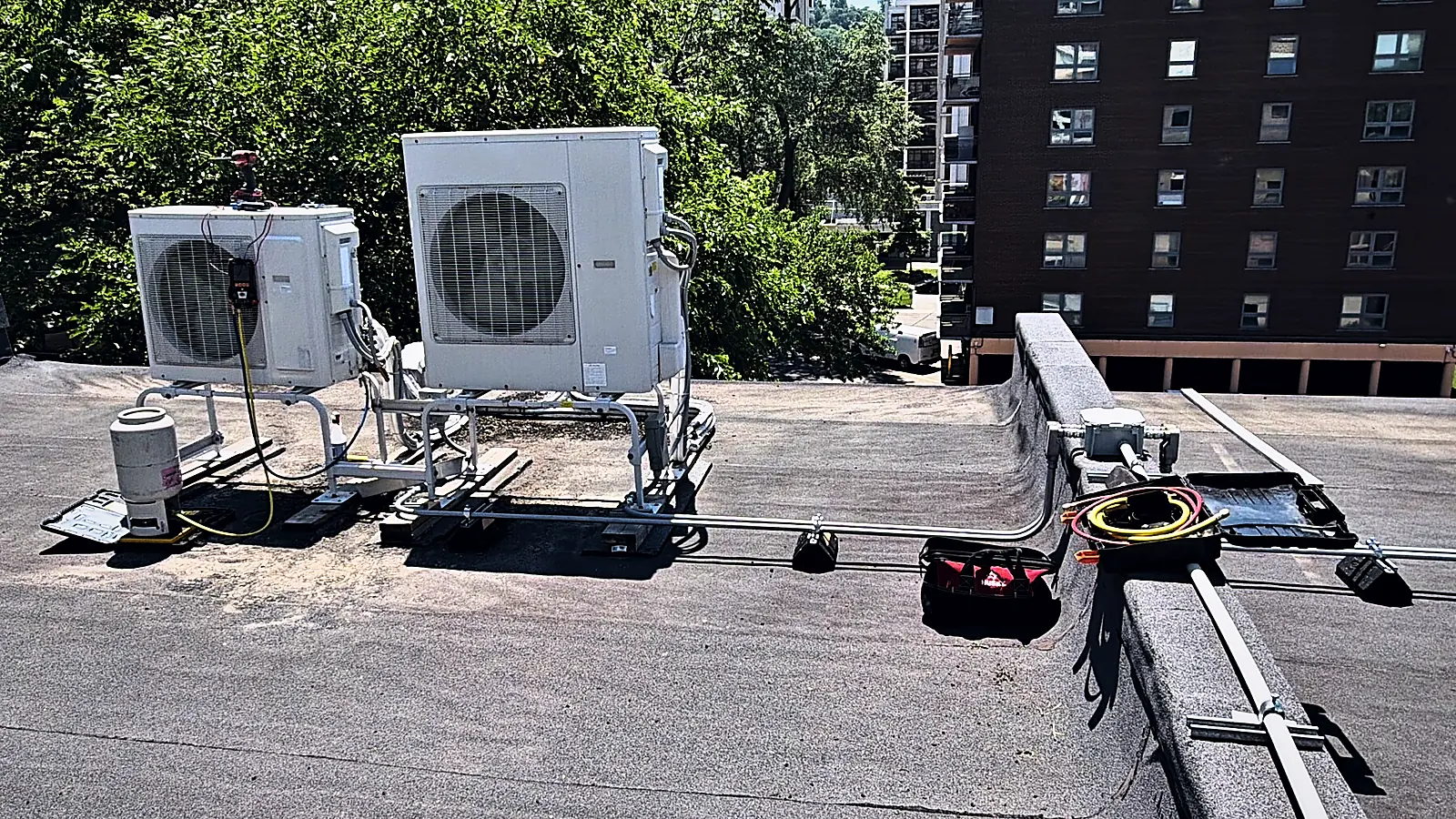 Kelvin job photo
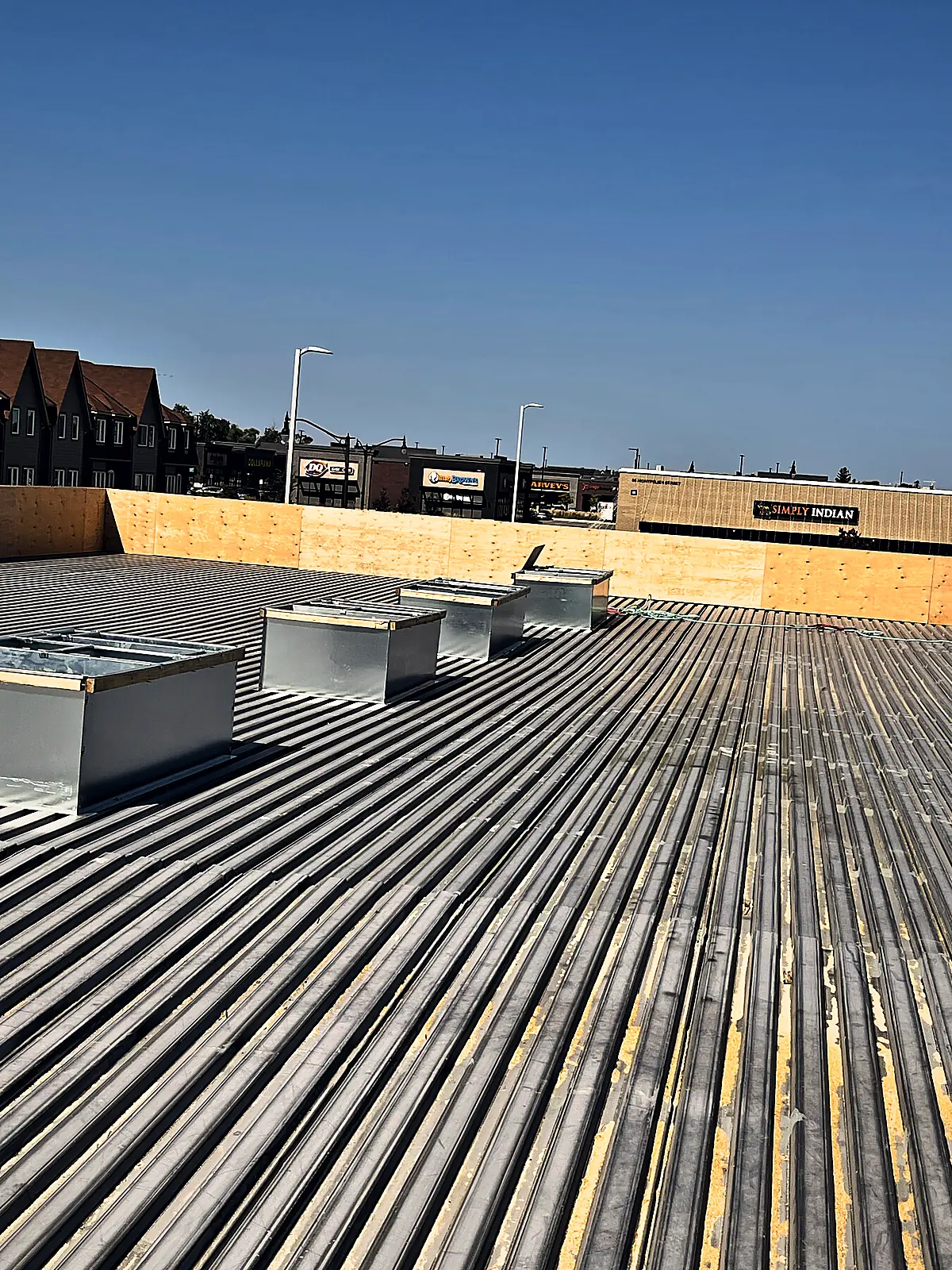 Kelvin job photo
Photos from Kelvin Mechanical jobs in the GTA and nearby Ontario.
Good to know
Packaged formats and when each one fits
Packaged AC with gas heat
A cooling coil and compressor sit with a gas heat section in one cabinet. It suits buildings that already have gas service and want one unit to handle both seasons.
Packaged heat pump units
The refrigerant circuit reverses to heat in cooler weather, often with electric backup heat strips. Heating output falls as outdoor temperature drops, so selection depends on the model, the building's heat loss and design conditions.
Ground-level versus rooftop
Ground-level units sit on a pad beside the building and connect through the wall. Rooftop units need a curb, a lift and roof access for service. Neither is always better; the site decides.
Duct transitions that hold up
Transitions bridge the unit's openings and the existing duct sizes. They need sealed seams, insulation, support and weatherproofing so they do not leak air or water. Return air paths and static pressure are checked afterward.
Install, repair, maintain
Installation: placement, sizing and ducts
We confirm placement, load and duct capacity before the unit is ordered, then handle the set, connections and start-up. Delivery and lift timing depend on the equipment and the site.
Repair: compressor, fan, heat section and controls
Packaged units fail in the same places as a separate AC and furnace: capacitors, contactors, motors, ignition parts and control boards. We diagnose first and give written options, including replacement where it makes sense.
Maintenance: filters, coils and drains
Planned visits cover filters, coils, belts, drain lines and the heat section. A written note records readings for the next visit and for your building file.
Heat pump performance and backup heat
Packaged heat pumps lose heating output as the outdoor temperature falls. Whether backup heat is needed, and how much, depends on the model, the building's heat loss and the design temperature, so it is set from the load calculation, not assumed.
Ontario notes
Packaged unit notes for Ontario climate and buildings
Humid summers and moisture removal
Ontario summers add moisture as well as heat. An oversized packaged unit cools quickly, shuts off and leaves the air clammy, while an undersized one runs all afternoon. Sizing from a load calculation, with ventilation air included, helps the unit run long enough to remove moisture without struggling.
Heat pump output in cold weather
Packaged heat pumps lose heating output as outdoor temperatures drop. In Ontario that means checking the model's cold-weather performance, the building's heat loss and how backup heat is set. Backup heat may be electric strips or a gas section, depending on the unit and the building's supply.
Gas and electrical service on site
Many older plazas have gas service from Enbridge Gas and limited electrical capacity. A packaged unit may need a gas input check, a larger breaker or three-phase supply. Checking the meter, panel and nameplate early shows whether the building can carry the new unit before it is ordered.
Permits, pads and landlords
A ground pad, a new curb or a wall opening can all bring approvals. Municipalities in the GTA and beyond handle permits differently, and landlords often have their own rules for roofs and exterior walls. Rules differ by municipality and change, so we confirm them before work begins.
Help centre
Questions about Packaged Units
What is the difference between a packaged unit and a split system?
A packaged unit holds the compressor, coils, fan and heating section in one cabinet outside the building. A split system divides them between an indoor air handler and an outdoor condenser. Packaged units suit buildings with little indoor mechanical space.
Do you size packaged units by square footage?
No. Sizing uses a load calculation based on the building envelope, windows, occupancy, lighting, equipment heat and ventilation air. Square footage alone leaves out most of what drives the load.
Can a packaged unit replace my old furnace and AC pair?
Sometimes. It depends on outdoor space or roof capacity, existing ductwork, gas and electrical supply and landlord approval. We review these during the site walk before recommending it.
Will my existing ductwork work with a new unit?
Often it can, but only after duct sizes, leakage and static pressure are checked. A transition fitting can join different openings. If the ducts cannot carry the airflow, we say so and explain the options.
Can you service packaged units installed by another company?
In most cases, yes. Send nameplate photos and a short description through Build My Quote, or compare with rooftop unit service if the unit sits on a roof.
Is a packaged heat pump a good fit for a small business in Ontario?
It can be, depending on the building. Cold weather reduces heat pump output, so the model, the building's heat loss, the design temperature and the backup heat all matter. A packaged heat pump may suit a space with electric service and no gas. We review these points during the site walk and write down the options. See heat pump installation for the home-side basics.
Can a packaged unit sit on the ground beside my building?
In many cases, yes. A ground pad needs level, stable support, clearances for airflow and service, and a duct route through the wall or below grade. Snow drift, noise, security and landlord rules also matter. Ground-level placement keeps service at ground level and may avoid a crane. We compare it with roof placement during the site walk.
Do I need a permit to install a packaged unit in Ontario?
A new or replacement packaged unit can involve mechanical, gas and electrical permits, and a building permit if a pad, curb or wall opening changes. What applies depends on the municipality and the scope. Rules differ by municipality and change, so we confirm requirements in the written scope. Landlord approval is a separate step.
Why does my packaged unit ice up?
Ice on the coil usually points to low airflow, a dirty filter or coil, a blower problem or low refrigerant from a leak. Cooling in cool weather can cause it too. Turn the cooling off and run the fan to thaw the coil, then book a visit. Do not chip ice off the coil. Send a photo through Build My Quote.
What electrical supply does a packaged unit need?
It depends on the unit. Some run on single-phase power, while larger units often need three-phase supply, a correctly sized breaker and a disconnect within reach. The nameplate lists voltage, phase and minimum circuit ampacity. Electrical work is carried out by licensed electrical professionals or trade partners, with permits and notification where required.
How should I prepare my property for a packaged unit delivery?
Clear the pad or the roof route, arrange parking or street access for the delivery vehicle and lift, and give tenants notice of any shutdown. Confirm who has keys, roof hatch access and building contacts. Delivery and lift timing depend on the equipment and the site, and we plan them in the written scope.
Why does my packaged unit start and stop all the time?
Frequent cycling can come from an oversized unit, a dirty filter, a poorly placed thermostat, a tripping safety or low refrigerant. Constant starts wear contactors and compressors. A visit checks airflow, thermostat location and safety trips before parts are replaced. Call +1 905-407-7353 or send a request through Build My Quote.
How can I tell if my packaged unit is the wrong size?
Signs include a unit that runs all day and still cannot keep up, rooms that swing hot and cold, or air that feels clammy because the unit shuts off too quickly. Duct problems can look the same. Sizing is checked with a load calculation and a duct review, not a rule of thumb, before any replacement is recommended.
Where we do this work
Packaged Units in Toronto, the GTA and Hamilton
Toronto Mississauga Brampton Vaughan Markham Oakville Burlington Hamilton All service areas
Quote and booking
Request: Packaged Units
Share a few details and we will follow up. A written quote comes after a site review. There is no online checkout.
- City and service type help us route your request
- Urgency and property details let us prepare properly
- Optional equipment photos speed up repairs and replacements
Prefer to talk? +1 905-407-7353
Gas smell or carbon monoxide alarm? Leave the building and call 911 first. Do not use this form.