
Maintenance
Water Heater Maintenance: Flushing, Anode Rods and Safety Checks
A maintenance visit checks the parts that fail quietly: venting, relief valve, connections, temperature setting and, where they apply, flushing, anode rod and condensate neutralizer.
- Applies toGas and electric tanks, hybrid, tankless
- FocusSafety checks and scale control
- TimingSet by your water and unit type
 Serving the GTA and nearby Ontario
Scope
The maintenance checklist, item by item
- Tank flush to clear sediment, where the unit and water conditions call for it
- Descaling for tankless heat exchangers, using isolation valves or a service kit
- Anode rod inspection where the tank design allows access and the condition suits it
- T&P relief valve check and discharge pipe inspection
- Venting check: joints, slope, terminations and, on power vent units, the fan and pressure switch
- Condensate neutralizer check on condensing units, with media replaced as required
- Leak check at fittings, valves, the drain and around the base of the tank
- Temperature setting review, with a note on water quality and hardness
Process
What happens during a water heater service visit
Every job starts with a conversation and a look at the equipment. You see the options in plain language before anything is booked.
- 1
Look and listen
We start with the room: moisture marks, rust, scorching, combustion air and clearances. Then we run the unit and listen for rumbling, popping or fan noise that points to scale or airflow trouble.
- 2
Service the unit
We flush or descale where it applies, inspect the anode rod where suitable, and clean or replace neutralizer media on condensing models. Hybrid units also get air filter and condensate drain attention.
- 3
Test the safety parts
The T&P valve, discharge piping, vent and gas or electrical connections are checked. We confirm ignition, flame quality or element operation, and the temperature at the tap.
- 4
Report back
You get plain notes on what we found, what to watch and when to book again. If the unit is nearing the end of its useful life, we say so before it fails.
Interactive
Water heater setting
What temperature is your tank set to?
General guidance only. Safe tap temperatures depend on the household; ask us about a mixing valve.
In pictures
What this work looks like
 Kelvin job photo
 Kelvin job photo
 Kelvin job photo
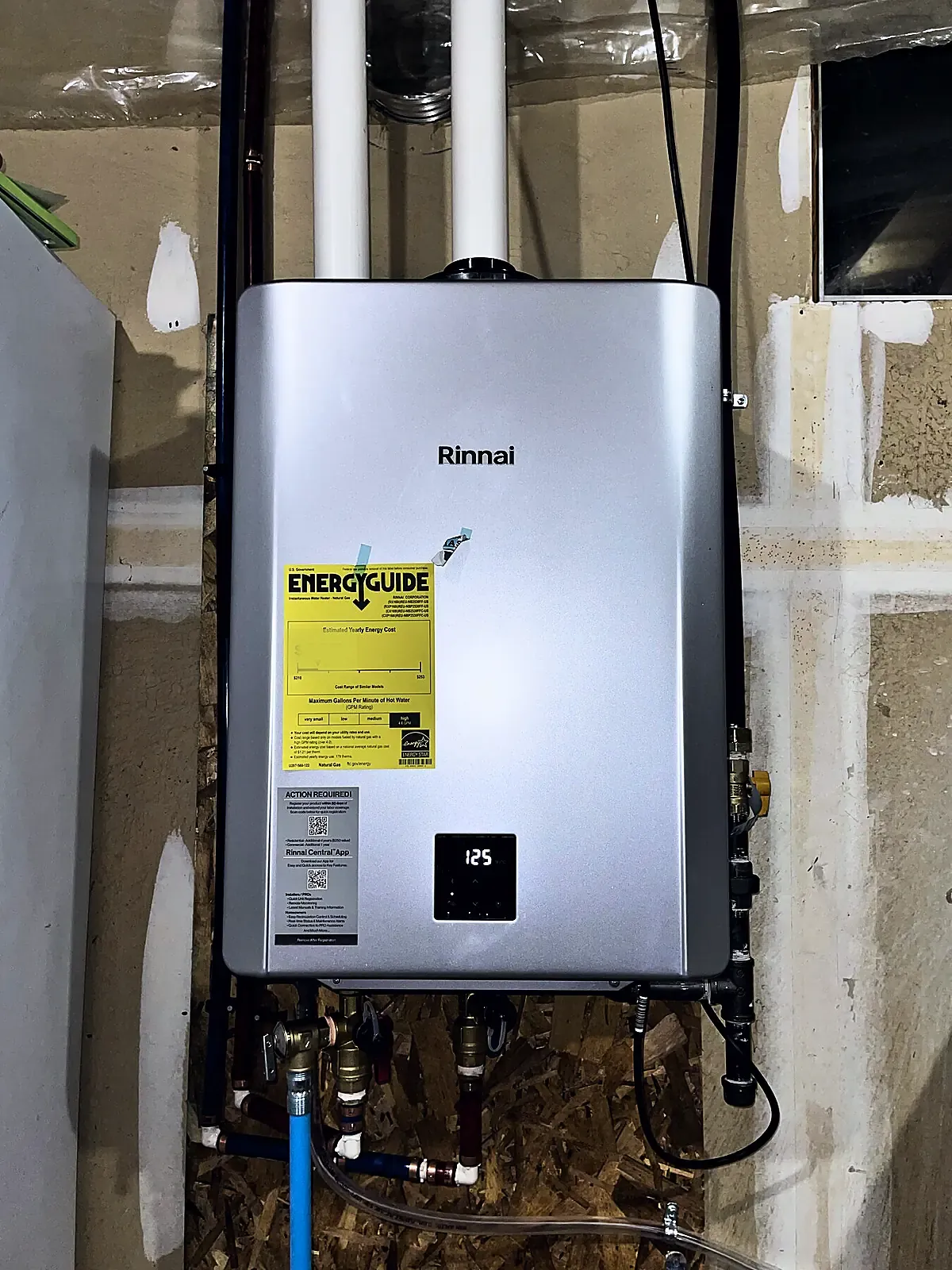
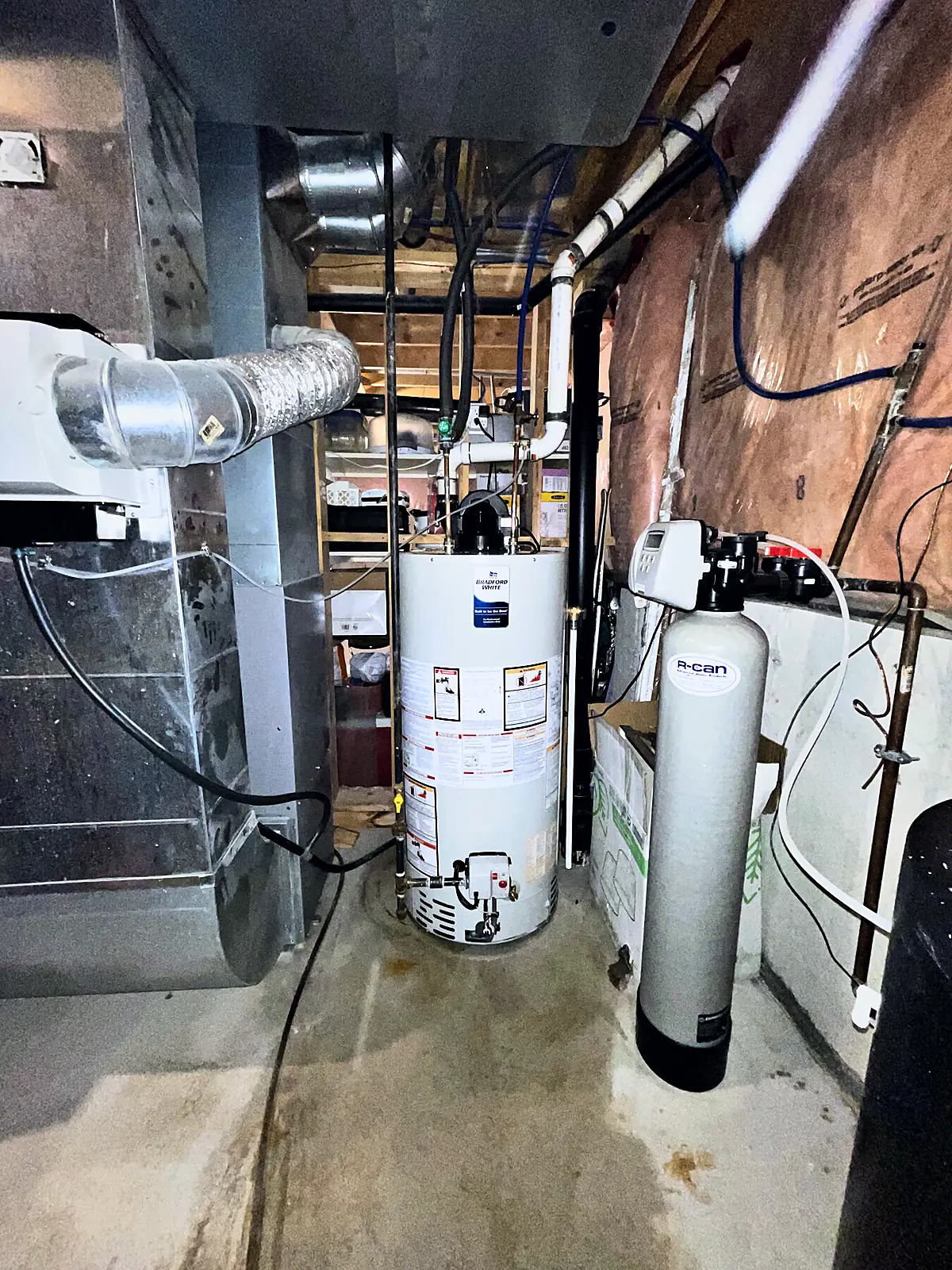
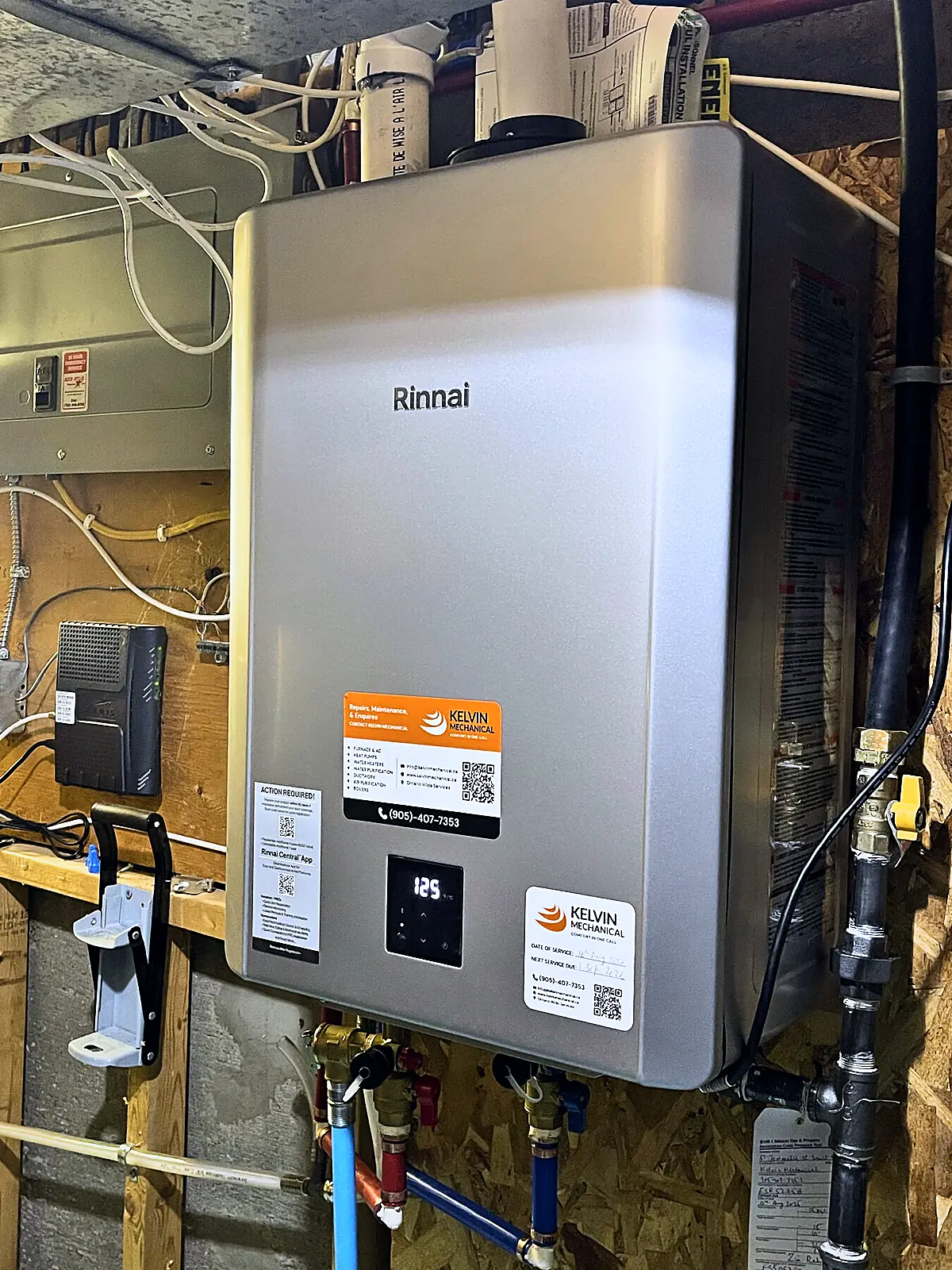
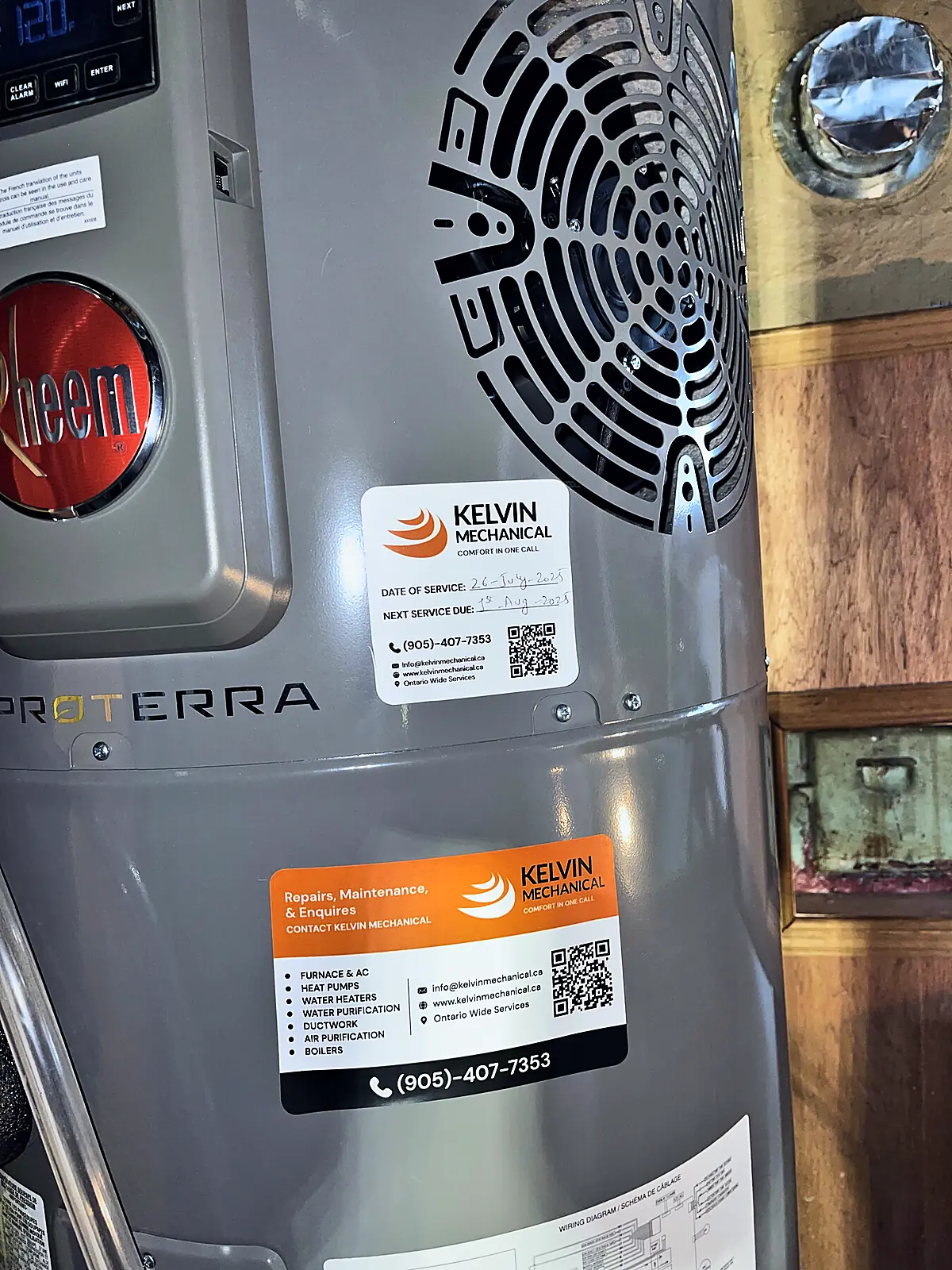
Photos from Kelvin Mechanical jobs in the GTA and nearby Ontario.
Good to know
Flushing, anode rods and temperature: the judgement calls
Flushing: when it helps
Sediment builds faster in hard-water homes. Flushing can clear loose sediment, but a long-neglected tank may hold hardened scale that does not drain out. We assess condition before flushing and tell you what to expect.
Anode rods
The anode rod corrodes in place of the tank steel. Some tanks make it easy to check and others do not. Whether to inspect, replace or leave it depends on the model, the age and your water, so we talk it through with you.
Temperature setting
Water stored at about 60 °C keeps Legionella bacteria in check, but water that hot can scald within seconds. The usual answer is to keep the tank hot and limit the temperature at the tap with a mixing valve. Hotter settings also speed up scale. We review the setting against the manufacturer instructions and local requirements.
Water quality
Hard water drives scale, and well water can add iron or sediment. If scale keeps coming back, treatment may do more than extra flushing. See softener installation and water treatment service.
Watch for these between visits
Puddles, rust streaks, a dripping relief valve, a yellow or sooty flame on gas units or new noises are all reasons to call early. See water heater repair.
Ontario notes
Ontario notes for water heater upkeep
Hard water sets the schedule
Hardness varies by municipality and supply, and it decides how fast sediment builds in a tank or scale narrows a tankless heat exchanger. A test of your own tap is the most reliable guide to timing. If scale keeps returning, treatment may do more than extra flushing.
Book before the busy season
Heating-season breakdowns arrive when equipment is working hardest. Fall is a sensible time for a maintenance visit, along with the furnace service, because it gives time to order parts and plan a replacement if the unit is tired. Spring suits tankless descaling after a hard winter.
Carbon monoxide alarms and combustion air
Tighter windows and doors reduce the air available for combustion in older homes. We check venting and combustion air on gas units, and we recommend testing your carbon monoxide alarms alongside any maintenance visit.
Rented units have different rules
If your heater is rented, check the agreement before booking maintenance, because the rental company may require its own service. If you own the unit, we can service it and keep a record of the work, which helps if you ever make a warranty claim.
Equipment we install and service




Brand names and logos belong to their owners. Availability depends on the product line and region.
Help centre
Questions about Water Heater Maintenance
How often should a water heater be serviced?
Annual attention is a common starting point, and hard-water homes may need it more often. Tankless units in scale-prone areas are usually descaled on a schedule tied to water hardness and use. We set a schedule around your unit and your water.
Do I need to drain my water heater every year?
Many tank manufacturers call for flushing at least once a year, and hard-water homes may need it more often, so check your manual. If a tank has never been flushed, we check its condition first and recommend flushing only where it makes sense.
Should the anode rod be replaced?
It depends on the tank model, how much of the rod remains and your water. Some tanks have limited access. We inspect where suitable and explain the options.
Can I do some of this myself?
Looking for leaks and keeping the area clear are fine. Work on gas, electrical, venting or the T&P valve should be left to a qualified professional. Always follow the manufacturer manual.
Does maintenance affect my warranty?
Manufacturer warranties often depend on correct installation and reasonable care, but terms vary by model. We keep a record of the work we do. Check your warranty documents for specifics.
Is it worth flushing a water heater that has never been flushed?
Sometimes, with caution. Long-neglected tanks can hold hardened scale that does not drain out, and flushing can disturb a drain valve that has been closed for years. We assess the condition first and tell you what to expect. If the unit is old, we also discuss whether the money is better spent on replacement.
Should I test the pressure relief valve on my water heater?
Some manuals describe lifting the lever, but an older valve can fail to reseat and start leaking afterward. Ask before you try it. As part of a maintenance visit, we check the valve, the discharge pipe and signs of pressure or thermal expansion problems.
How do I know if my anode rod is worn out?
It has to be inspected to know. Clues include a rotten-egg smell, a rumbling tank and a unit of some age that has never been checked. Some tanks make the rod easy to reach and others do not. We look where access allows and explain whether to replace it.
How do I descale a tankless water heater?
A tankless heat exchanger is descaled by circulating a descaling solution through it with a pump, using isolation valves, following the manufacturer instructions. If your unit has no isolation valves, they are added first. We do the descale and set a schedule based on your water hardness and use.
How can I make my water heater last longer?
Regular maintenance can help: flushing where it suits, an anode check, a sensible temperature setting, a working relief valve and treatment for hard water. Fix small faults early. Nothing stops age, so we tell you honestly when a unit is nearing the end of its useful life. See water heater repair.
Should I turn off my water heater when I go away?
For a short trip, many manufacturers offer a vacation or low setting. For a longer absence in winter, the house must stay heated and the plumbing protected from frost. Check the manual for your model, and ask us if you are unsure about restarting a gas unit afterward.
Does water heater maintenance help gas units run safely?
It helps. We check the vent for joints, slope and terminations, look at combustion air and the flame, and test safety devices. Ontario rules generally call for working carbon monoxide alarms in homes with fuel-burning appliances. Test your alarms regularly and replace them at the end of their stated life.
Where we do this work
Water Heater Maintenance in Toronto, the GTA and Hamilton
Toronto Mississauga Brampton Vaughan Markham Oakville Burlington Hamilton All service areas
Quote and booking
Request: Water Heater Maintenance
Share a few details and we will follow up. A written quote comes after a site review. There is no online checkout.
- City and service type help us route your request
- Urgency and property details let us prepare properly
- Optional equipment photos speed up repairs and replacements
Prefer to talk? +1 905-407-7353
Gas smell or carbon monoxide alarm? Leave the building and call 911 first. Do not use this form.