
Water treatment
Water Softener Installation in Ontario: Sized From a Hardness Test
Hardness testing, grain capacity, drain and bypass connections and upkeep, with honest limits on what softened water can do for your plumbing, water heater and fixtures.
- Starts withWater hardness testing
- OptionsSalt-based and salt-free
- Water sourceMunicipal or well
 Serving the GTA and nearby Ontario
Scope
The parts of a softener installation
- Hardness testing at the tap, with iron and pH noted where the test allows
- Grain capacity matched to hardness, household use and regeneration frequency
- Salt-based ion exchange softeners, including dual-tank layouts for heavier use
- Salt-free and carbon filter options, explained as conditioners or filters rather than softeners
- Drain connection for regeneration discharge, with an air gap where required
- Bypass valve so the unit can be isolated without shutting off the whole house
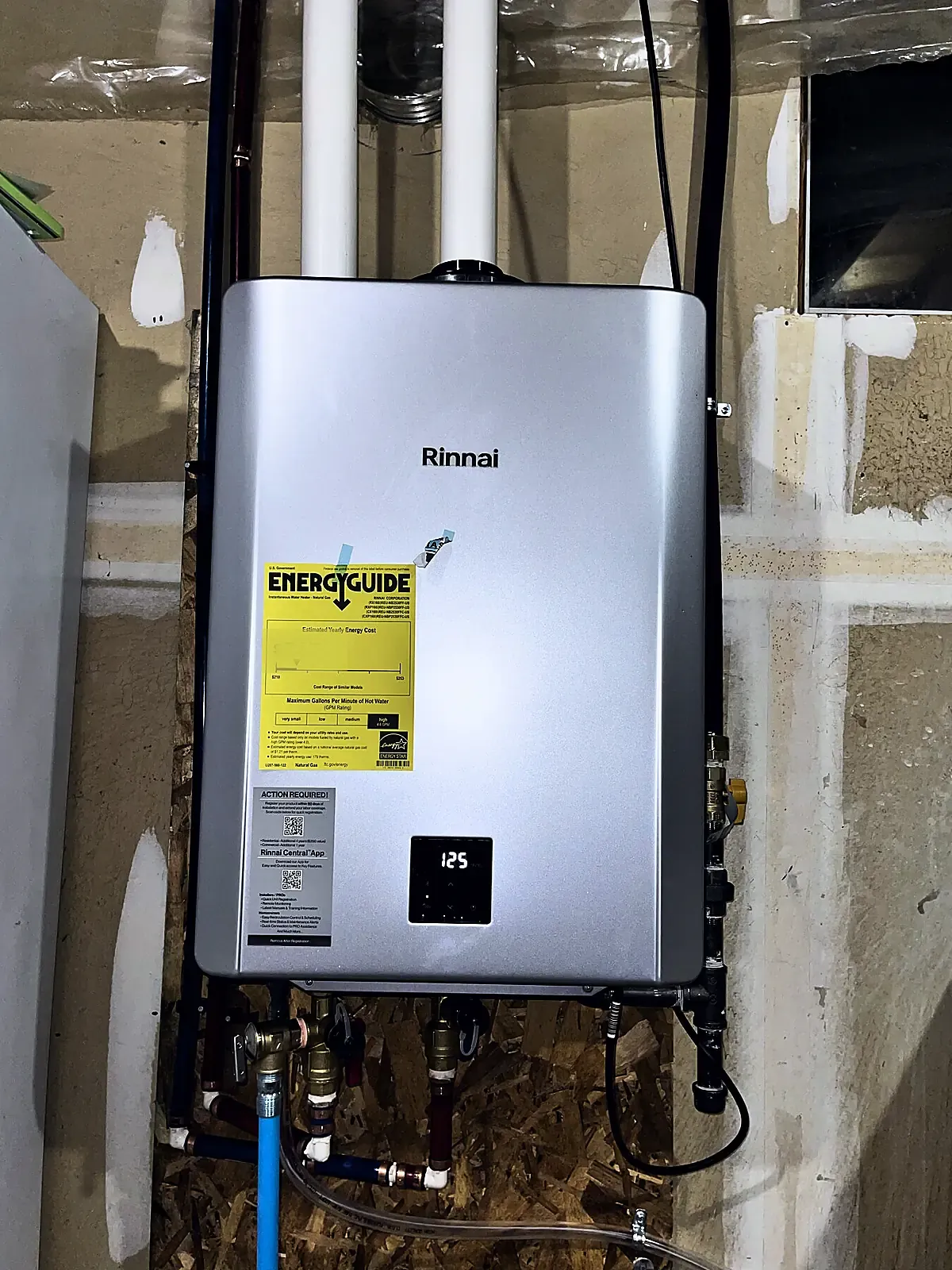
- Water heater protection: softening upstream can limit scale in the tank or heat exchanger
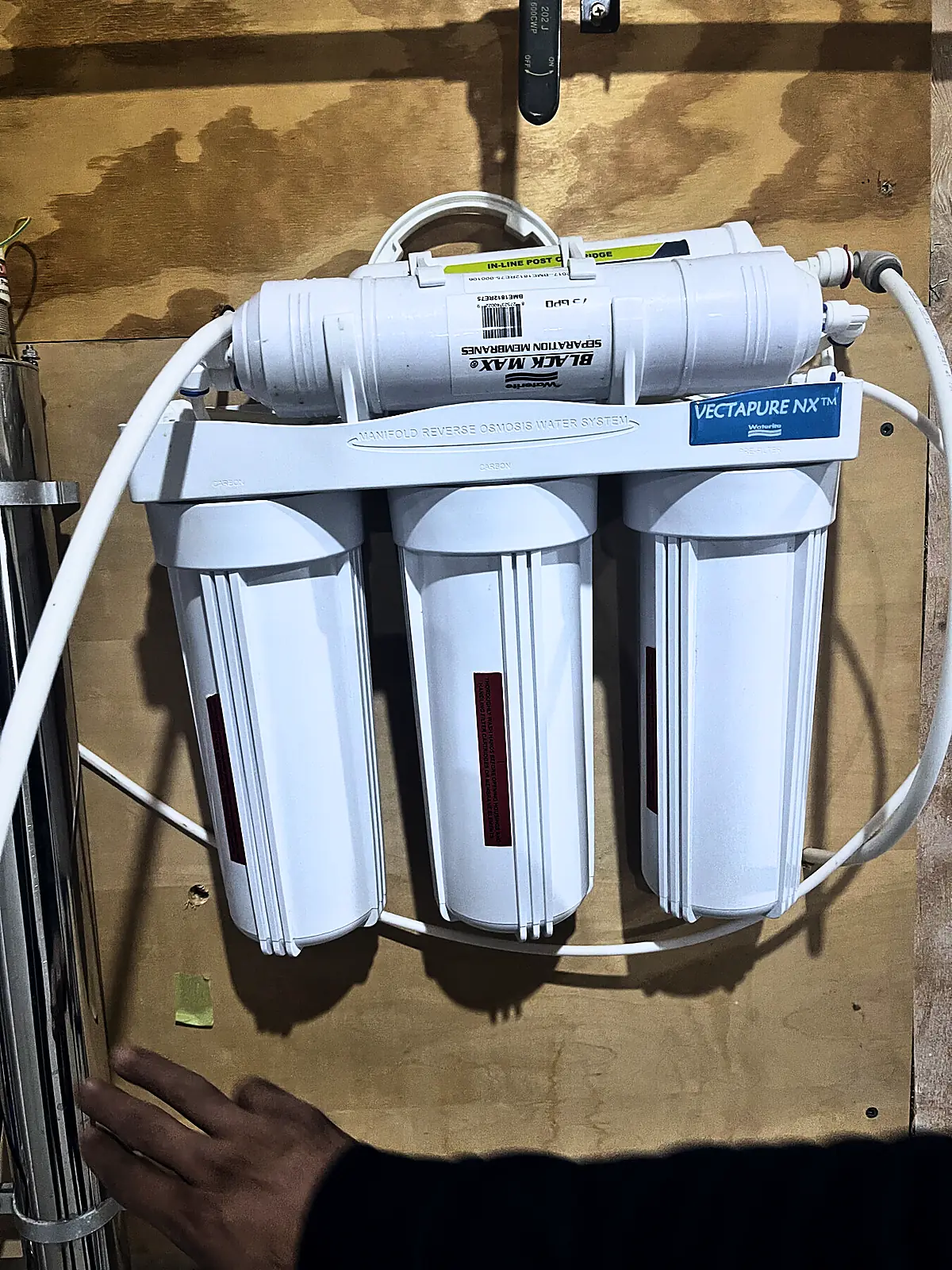
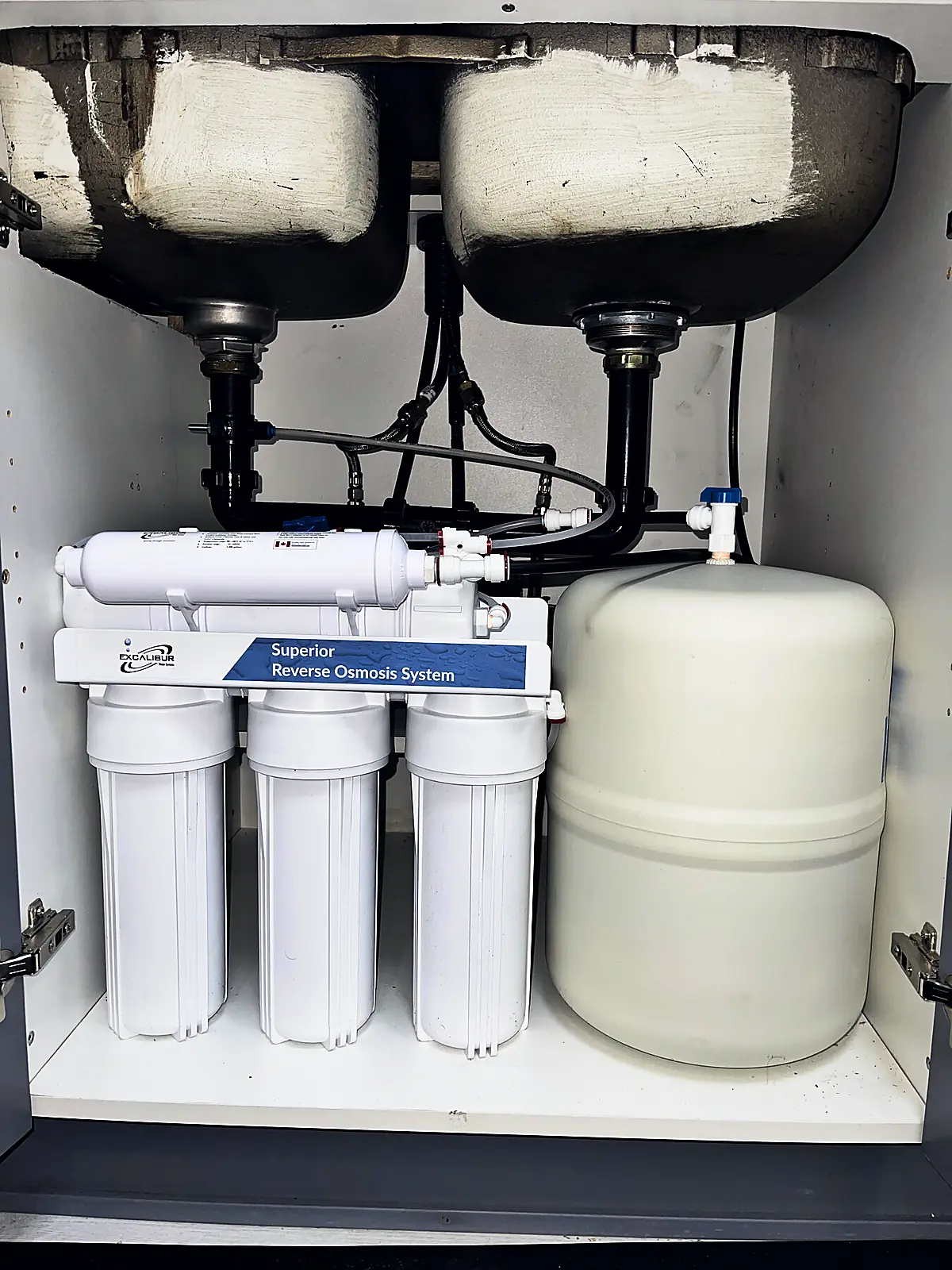
- Pairing with an under-sink reverse osmosis system for drinking water
Process
From hardness test to first regeneration
Every job starts with a conversation and a look at the equipment. You see the options in plain language before anything is booked.
- 1
Test the water
We test hardness at your tap and ask where the water comes from. Ontario water varies by municipality, and well water differs from municipal supply. Iron, sulphur or sediment may call for extra treatment first.
- 2
Choose type and capacity
Capacity depends on hardness and how much water the household uses. A larger unit regenerates less often, but an oversized one can cost more up front without adding much. We explain the trade-off.
- 3
Plan the location
A softener needs space, a drain, power for the controller and access to the main water line. We check where it sits relative to the water heater and outdoor taps, which can be left on untreated water.
- 4
Install with bypass and drain
We set the unit, install the bypass valve, connect inlet and outlet, and run the drain line. Connections are pressure tested before the unit goes into service. See plumbing support for our scope.
- 5
Program and explain
We set hardness and capacity on the controller, run a regeneration, check flow and show you how to add salt and check the settings.
Interactive
Water hardness scale
How hard is your water? Move the slider to your test result in grains per gallon.
Hardness classes follow common water-industry ranges. We test your water on site before recommending a size.
In pictures
What this work looks like
 Kelvin job photoKelvin job photo
 Kelvin job photo
Photos from Kelvin Mechanical jobs in the GTA and nearby Ontario.
Good to know
Salt-based, salt-free and carbon: what each does
Salt-based ion exchange
Resin beads swap calcium and magnesium for sodium or potassium, which reduces hardness. Regeneration uses salt and water and sends brine to a drain. This is the approach that actually softens water.
Salt-free conditioners
These do not remove hardness minerals. Some are designed to change how scale forms. Results vary with the water and the product, so we set expectations before you buy.
Carbon filters
Carbon filtration helps with chlorine taste and odour, not hardness. It often complements a softener or sits ahead of a reverse osmosis system.
Water heaters and fixtures
Softer water can reduce scale on elements, heat exchangers and fixtures. It cannot reverse scale already there. See water heater maintenance for upkeep.
Realistic claims
Softening reduces hardness. It does not purify drinking water, and salt-based softening adds a small amount of sodium or potassium to the water, so tell us if that matters in your household. Results depend on your water and your use.
Ontario notes
Ontario notes for water softeners
Hardness depends on the source
Water hardness differs between municipalities and between municipal and well supplies. A test of your own tap, with notes on iron and pH, is a better guide than a regional guess. The result sets the capacity and the type of equipment we recommend.
Well water often needs more
Private wells in parts of Ontario can carry iron, sulphur or sediment that a basic softener does not handle well. These may need pre-treatment. A softener also does not make water microbiologically safe, so test a private well through your local public health unit.
Cold garages and basements
An Ontario winter can drop temperatures in garages and basement corners low enough to damage a softener, its drain line or its controller. We choose a protected location and keep the bypass and drain accessible.
Septic systems and drain rules
Regeneration sends brine to a drain, so the discharge matters if you have a septic system or if local drain rules apply. Tell us where your drain goes. Rules differ by municipality and change, so we confirm before work and talk about efficient settings.
Equipment we install and service

Brand names and logos belong to their owners. Availability depends on the product line and region.
Help centre
Questions about Water Softener Installation
How do I know if I need a water softener?
Signs include scale on fixtures, spotting on glass, soap that does not lather well and mineral crust in kettles. A hardness test gives a real number. Ontario water varies by municipality and between well and municipal supply, so test your own tap.
What size softener do I need?
It depends on your water hardness, household size and use. We work out grain capacity from your test result and how much water you use, rather than from a rule of thumb.
How often do I add salt?
It depends on the unit, the hardness and your water use. Many owners check the level monthly. We show you how to check it and which salt suits your system.
Will a softener protect my water heater?
It can help limit scale build-up from hard water, but it will not repair existing damage. Upkeep such as flushing still applies.
Can I pair a softener with reverse osmosis?
Yes, they do different jobs. The softener treats hardness for the whole house, and the RO unit treats drinking water at one tap. See reverse osmosis installation.
Is Ontario water hard enough to need a softener?
It varies by municipality and by supply, and private wells differ again. Hardness is measured at the tap, usually as grains per gallon or milligrams per litre. Some homes are comfortable without a softener, and others see scale quickly. A hardness test gives a real number to decide with.
Can I install a water softener with a septic system?
Often, but regeneration water goes to a drain, so tell us if you have a septic system. Where the discharge goes and how much water the unit uses per cycle both need thought. Local guidance may apply and rules differ by municipality, so we confirm before work.
Where does a water softener connect in the house?
A whole-house softener usually connects to the main water line after the shutoff, ahead of the water heater and the rest of the plumbing. Many homes leave outdoor taps on untreated water. We choose the location based on space, a nearby drain, power and the layout of the main line.
Will softened water feel slippery?
Many people notice that soap rinses differently and skin or fixtures feel slicker at first. That is normal for softened water. You may find you need less soap. If the feel bothers you, we can talk through the hardness setting.
What kind of salt does a water softener use?
Use the type the manufacturer specifies, usually pellets or crystals made for softeners, and avoid mixing types. Some units can use potassium instead of sodium. We tell you which salt suits your system and how to check the level. See water treatment service.
Can I put a water softener in an unheated garage?
It is not ideal. A softener holds water and has a controller and drain line that can be damaged by frost, so a cold, uninsulated space is a poor choice for an Ontario winter. We look for a protected spot near the main line and a drain.
Does water from a softener affect people on low-sodium diets?
Salt-based softening adds a small amount of sodium or potassium to water. If sodium matters in your household, tell us and talk to your health provider. Options include leaving the kitchen cold tap on unsoftened water or pairing with reverse osmosis for drinking water.
Where we do this work
Water Softener Installation in Toronto, the GTA and Hamilton
Toronto Mississauga Brampton Vaughan Markham Oakville Burlington Hamilton All service areas
Quote and booking
Request: Water Softener Installation
Share a few details and we will follow up. A written quote comes after a site review. There is no online checkout.
- City and service type help us route your request
- Urgency and property details let us prepare properly
- Optional equipment photos speed up repairs and replacements
Prefer to talk? +1 905-407-7353
Gas smell or carbon monoxide alarm? Leave the building and call 911 first. Do not use this form.